Open the storage compartment now
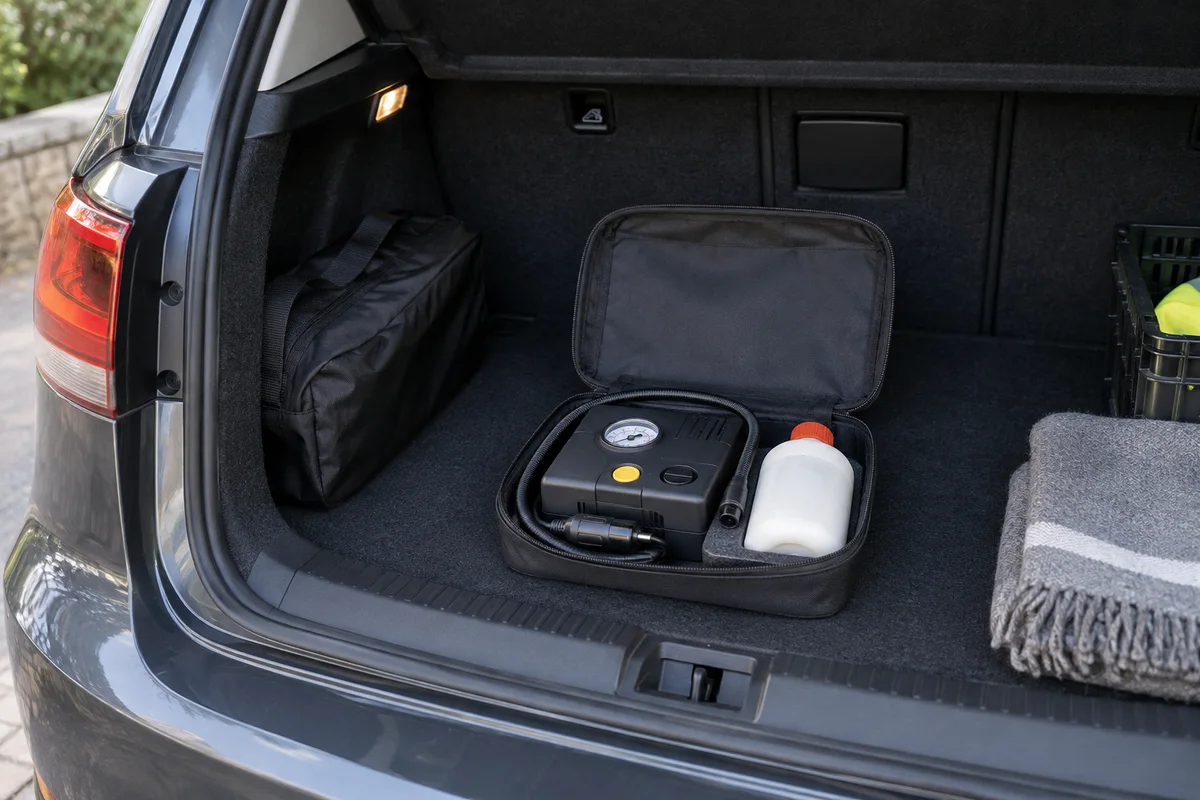
Find out what the car carries rather than assuming there is a spare under the boot floor. Some vehicles have a compressor and sealant bottle, others have different equipment, and used cars may be missing parts. Compare what you find with the handbook. Do this at home with the luggage removed, where you can read labels without being rushed by weather or traffic.
Locate the sealant’s expiry date and confirm that the bottle is the correct type for the kit. Check for damage or signs that it has already been used. A tidy-looking compressor does not establish that the consumable bottle is usable. If anything is missing, expired or uncertain, obtain the appropriate replacement rather than filling the compartment with a vaguely similar product.
Read the limits before the emergency
The instructions explain which damage the kit can address, the required inflation process and the conditions under which it must not be used. A sidewall injury or a seriously damaged tyre is not made sound by sealant. Different kits have different procedures and restrictions, so borrowing a speed or distance figure from another car can be misleading.
Identify the intended electrical connection and where it is located in the vehicle. Check the hose and cable visually without opening components or running an unnecessary sealant cycle. Store the instructions where they remain accessible when the boot is full. A printed copy can be useful if the relevant handbook normally lives on a phone with an unreliable battery or connection.
Plan for a kit that cannot help
Keep assistance contact details available because some punctures and roadside locations make using the kit unsuitable. Even a compatible puncture does not justify standing beside fast-moving traffic to operate a compressor. Personal safety and the suitability of the stopping place come before trying to recover mobility. Do not let ownership of a kit create an obligation to use it.
After any use, tell the tyre professional that sealant is inside and follow the kit’s replacement instructions for consumables or parts. Replenish the equipment promptly rather than leaving an empty bottle for the next trip. Add its new expiry date to a maintenance reminder. This is a small preparation task whose value appears when an inconvenient puncture would otherwise become a second equipment problem.