Make the comparison fair
Choose a time before the car has been driven or after the cooling period specified in the relevant guidance. A tyre warmed by a journey can show a higher pressure than it did at rest. That does not automatically mean somebody overinflated it. The important comparison is between the recommended cold setting and a reading taken under suitable conditions, not between two numbers collected at unrelated moments.
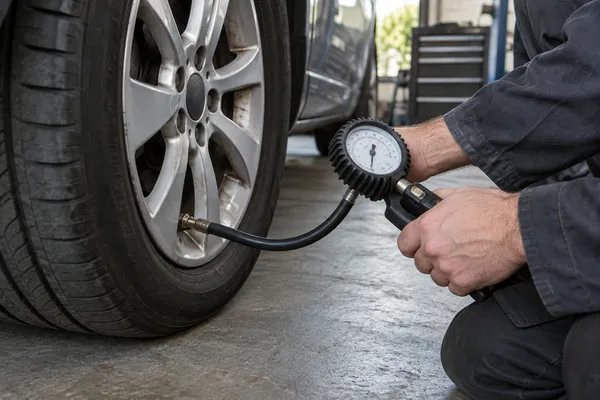
Use a reliable gauge and confirm the correct units. Remove the valve cap, hold the connector squarely and take a stable reading without deliberately releasing air. If the gauge hisses or gives an unexpected result, reseat it and check again. A rushed reading from a poorly seated connector can lead to an unnecessary adjustment.
Temperature affects the whole set
Seasonal changes can alter pressures even when there is no puncture. Check all tyres rather than assuming a dashboard alert must identify a single damaged one. Compare the results with the correct vehicle settings for the current load. If one tyre behaves very differently from the others, that pattern is worth investigating separately from the general effect of colder weather.
Do not deliberately let air out of a warm tyre just to bring it down to the listed cold pressure. When it cools, the result may be too low. If adjustment is unavoidable after driving, follow the vehicle or tyre manufacturer’s instructions and recheck cold afterward. Avoid a universal correction figure taken from a different vehicle or tyre application.
Make the habit easy to repeat
Keep a gauge where it remains clean and protected, and replace or check it if readings seem inconsistent. Refit the valve caps after measuring. Include the spare according to its own instructions; its recommended pressure may differ considerably from the road tyres. If the car requires a monitoring-system reset, perform it only after the actual pressures have been set correctly.
Record an unusual reading and the conditions if a problem recurs. A cold morning, a long motorway trip and a tyre losing air every few days are different stories. Clear measurements help you distinguish them and give the tyre professional something useful to work with. The goal is a dependable routine, not constant adjustment every time a warm display moves slightly.