The date is not the fitting date
A car that only goes to the shops may still have plenty of tread after several years. That says something about wear, but not everything about the condition of its tyres. Rubber and internal materials change with time. Heat, storage and use affect that process, so a generous groove depth cannot certify that an older tyre remains suitable.
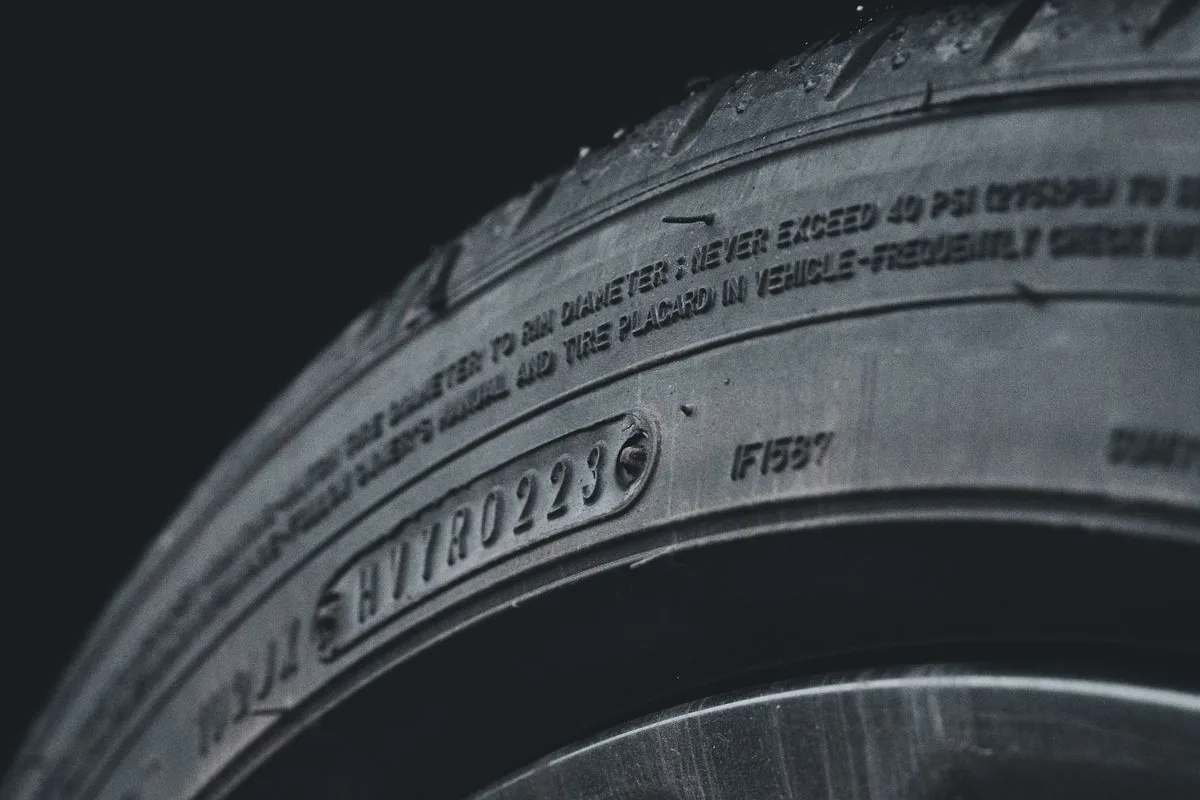
Find the manufacturing date in the tyre identification marking. For tyres made since 2000, the final four digits show the production week and year: 1822 means week 18 of 2022. It does not mean that the tyre was fitted in April 2022, and it is not a guaranteed expiry date. Keep a photograph of the complete marking alongside the purchase invoice rather than trying to remember four isolated numbers.
Read all four tyres, then the spare
Different dates on a car are not automatically suspicious; tyres may have been replaced at different times. Record the position of each one so you can discuss the actual set with a tyre specialist. The complete date marking may only be visible on one sidewall. If it faces inward and cannot be seen safely, ask the workshop to read it. Do not crawl beneath an unsupported car or remove a wheel just to find it.
Include the spare in the conversation. It can look almost unused while being as old as the vehicle. Its storage position does not stop ageing, and the fact that it holds air is not a complete condition assessment. A spare brought into regular service deserves particular attention rather than an assumption that unused means new.
Use the date to ask a better question
Follow the vehicle and tyre manufacturers’ applicable replacement advice. As one example, Michelin recommends annual professional checks after five years of use and precautionary replacement at ten years from manufacture, including spares. Those milestones do not promise safe use up to ten years, nor do they override an earlier vehicle-specific limit. Damage can require replacement much sooner.
Tell the specialist about long periods parked, repeated pressure loss, vibration or a significant impact, even if the tread looks healthy. A bulge, exposed reinforcement or serious cut needs prompt action; do not wait for an age anniversary. The useful question is not simply whether the tyre is too old, but whether its age, history and present condition make continued use appropriate.