Find the vehicle’s information
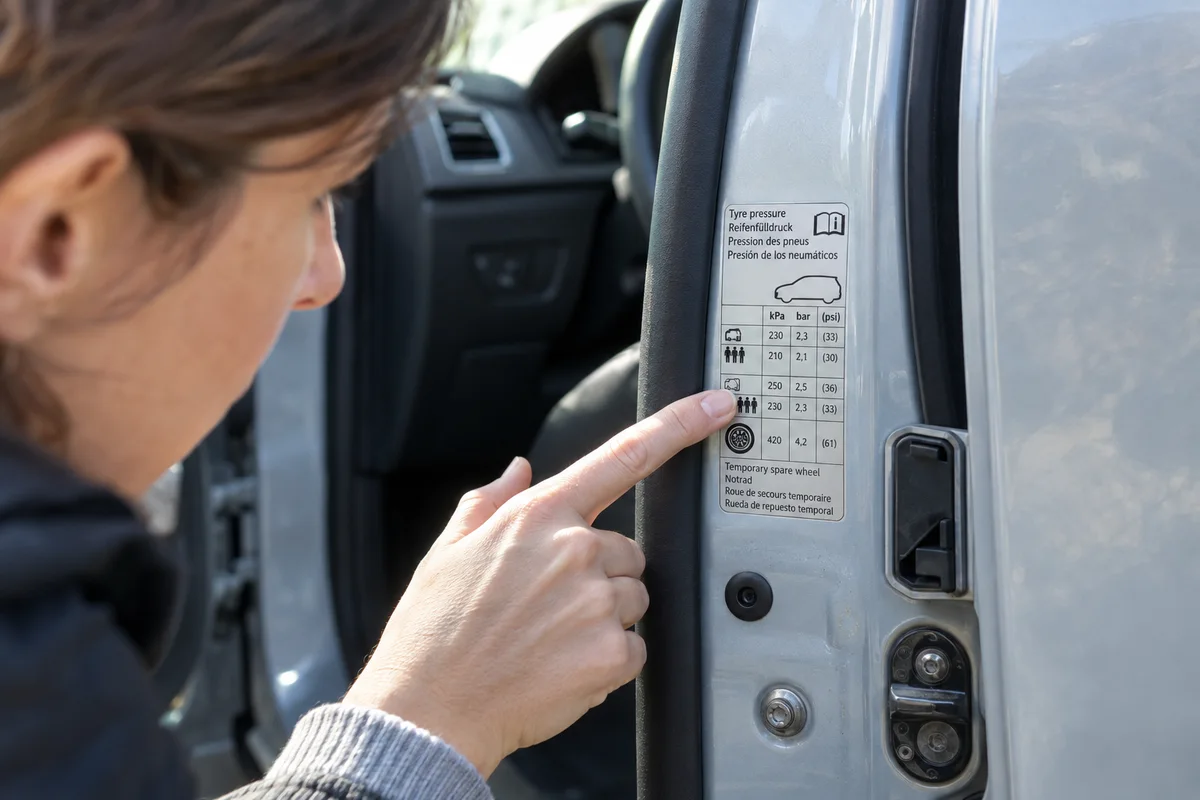
Look for the pressure label in the location described by the handbook, often a door opening or fuel flap. It may list several tyre sizes, front and rear values, and different passenger or luggage loads. Take a clear photograph so you can read it without holding a door open at the air machine. Check the units carefully; bar, kPa and psi are not interchangeable numbers.
Match the row to the tyres actually fitted and the use described by the manufacturer. Do not copy a setting from another car merely because the wheel diameter looks similar. If the label is missing, illegible or inconsistent with the fitted size, ask the manufacturer or a tyre professional to identify the correct information using the vehicle details.
Load changes the question
A pressure table may distinguish ordinary use from a fully loaded car. Before a holiday, consider passengers and luggage together rather than counting only bags in the boot. Follow any specific guidance for towing or other conditions. Do not invent an extra margin by adding a convenient round number to every tyre; the vehicle’s recommended values are the starting point.
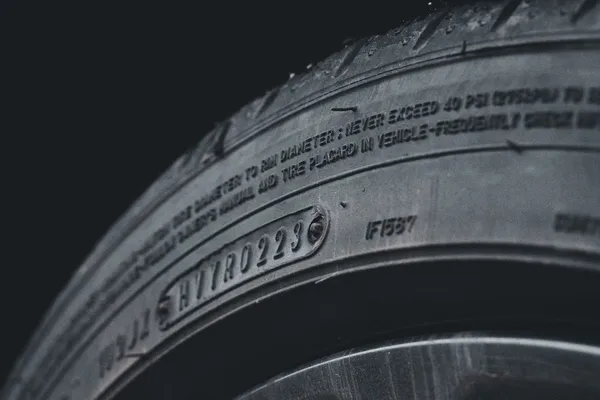
Front and rear pressures can differ, and a temporary spare may require a completely separate value. The maximum marking moulded on the tyre describes a tyre-related limit, not a universal setting for your vehicle. Treating it as the daily target can leave the car incorrectly inflated even though the number came from the tyre itself.
Set and confirm under the right conditions
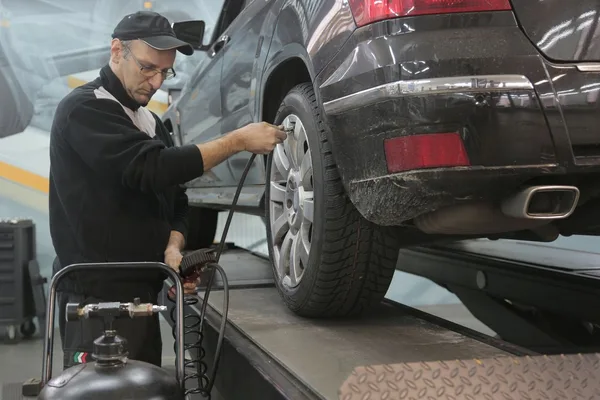
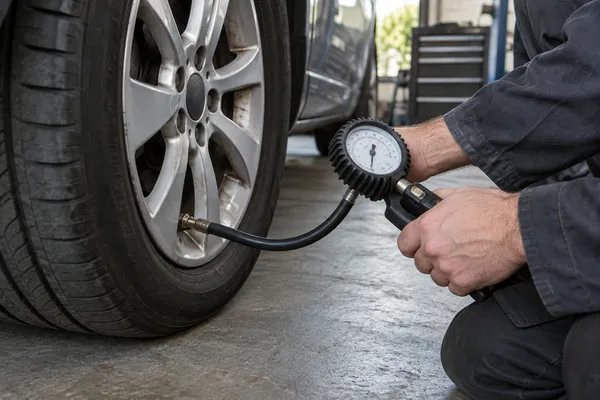
Check when the tyres are cold according to the manufacturer’s guidance, using a suitable gauge. If the air-machine display uses another unit, select the correct unit or make a reliable conversion before inflating. Refit valve caps and follow any required pressure-monitoring calibration only after the pressures are correctly established. A reset does not put air into a low tyre.
When the load returns to normal, review the applicable setting rather than forgetting the holiday adjustment indefinitely. Keep checking periodically and before demanding journeys. If one tyre repeatedly loses pressure, investigate the leak instead of treating every visit to the compressor as ordinary maintenance. Correctly reading the table is the beginning of tyre care, not the end.