Establish whether the pattern is real
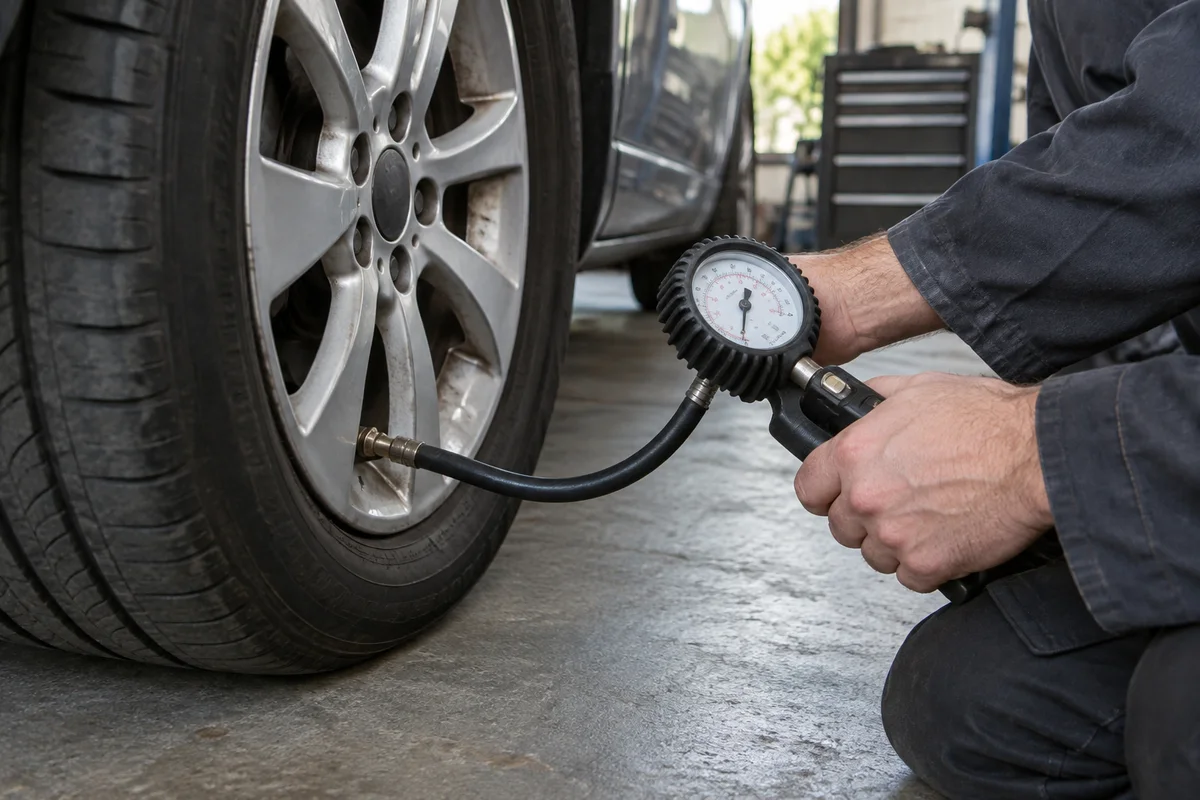
Check the tyres cold with the same gauge and the correct settings for the vehicle. Note the date, reading and wheel position before adjusting. Comparing one hot reading with another taken on a frosty morning can exaggerate a change. However, a single tyre repeatedly dropping relative to the others is useful evidence, even if the loss is slow enough to escape notice between journeys.
Look from a safe position for an embedded object, visible damage or an obviously low tyre. Do not pull out a nail or screw to find out whether it is responsible. Its removal can increase the leak. Avoid reaching underneath the car or rotating a wheel on an unsupported jack just to inspect an inaccessible section; a tyre professional can examine it properly.
The leak may not be in the tread
A puncture is one possibility, but the valve, bead area or wheel can also be involved. A recent tyre fitting, kerb impact or wheel repair is relevant history to mention. Do not decide that a nearly new tyre cannot be at fault, or that replacing the rubber automatically addresses a damaged wheel. The whole assembly needs the appropriate assessment.
Tell the technician whether sealant has been used and whether the tyre was driven while significantly underinflated. Internal damage can exist even if the exterior looks acceptable after reinflation. A successful top-up is therefore not proof that the tyre remains suitable for continued use. The repair decision should follow inspection, not just the ability to hold air for a few minutes.
Do not let convenience decide safety
If the tyre is flat, visibly damaged or losing air rapidly, do not drive to the nearest compressor on it. Arrange assistance or use the vehicle’s approved emergency procedure only when the location and conditions allow it safely. A motorway shoulder is not a convenient workshop. Prioritise occupants and follow local roadside guidance.
After repair or replacement, check the pressures as instructed and monitor for recurrence. Keep the work record and clarify any monitoring-system reset. If the same wheel loses pressure again, return with the earlier findings instead of starting another cycle of regular inflation. A recurring pressure problem needs a cause and a resolution, not a place on the weekly errands list.