What you can see through the wheel
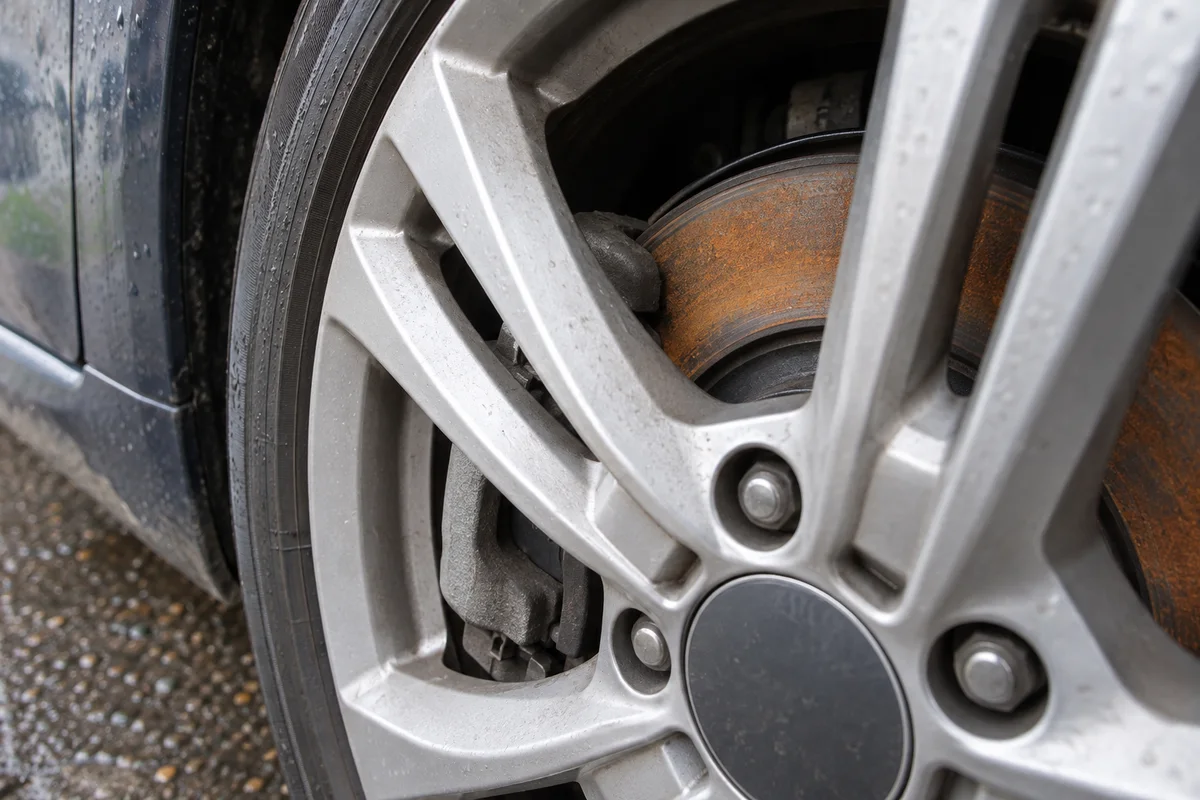
Many brake discs have exposed metal friction surfaces on which a light coating of rust can form when the car is parked, particularly in damp conditions. This can look alarming through an open wheel even after a relatively short period. The appearance alone does not tell you the depth of corrosion or the condition of the pads and hidden surfaces.
Look only from a safe position and leave the components untouched. Discs can be hot after driving, and reaching through spokes is not a useful inspection method. A photograph taken while the car is parked can help describe the concern to a workshop. Avoid deciding that every orange mark demands replacement, but do not assume every rusty-looking disc is harmless either.
Normal use is different from a cleaning exercise
A light surface film can be removed by ordinary braking during normal use. That does not mean you should perform repeated hard stops, drag the brakes or take the car out specifically to scrape them clean. If braking feels abnormal, a wheel seems stuck, noise is severe or there is another safety concern, obtain advice before attempting to move the vehicle.
Longer parking periods and heavier corrosion can create a different situation from an overnight film. Persistent roughness, vibration, reduced performance or a brake that does not release properly requires professional attention. Do not apply oil, rust remover or a general cleaning product to the friction surfaces. Making the metal look cleaner is not the same as restoring safe braking operation.
Consider how the car is used
A vehicle used infrequently may need its brakes assessed even when mileage is low. Some hybrid and electric driving patterns make less frequent use of friction braking, but those brakes still need to remain serviceable. Follow the manufacturer’s maintenance guidance and report symptoms rather than creating an unofficial routine of aggressive braking to compensate for the way the car normally slows.
If the car will be stored for a long time, ask for model-specific preparation and return-to-service advice. Parking arrangements and brake systems differ, so a general instruction to leave a parking brake released is not appropriate for every situation. After storage, a professional inspection may be sensible before ordinary use resumes. The aim is to distinguish a familiar surface change from corrosion or sticking that needs actual work.