The shape matters
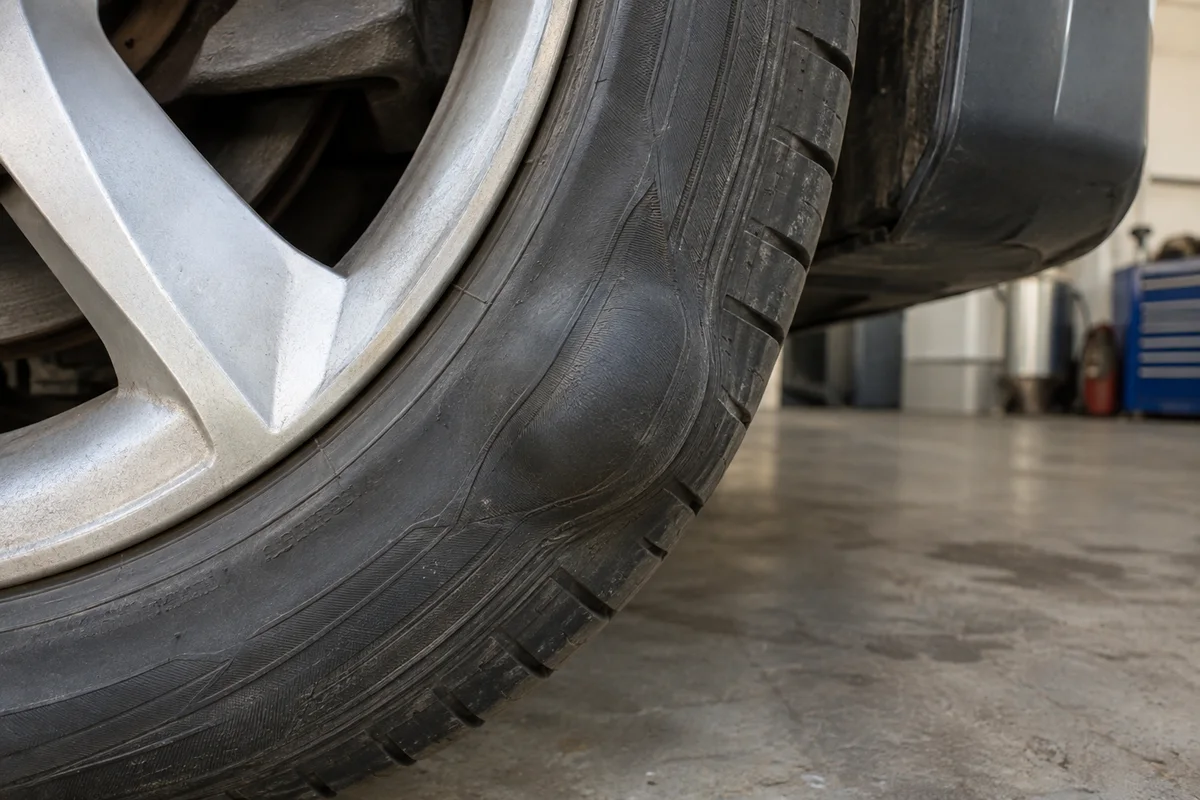
A pronounced outward swelling in a tyre sidewall can indicate damage to its internal structure. It is different from some shallow inward indentations that can be normal features of radial tyre construction. If you cannot confidently tell what you are seeing, have a tyre professional assess it. Do not press, puncture or try to flatten the area to investigate its contents.
Notice the circumstances without making them a requirement. A kerb strike or pothole impact may explain a newly discovered bulge, but damage can come to light after the event has been forgotten. The absence of a memorable impact does not make the swelling harmless. Likewise, good tread depth and a normal-looking pressure reading do not establish that the tyre is safe to use.
Change the travel plan
If you discover the problem before setting off, leave the car parked and arrange a suitable professional response. If it becomes apparent during a journey, stop somewhere safe as soon as the circumstances allow and contact assistance. Avoid treating a nearby tyre shop as permission to drive there. Tell the service what you have found so it can advise on recovery or another safe arrangement.
Do not attempt a wheel change on a dangerous roadside or without the correct equipment and vehicle instructions. A spare is an option only when its use and fitting can be managed safely and in accordance with the handbook. A sealant bottle cannot restore damaged structural cords, and adding air is not a repair for a bulging sidewall.
Describe the damage clearly
From a safe position, take a photograph showing both the swelling and enough of the wheel to identify its location. Note which corner of the car is affected, any recent impact, and whether pressure has changed. Keep people clear of the damaged tyre while waiting. There is no benefit in repeatedly handling it to produce a more dramatic photograph.
Ask the tyre professional to check associated wheel damage and advise on a compatible replacement. If an impact was involved, describe any steering change or vibration that followed, without taking another drive to reproduce it. The useful outcome is a safe tyre and an understood cause, rather than an improvised repair that leaves the underlying structural problem in place.