Two clocks run together
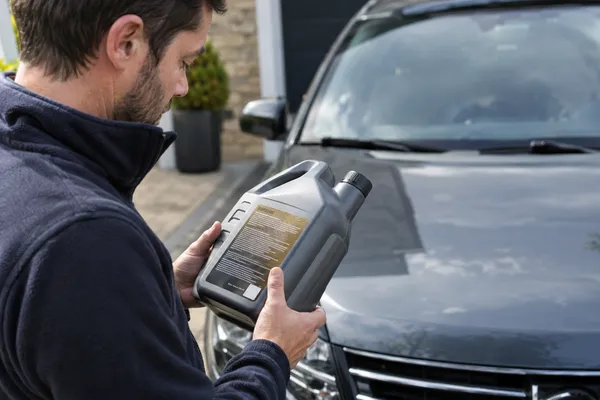
You may reach the end of a year having driven very little, yet still find a service due. Maintenance schedules often give both a distance and a time limit because use is not the only thing that matters. Read the actual wording for your vehicle. Where it says whichever comes first, a low odometer increase does not cancel the calendar deadline.
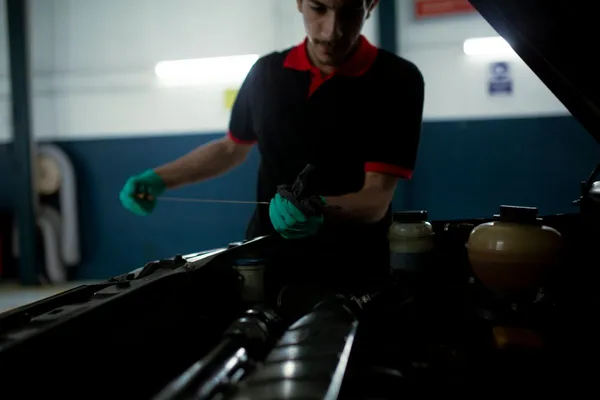
The schedule may also separate tasks. An oil and filter change, a brake-fluid replacement and a timing-belt requirement need not share the same interval. A workshop package called a full service is a commercial description, not proof that every manufacturer-scheduled item is included. Ask for the list of work appropriate to the car’s age, mileage and previous history before comparing prices.
Build a starting point from evidence
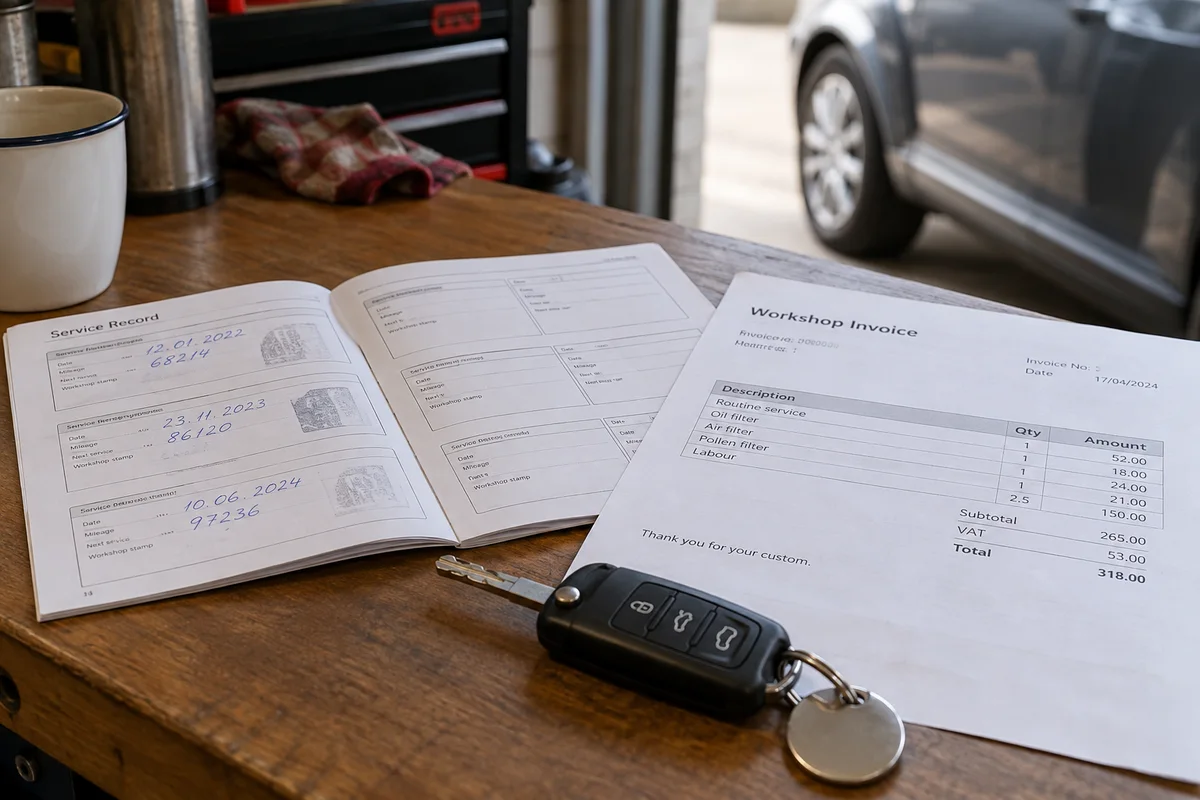
Find the most recent invoices and note the date and mileage for each significant operation. A stamp in a service book is useful, but a detailed invoice often tells you more about what was changed. If a previous owner says a belt was done but there is no record, ask the workshop how to resolve the uncertainty rather than inventing a reassuring date.
Digital histories can also need interpretation. Check that entries belong to the correct vehicle and distinguish an inspection from a replacement. If the records are incomplete, request a practical catch-up plan. It should identify work that is due or uncertain, explain the evidence and separate urgent defects from routine scheduled tasks. That makes the decision easier than approving an unexplained list of extras.
Plan around the next journey
Do not leave a known deadline until the morning of a long trip. Booking earlier allows time for a part order or an unexpected finding. Tell the workshop about the car’s actual use, including prolonged parking, repeated short journeys or towing. The applicable schedule may include different conditions for those patterns.
Keep the completed invoice and write down the next relevant dates rather than only the next mileage target. A periodic roadworthiness test and a service also serve different purposes; passing one does not automatically complete the other. The useful maintenance plan is the one tied to your vehicle and its records, not an annual ritual chosen solely because every car in the family gets the same package.