Start with the car, not the bottle
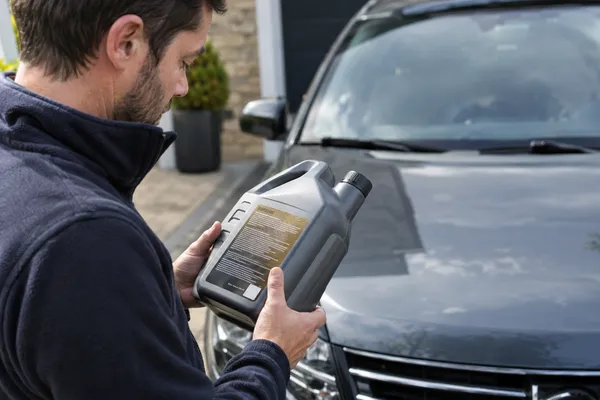
An oil check is a measurement, not an invitation to top up. Park somewhere level, secure the car and switch the engine off. Open the handbook before opening the oil bottle: some manufacturers specify a cold check, while others want a warmed engine followed by a particular waiting period. That pause lets oil return to the sump. A reading taken on a slope or immediately after shutdown can mislead you.
Identify the engine-oil dipstick from the manual. Do not pull an unfamiliar handle because it happens to be brightly coloured. Keep clothing and hands clear of belts, fans and hot surfaces; an electric cooling fan may operate with the engine stopped. If the vehicle uses an electronic level display instead, follow its measurement conditions rather than looking for a missing dipstick.
Look for a repeatable boundary
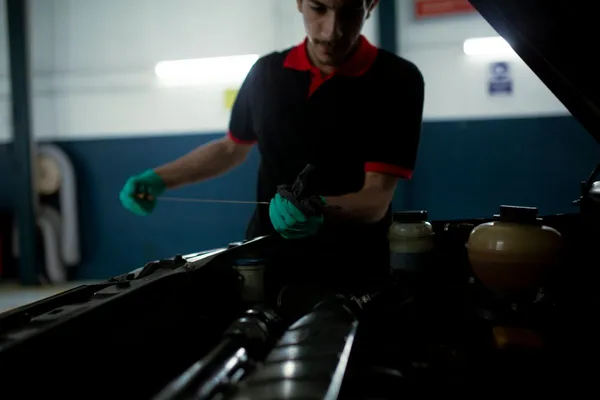
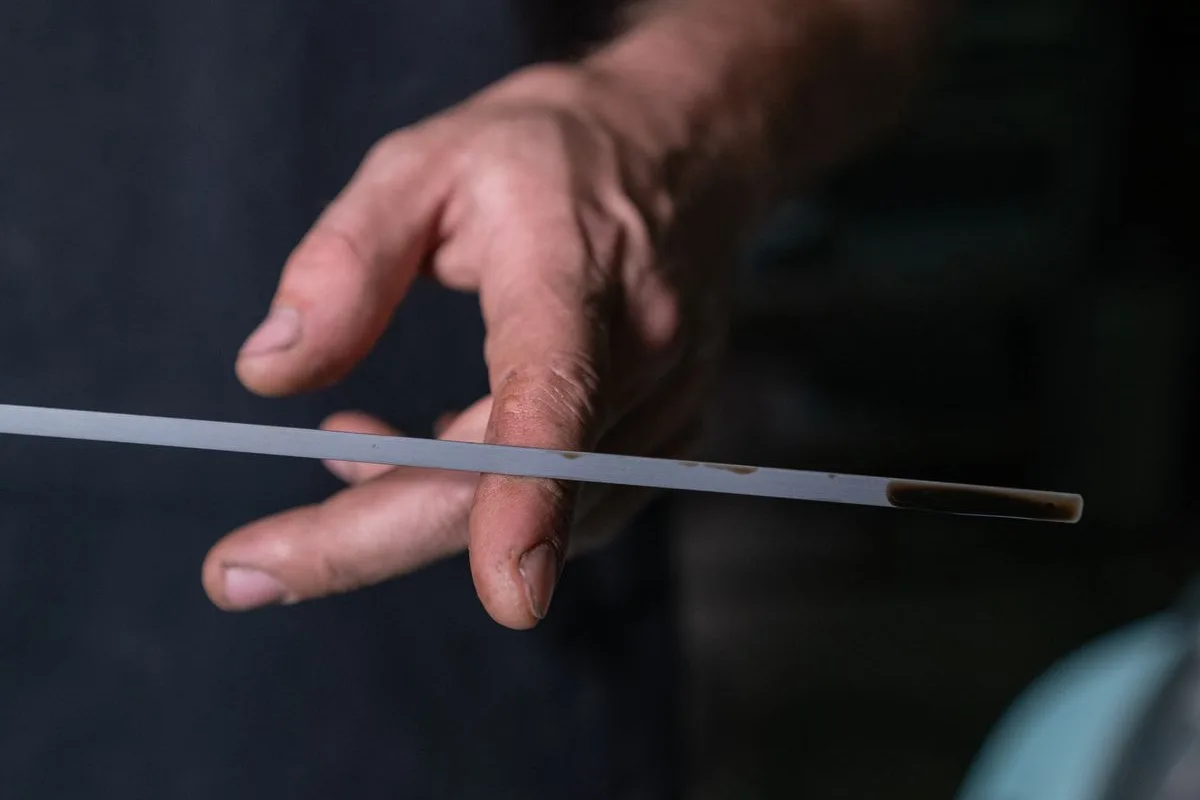
Withdraw the dipstick, wipe its measuring end with a clean lint-free cloth, insert it fully and withdraw it again. Read the marked area in good light. A thin streak far above the main wet section may be oil picked up from the tube, rather than the actual level. Repeat the measurement if the boundary is unclear; pouring in oil does not resolve uncertainty.
A level between the specified minimum and maximum marks normally needs no correction. Do not assume the gap represents exactly one litre: the quantity varies by engine. An unexplained reading above maximum also deserves attention. Check again under the correct conditions, then ask a workshop before driving if the excess remains. Removing oil is not a suitable improvised roadside task.
Make the next check more useful
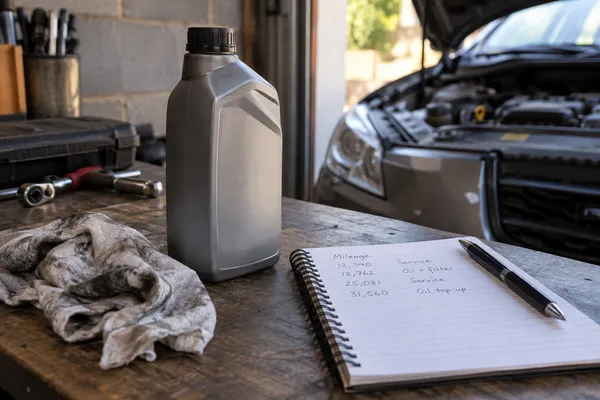
If a confirmed low level needs topping up, use oil meeting the vehicle’s required specification, add a small amount and allow time before rechecking. The maximum mark is a limit, not a target to exceed. Refit the dipstick and filler cap securely, and record the date, mileage and amount added. That short note is more useful than remembering that the bottle looked half empty.
Check subsequent readings in comparable conditions. A falling level, a new leak or frequent top-ups calls for investigation rather than endless refilling. An oil-pressure warning is a different matter from a low dipstick reading: stop safely, switch off and follow the handbook’s warning instructions. A normal level does not prove that the engine has adequate oil pressure.