The large number is only part of the label
The prominent 5W-30 or 0W-20 on an oil bottle describes a viscosity grade. It does not identify every aspect of the oil’s performance. Two products with the same grade may have different manufacturer approvals and may not be interchangeable in your engine. Choosing by the biggest number on the shelf leaves out information that the engine designer considers important.
Find the specification in the handbook or the manufacturer’s current information for the exact engine. A model name alone may cover several petrol and diesel engines, sometimes with different emissions equipment. Have the registration details or vehicle identification number available when asking a supplier. The aim is to identify one applicable requirement, not to collect a list of oils that somebody has used successfully.
Compare the exact wording
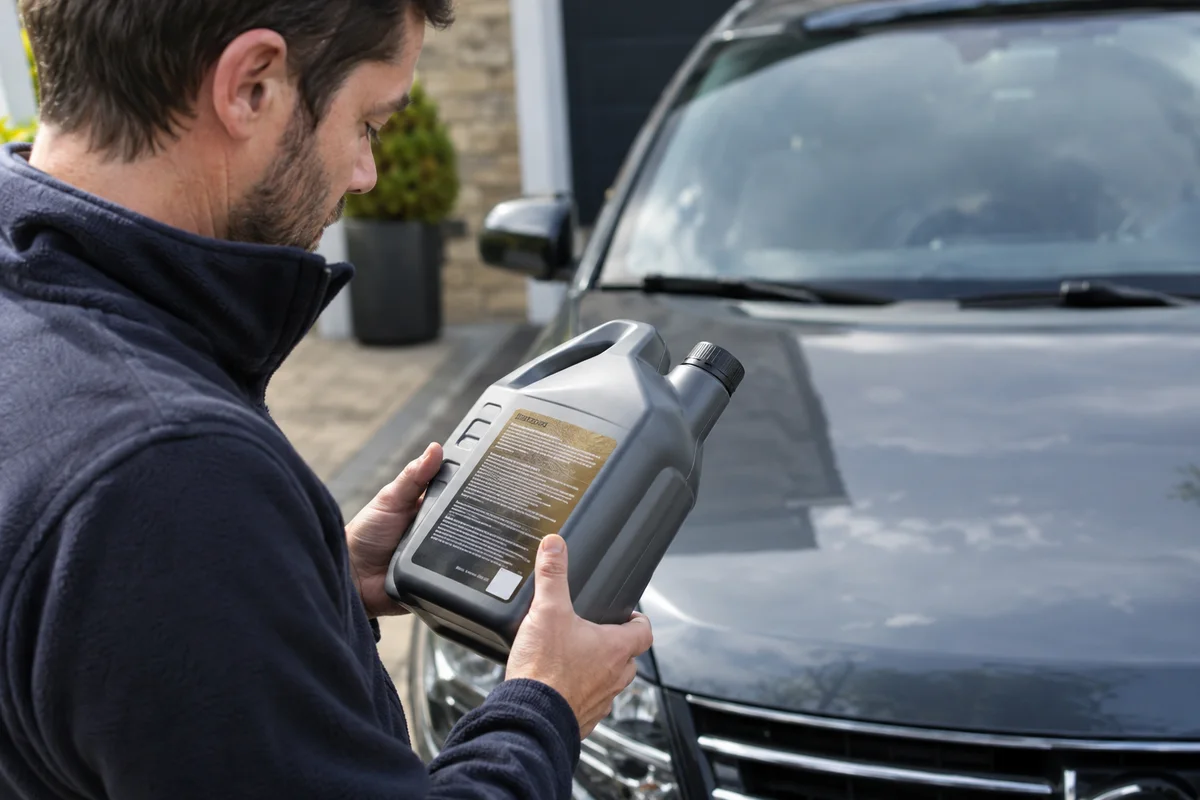
Check the approval code on the bottle against the required code, including any suffix. Marketing descriptions such as premium, fully synthetic or suitable for modern engines do not replace that match. If the wording is unclear, ask the supplier to confirm the product’s technical documentation. Do not assume that a newer-looking specification automatically replaces the older one required by your car.
An oil selected for a different engine may be inappropriate even when it feels reassuringly expensive. Nor should an older engine automatically receive a thicker grade because it has accumulated mileage. A change made to disguise consumption or noise can distract from a fault that needs diagnosis. Ask for a reason tied to the manufacturer’s instructions before changing the specified product.
Keep the choice traceable
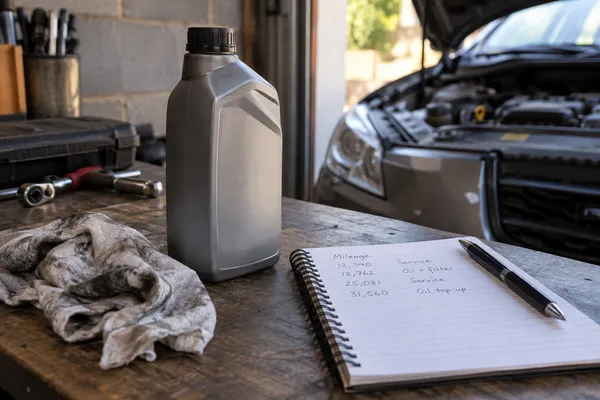
After a service, keep the invoice showing the oil specification and quantity supplied. If the invoice merely says engine oil, request the detail while the job is still easy to identify. A photograph of the bottle used for an occasional top-up is enough for your own records; there is no need for an elaborate spreadsheet.
Store any remaining oil in its original, securely closed container, away from children and sources of contamination. Before the next top-up, confirm the level using the correct procedure and check the label again. Having a bottle in the boot does not prove that it belongs to the car now parked in front of you.