Choose the right conditions
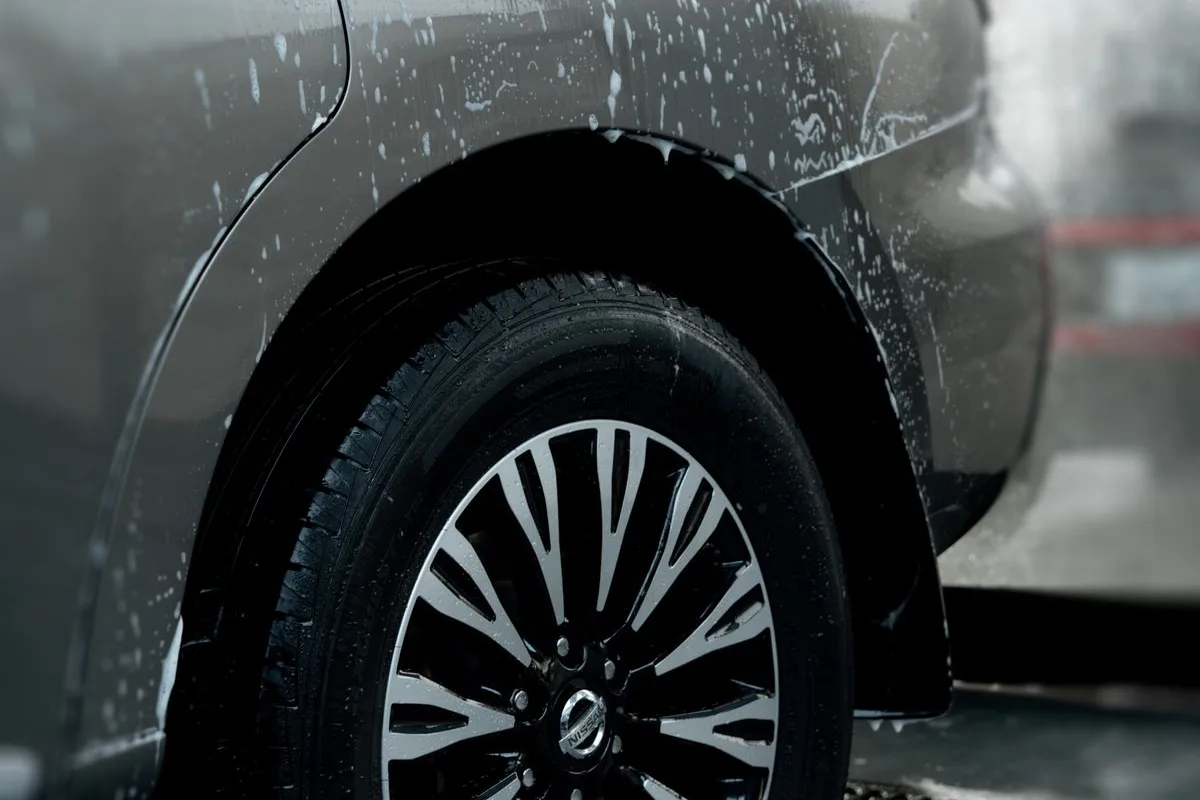
After repeated journeys on treated winter roads, visible grime is only part of what the car has collected. Wheel arches, lower panels and accessible underside areas deserve attention as well as the bonnet. Plan a wash when the vehicle and surroundings allow it safely. Freezing conditions can leave slippery ground or frozen closures, so a suitable professional wash may be more practical than a hurried driveway job.
Read the vehicle’s washing instructions, particularly for sensors, cameras, charging connectors and modified finishes. An electric car is not exempt from road-salt care, but its manufacturer may specify particular precautions around electrical equipment. Do not assume that a pressure-washer setting safe for a concrete path is suitable for every part beneath a vehicle.
Use pressure with restraint
Remove loose dirt gently and use an appropriate vehicle-cleaning product. Keep the nozzle at the recommended distance and avoid concentrating a jet on seals, connectors, damaged paint or loose protective material. Do not crawl beneath a car supported only by a jack to reach one more patch. If safe access is lacking, choose a service equipped for underside washing.
A wash cannot reverse corrosion already present. Look for stone chips, damaged coatings or loose trim while the surface is clean, and arrange appropriate attention. Do not conceal a rusty area with an arbitrary coating before its condition is understood. The point of cleaning is partly to make inspection possible, not simply to produce a glossy exterior that hides the lower body.
Finish before the next freeze
Follow the manufacturer’s advice for drying and post-wash checks. Confirm that lights, number plates and windows are clear, and dry accessible door-seal contact surfaces where appropriate. If braking feels abnormal after washing, stop safely and have it assessed; do not perform aggressive braking experiments in traffic to prove that everything is fine.
Keep washing proportional to conditions. A car used regularly on salted roads may need more frequent attention than one stored through winter, but there is no universal calendar that suits every location. A careful rinse and inspection after exposure can be more useful than an elaborate cosmetic treatment applied once and then forgotten for the rest of the season.