Give the workshop something measurable
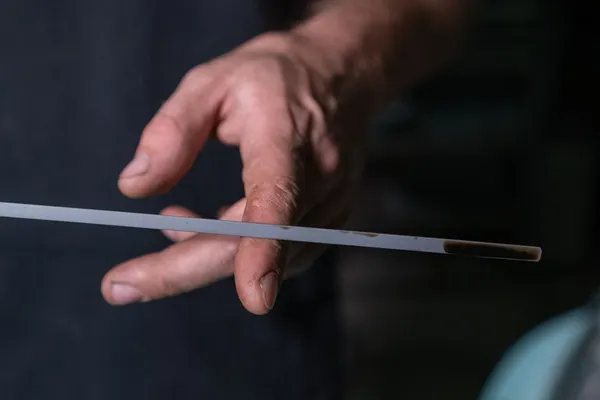
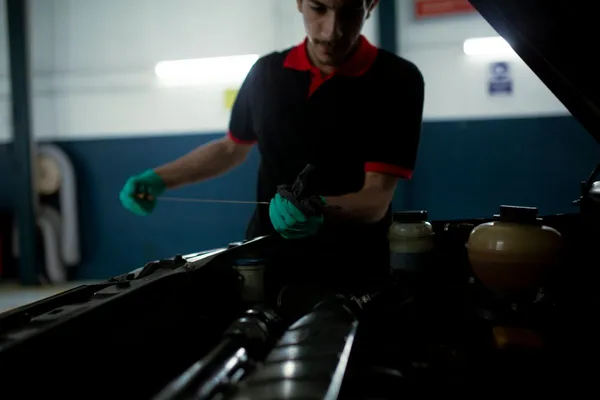
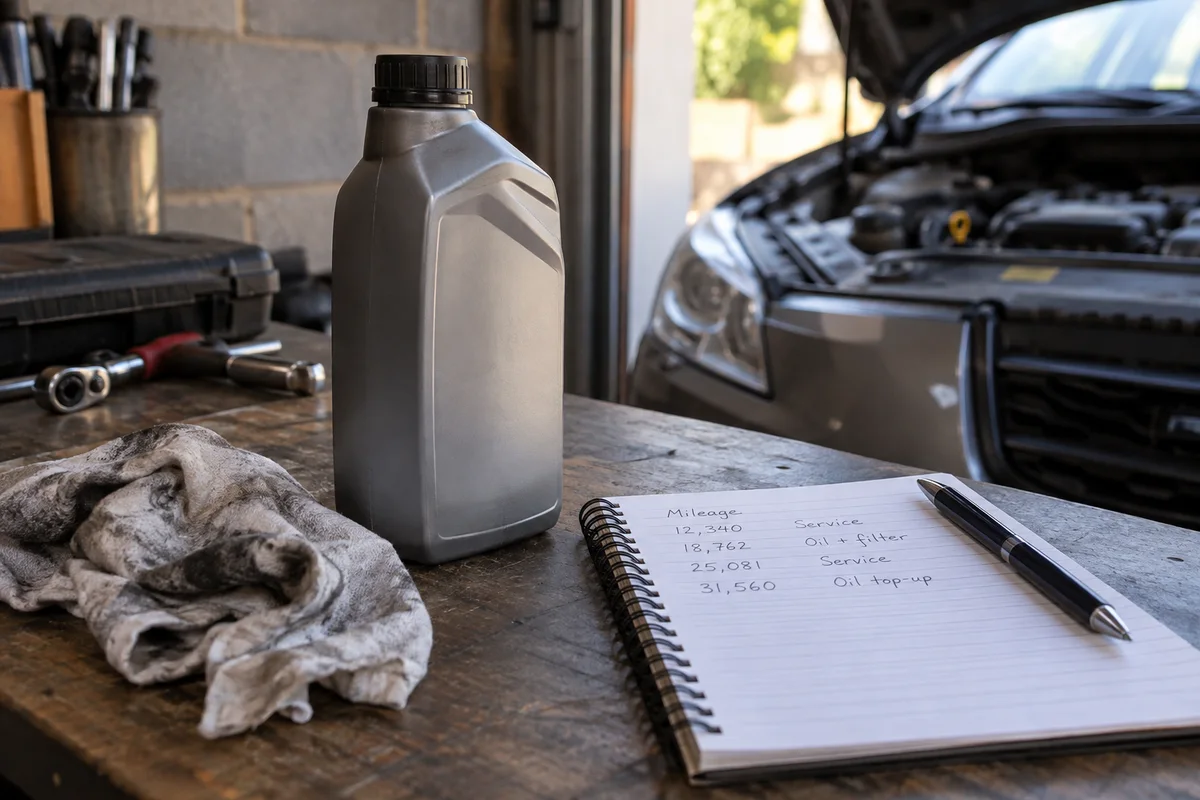
An almost empty top-up bottle is not a consumption measurement. Perhaps it was used for another car, perhaps some was spilled, or perhaps the engine began below its usual level. To establish a useful record, first check the oil using the handbook’s procedure and correct any confirmed shortfall with the specified product. Write down the date, mileage and amount actually added, not the bottle’s original capacity.
Choose a simple place for the notes: a phone document, the service folder or a small notebook kept with the car. Add the oil specification once, then record each measured addition. Photographing the bottle’s remaining contents may help, but moulded volume marks can be approximate. Avoid reporting a level with more precision than your measurement supports.
Compare like with like
Use level ground and the same temperature and waiting conditions for subsequent checks. A reading taken immediately after a motorway journey should not be compared casually with one taken after an overnight stop if the manual specifies a different method. The objective is a consistent trend, not a perfect laboratory result. Always respond to warning messages separately; the record is not permission to keep driving with an oil-pressure alert.
Note changes in use alongside the numbers. A holiday with long motorway stages, regular short urban trips or a period towing may help the technician understand when the pattern changed. Also mention visible leakage, smoke or an unusual smell, but do not turn those observations into a diagnosis. Several faults can produce similar signs, and some oil loss may leave no obvious puddle.
Agree on the next step
There is no universal consumption figure that proves every engine healthy or faulty. Ask the workshop to compare the record with the manufacturer’s procedure for your engine. A formal consumption test may require a controlled starting quantity and specific follow-up conditions. Do not secretly top up during such a test without telling the technician; safety and accurate records both depend on clear communication.
If the level falls quickly, the oil warning appears or a substantial leak develops, stop treating the exercise as routine monitoring and obtain prompt advice. Otherwise, bring the log and recent service invoices to the appointment. A short sequence of reliable measurements usually tells a clearer story than a long argument about whether the car has always done this.