Break the code into useful pieces
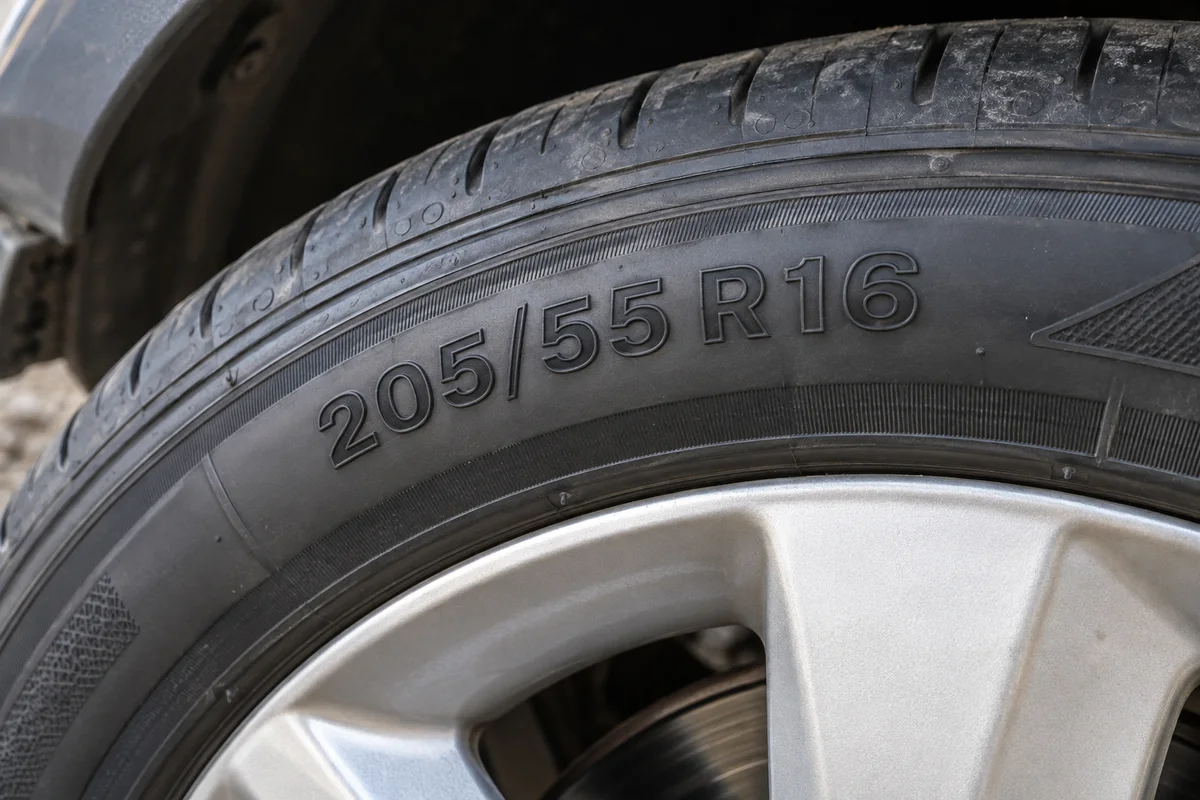
In a common passenger-car marking such as 205/55 R16, the first number describes nominal width in millimetres. The second is the sidewall height expressed as a percentage of that width, not a height in millimetres. The letter identifies radial construction, and the final number describes the rim diameter in inches. Mixing those units is a common source of confusion.
This means two tyres ending in R16 can still be very different sizes. The width and aspect ratio affect the overall dimensions, while the wheel itself must also be suitable. Do not choose a replacement because the diameter matches and the tyre seems close enough in a photograph. A tyre professional should confirm the complete approved fitment for the vehicle.
Copy what follows the size
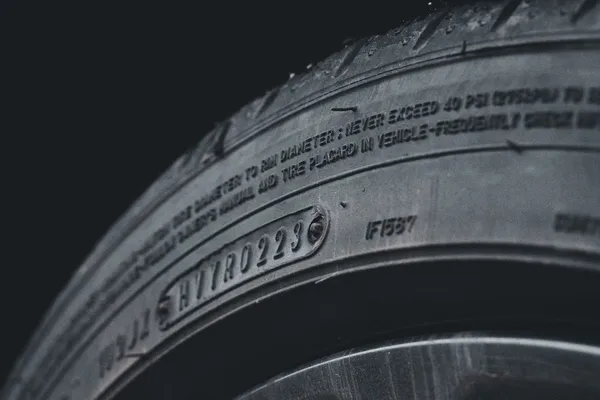
The nearby load index and speed symbol are also part of the specification. Additional markings can identify reinforced construction, manufacturer-specific approval or other features relevant to the vehicle. Take a clear photograph of the complete marking rather than typing only the three most familiar numbers into a shopping search. Check both axles because some cars legitimately use different sizes at the front and rear.
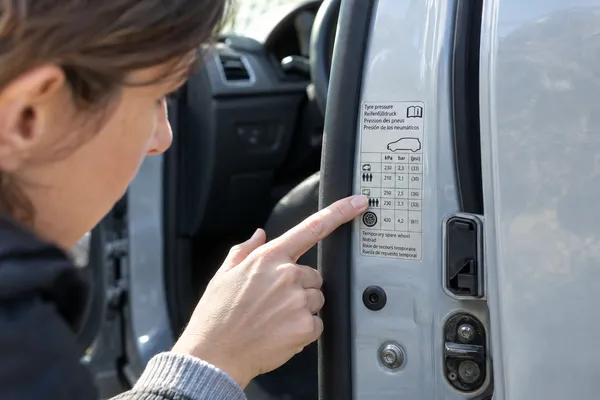
Compare the fitted tyres with the vehicle’s handbook, pressure label or manufacturer-approved information. The tyres currently on a used car are evidence of what is fitted, not proof that it is correct. If the size does not agree with the documentation, resolve the discrepancy before buying another matching tyre. Repeating an earlier owner’s mistake can make a simple replacement more expensive later.
Use the information to ask a better question
When requesting a quote, provide the vehicle details and the full specification, including any front-to-rear differences. Ask the supplier to confirm compatibility instead of asking only whether a particular size is available. If you are considering another wheel size, that becomes a separate fitment question involving more than the tyre’s visible diameter. Obtain vehicle-specific advice before making the change.
After fitting, check that the invoice and the markings agree with the approved order. Keep the details so a future replacement does not begin with another uncertain search. Understanding the code is useful because it helps you communicate accurately; it does not remove the need to confirm which combinations the car manufacturer permits for your exact vehicle and equipment.