Deal with the immediate situation
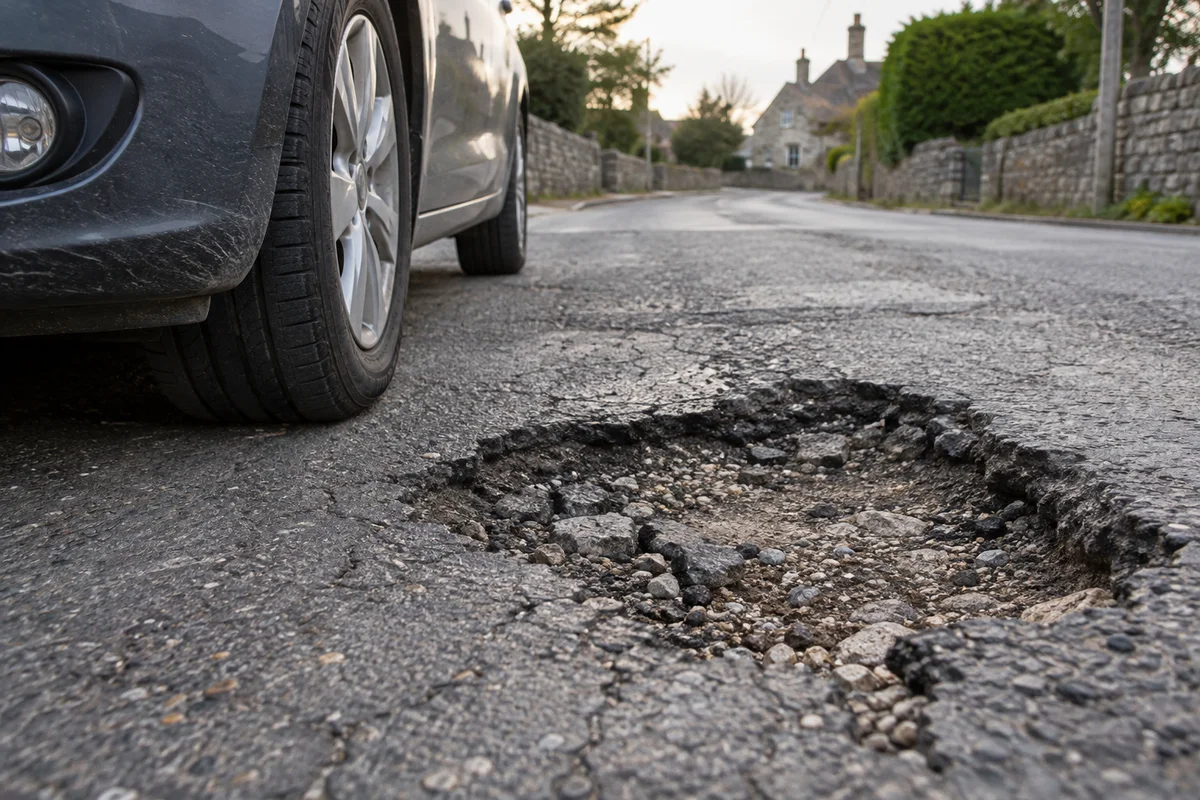
If an impact is followed by strong vibration, loss of pressure, unstable steering or another serious change, slow and stop safely as circumstances allow. Contact assistance rather than trying to reach a convenient workshop on a potentially damaged wheel. Do not stop abruptly in a dangerous place merely to inspect the pothole or obtain a photograph for a claim.
Once the car is safely parked, look at the accessible wheel and tyre from outside. A cut, outward bulge, visibly low tyre or damaged rim is a reason to obtain professional advice. Keep clear of traffic and do not reach behind the wheel or crawl underneath. Some damage is hidden on the inner side or inside the tyre, so a tidy outer face cannot rule it out.
Keep a useful account of the impact
Record which side was involved and what you noticed immediately afterwards. A pressure warning, an off-centre steering wheel or a new sound is useful information, even if it later disappeared. Photograph accessible damage from a safe position. If you record the location of the road defect, do so without walking into traffic or revisiting an unsafe place simply for evidence.
Avoid repeatedly inflating a leaking tyre to see whether it eventually settles. Likewise, do not ask a passenger to watch a wheel while you drive past or deliberately repeat a speed that caused vibration. The observations already available are enough to request an inspection. The workshop can use appropriate equipment to examine the tyre, wheel and related components without relying on a risky demonstration.
Ask what was checked
A significant impact may justify checking tyre integrity, wheel condition and suspension or steering components as appropriate. Alignment can be affected, but an alignment adjustment alone does not repair physical damage. Ask the workshop to distinguish inspection findings from recommended adjustments and replacement work. If a tyre is removed, internal damage may become visible that could not be assessed from your roadside photograph.
Keep the report and invoice with any photographs. If the car develops a new pressure loss or handling change after an initial check, report it promptly rather than treating the first inspection as a permanent guarantee. The point is not to assume every pothole destroys a wheel. It is to recognise when an impact has changed the evidence and to investigate that change safely.