Learn the routine while parked safely
An electronic parking brake replaces the familiar hand lever with a control and an electrical system. How it applies, releases and interacts with other functions varies by model. Read the vehicle’s instructions while parked somewhere safe, including the required pedal, ignition or door conditions. Do not learn the system by experimenting with its switch while the car is moving.
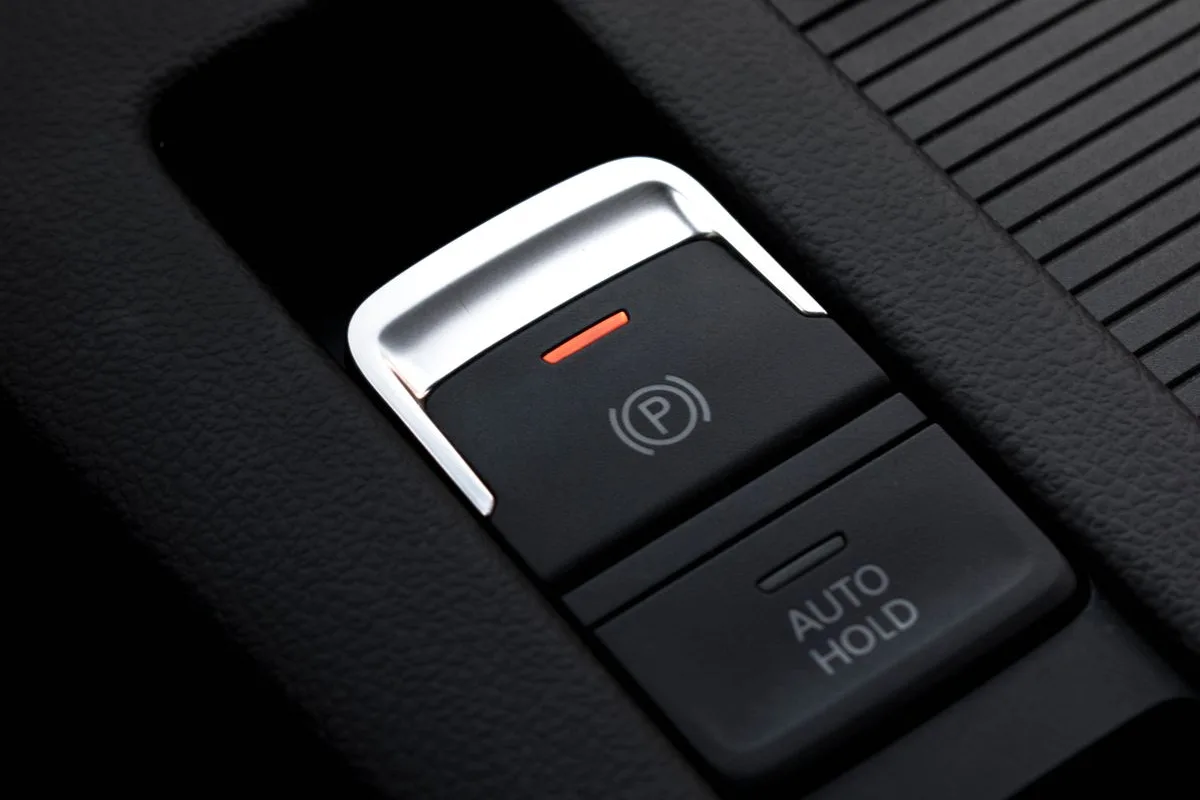
Identify the normal confirmation symbol and any fault indication. Automatic application can depend on settings or circumstances, so a previous occasion when the car applied it by itself is not a universal promise. Follow the complete parking procedure for the transmission and location. Before leaving, make sure the vehicle is secured as instructed rather than relying only on the absence of movement for a moment.
Separate parking from a temporary hold
Auto Hold and similar functions can keep the car stationary during a brief stop, but their operation is not identical to the parking brake. Some vehicles transfer between functions under certain conditions; others behave differently. Learn which indication belongs to each system. A symbol seen at a traffic light should not be treated as proof that the car is ready to be left unattended.
Automatic release may also depend on conditions such as the selected gear, seat belt or door status. If the car does not release as expected, stop and check the handbook rather than forcing it to move with more accelerator. A warning, unusual noise or failure to secure the vehicle requires appropriate assistance. Repeatedly cycling the switch is not a repair for an unresolved fault.
Know when ordinary use stops
A weak electrical supply or system fault can affect the parking brake’s operation. Recovery procedures are vehicle-specific and may need specialist equipment. Do not pull an unfamiliar cable, disconnect parts or follow another model’s emergency-release video. Tell the assistance provider that the vehicle has an electronic parking brake and describe whether it appears applied, released or uncertain.
Brake servicing can require a designated workshop procedure or service mode. Leave that work to a qualified professional rather than trying to retract components with improvised tools. For everyday ownership, the useful skills are simpler: understand the normal sequence, recognise its confirmation and notice when the sequence changes. Those habits make a convenient automatic system easier to use without depending on assumptions about what it has done.