What the percentage is for
An oil-life display helps decide when an oil change is due. Depending on the vehicle, the calculation may consider time, temperature and operating conditions rather than simply counting kilometres. Ford, for example, describes a system that accounts for factors including engine temperatures, idling and towing. Your car may use a different method, so its handbook is the place to establish what the display means.
Do not read 50 percent as a promise that exactly half the original protection remains under every possible condition. It is also not a measurement of how much oil is in the sump. A vehicle can have time left before its scheduled change and still have a low level or a lubrication fault requiring immediate attention. Different dashboard messages answer different questions.
A changing estimate is not necessarily a fault
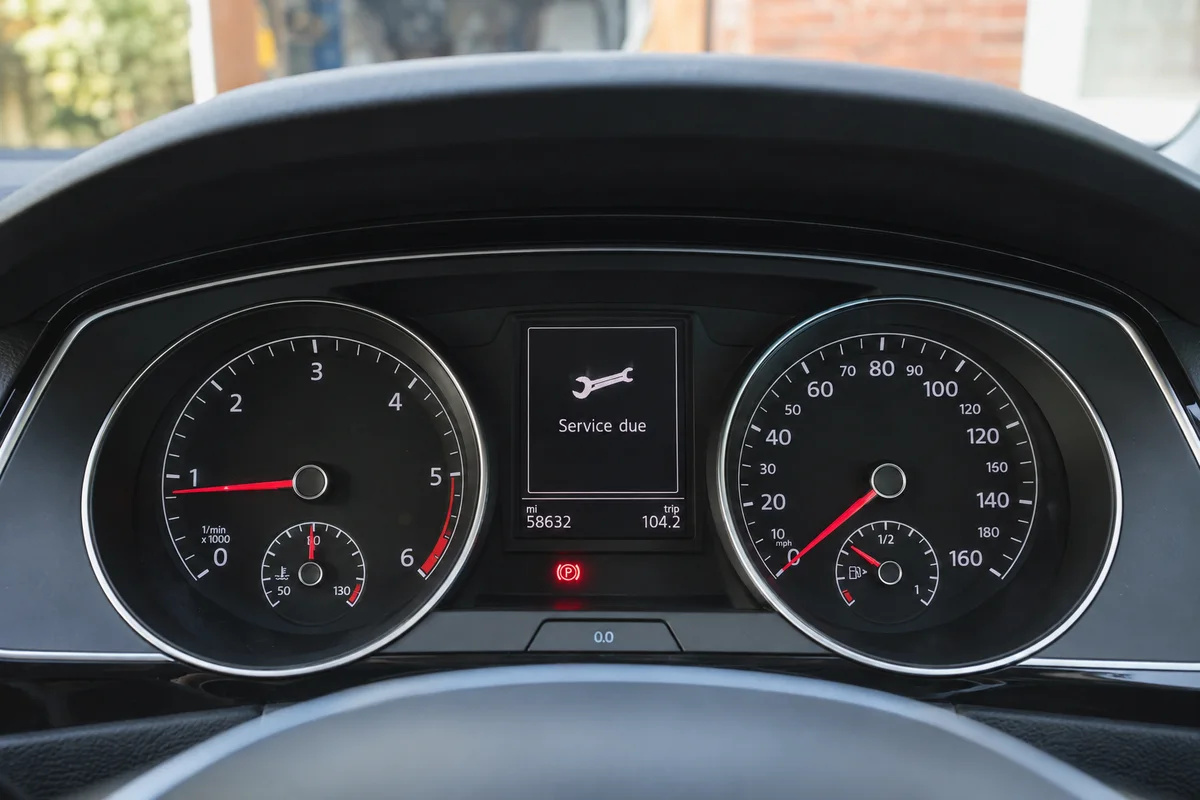
If the expected distance to service falls faster after several weeks of short journeys, the calculation may be responding to use. Record the message and compare it with the service instructions instead of resetting it to make the number look comfortable. A service reminder should be reset only when the corresponding work has actually been completed, using the correct procedure for that model.
After a workshop visit, check the invoice before assuming the reminder was forgotten. Some appointments cover tyres, an inspection or another repair without an oil change. If oil and filter replacement are listed but the display still shows the old reminder, contact the workshop. Conversely, a reset display without supporting records does not prove that fresh oil was installed.
Keep the calendar beside the screen
Follow any maximum time or distance limit stated by the manufacturer, even if a screen appears reassuring. Other maintenance items can fall due independently: an oil-life estimate does not track every filter, fluid or belt. Keep those dates in the service record instead of expecting one percentage to represent the whole car.
When buying a used vehicle, ask for the dated invoice behind the latest reset. When an oil-pressure warning appears, act on the warning rather than consulting the service countdown. Separating these functions makes the dashboard easier to understand: one plans maintenance, another reports a possible problem that cannot wait for the next scheduled appointment.