Resist the obvious first move
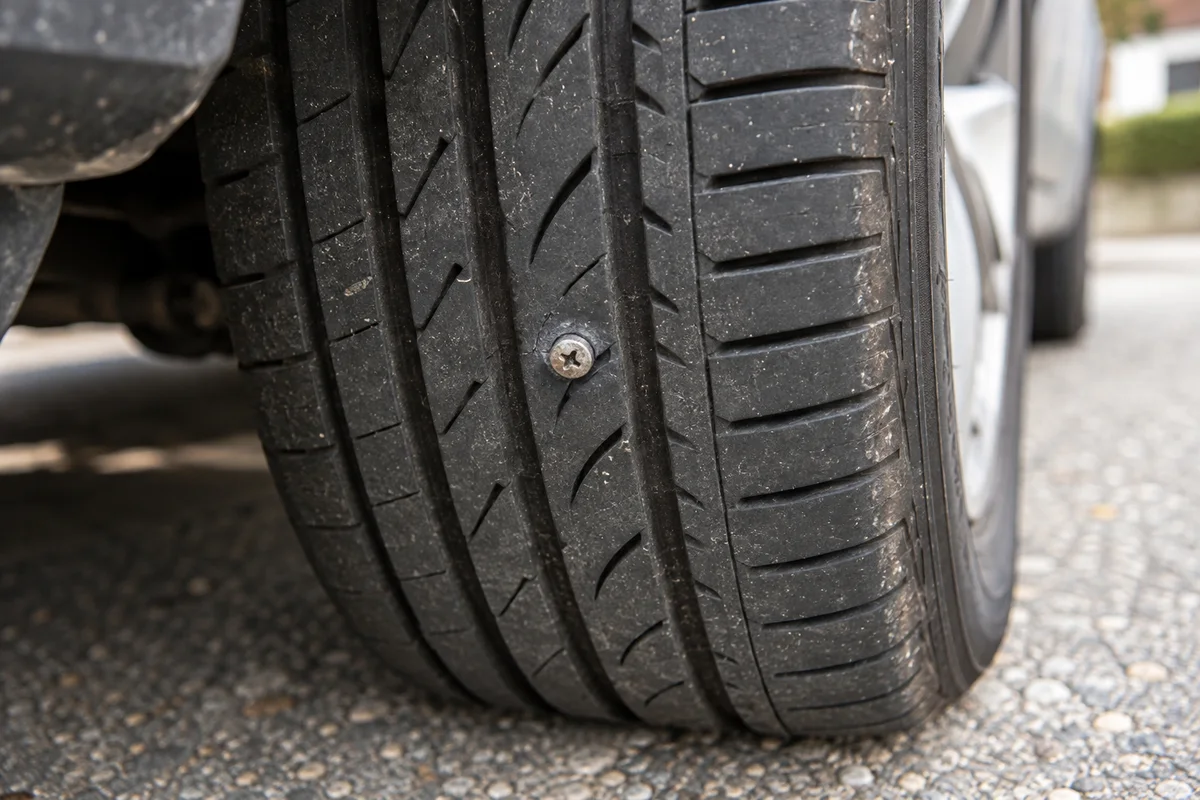
A nail head in the tread invites a simple reaction: pull it out and see what happens. That can turn a slow leak into a much faster one. Leave the object in place while arranging advice, and do not push it farther into the rubber. Its position is useful information for the person who will inspect the tyre properly.
Look at the whole situation from a safe place. A tyre that is visibly low, an active pressure warning, unusual handling or obvious damage changes the immediate priority to stopping and obtaining assistance. Do not keep driving to test whether the nail is really causing a problem. If the car is already parked safely, there is no reason to create a journey just to gather more symptoms.
A photograph is more useful than a guess
Note the affected wheel and photograph the object without putting yourself in traffic or underneath the car. Show its position relative to the tread and shoulder. Tell the tyre service whether the car has been driven with low pressure and whether any sealant has been used. Those details can affect the inspection and possible repair, even when the hole itself looks small.
Pressure that appears normal at one moment is not a guarantee that it will remain so. The visible head also does not reveal the path of the object or damage inside the tyre. Avoid promising yourself that a central-looking puncture will certainly be repairable. The professional needs to assess the tyre’s condition and the applicable repair criteria, not simply look at the nail head.
Arrange the next step before moving
Contact a tyre professional or assistance provider and follow advice appropriate to the tyre’s condition and your location. If an emergency kit is being considered, read the vehicle and kit instructions first; it may be unsuitable for the damage or circumstances. Temporary mobility measures are not substitutes for a proper inspection. Never attempt a roadside repair where approaching traffic makes working unsafe.
After the tyre has been assessed, keep the repair or replacement details with the vehicle records. Ask whether anything needs checking after the work, including pressure-monitoring procedures relevant to the car. A small piece of metal can lead to a straightforward repair or to replacement. What makes the response sensible is preserving safety and evidence until that decision can be made.