Give the measurement a location
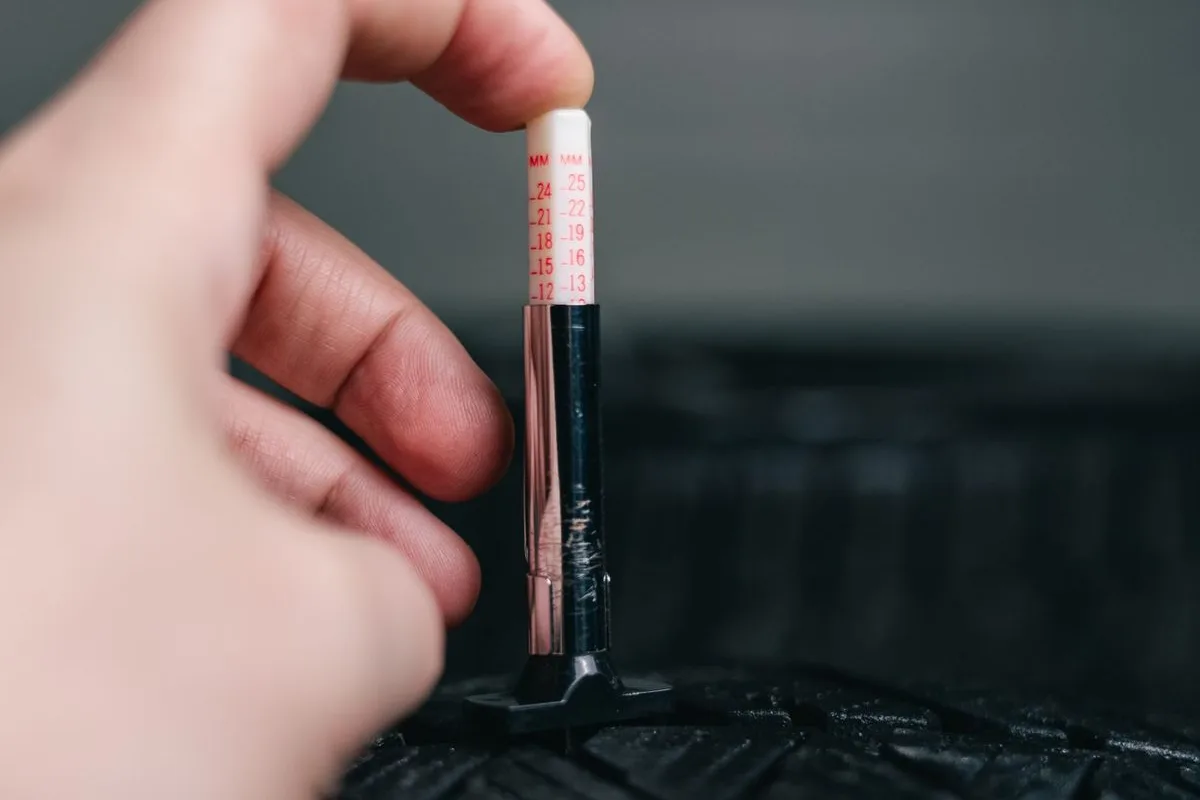
Park securely on level ground before looking at the tyres. Use a proper tread-depth gauge according to its instructions, keeping your hands away from any hot components. Record which tyre you checked and where the reading came from. A number without a location is surprisingly unhelpful when you try to compare it with a measurement taken a month later.
Measure the main grooves at several places across the accessible tread and repeat around the circumference where it is safely possible. Do not crawl under the car or move it while another person is examining a wheel. If access prevents a complete check, a tyre professional can inspect the areas you cannot see. The outside shoulder alone does not represent the whole tyre.
Read the pattern as well as the number
Compare the readings rather than celebrating the deepest one. A low area on one edge, a difference between the two shoulders, or a patch of unusually rapid wear deserves attention even when another groove looks generous. Photograph the pattern with the wheel position noted. Those observations help a workshop decide what else to inspect; they do not diagnose alignment or suspension by themselves.
Raised wear indicators moulded into the grooves provide another reference, but they are not a promise of good performance in every condition. Nor should an indicator from an unfamiliar tyre replace checking the legal requirements that apply where you drive. Different vehicle and tyre categories can have different rules. Ask about replacement before wear reaches the applicable limit, especially when difficult conditions are expected.
Make it a small, repeatable record
Keep the date, mileage and lowest relevant readings together with any photographs. Comparing the same locations next time is more useful than measuring a random easy groove each time. A new pattern or a quick change can matter more than a single isolated reading. Include the rear tyres even if the front wheels are easier to inspect.
Depth is only part of the decision. Cuts, bulges, age-related deterioration and repeated pressure loss can require action while plenty of tread remains. Have questionable damage assessed rather than allowing a good gauge reading to overrule it. The aim is to understand the condition of each tyre, not to find one reassuring number that lets the whole set disappear from attention.