Look at the lens in daylight
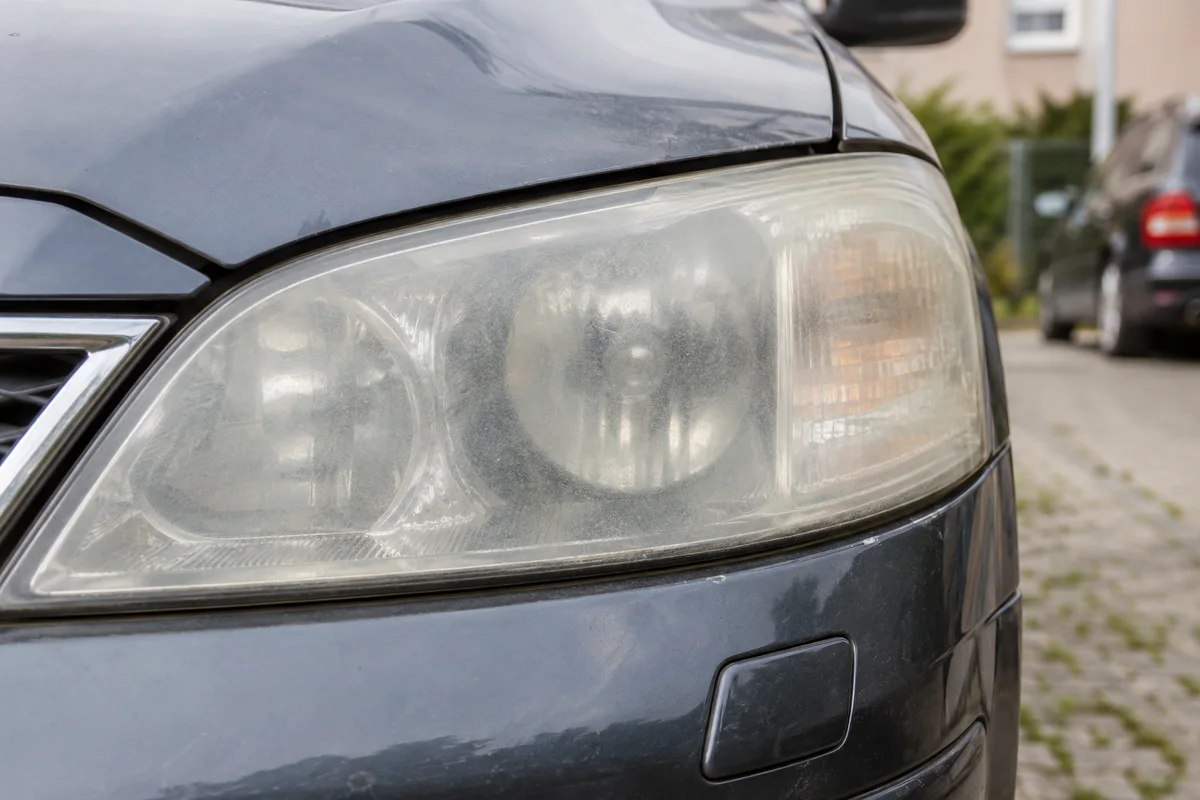
Inspect the headlamp with the lights off and the car parked. Ordinary dirt, insects and road film should be removed with a suitable gentle wash first. Once the surface is clean, a persistent yellow or cloudy appearance may indicate deterioration rather than dirt. Compare the two sides, but remember that both can age together; matching appearances do not prove that either is performing well.
AAA testing has shown that deteriorated headlamps can lose substantial light output. That does not mean every cloudy lamp has the same measured loss, but it explains why the issue deserves more than a cosmetic shrug. If night visibility has changed, inspect the windscreen and lamp condition as well as considering whether a bulb has failed.
Decide what kind of problem it is
Moisture inside the unit, a cracked lens and surface oxidation are not the same repair. A quick polish cannot fix a broken seal or damaged internal component. Take a clear photograph and ask a workshop or lamp specialist to identify the condition. Mention recent impact damage, replacement bulbs or a change that appeared suddenly rather than gradually over several seasons.
Avoid abrasive household experiments or a strong solvent chosen from an online tip. They can remove protective coatings or damage plastic. If restoration is appropriate, ask what preparation and protective finish are included, how long the result is expected to remain serviceable and whether replacement is more suitable for the particular unit. A shiny appearance immediately after treatment is only part of the outcome.
Check the light after the work
Headlamp aim and correct bulb installation still matter even with a clear lens. Ask for an appropriate check after restoration, replacement or work that could affect alignment. Do not compensate for poor output by installing an unapproved brighter lamp or altering the beam pattern. More glare for oncoming drivers is not an acceptable substitute for useful illumination of the road.
Keep the work record and monitor the condition during ordinary washing. If cloudiness returns quickly, discuss the result with the provider instead of repeatedly removing more surface material. The goal is dependable, correctly directed lighting, with an intact lamp assembly—not simply two transparent-looking patches on the front of the car.