Clean outside the system
With the car parked and the engine off, inspect the area around the fuel flap before the next refill. Remove loose dirt gently so it does not fall toward the opening. Follow the vehicle’s cleaning guidance and avoid directing a high-pressure jet into the filler recess. You are cleaning the surrounding bodywork, not flushing the fuel system or proving that every visible hole is a drain.
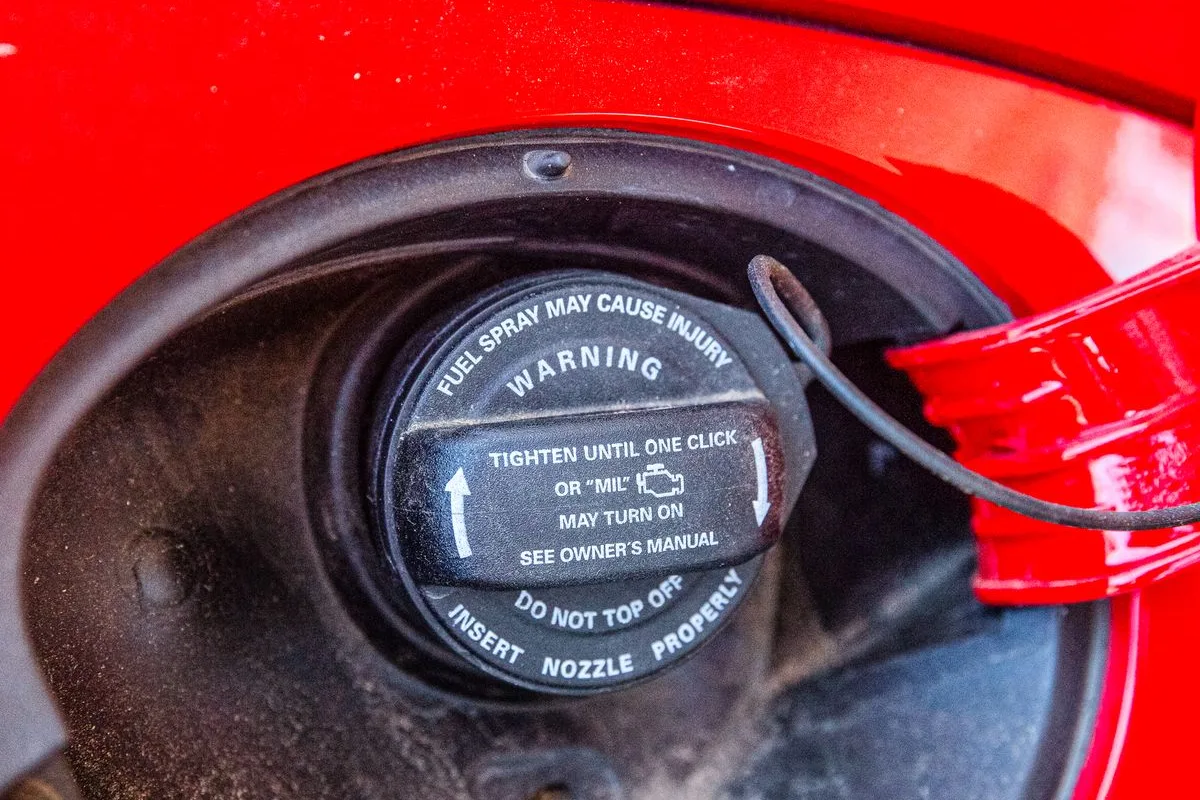
Some cars have a removable cap, others a capless mechanism, and some have more than one nearby fluid opening. Learn the arrangement from the handbook. Do not push tools into a capless filler to see how it works. If emergency filling requires a special funnel, keep the specified item available and understand its instructions before an actual need arises.
Closing should feel normal
After refuelling, close the cap or flap using the prescribed method. A cap may need a particular engagement, but the number of clicks is not universal. Make sure a tether has not become trapped and that the flap sits normally. If a part resists, does not latch or appears damaged, do not force it with a screwdriver or add an unapproved lubricant.
A missing or damaged cap should be replaced with the correct component, not an improvised plug. Tell the workshop if the problem began after a repair or a difficult filling-stop experience. If a warning appears soon after refuelling, note the timing, but do not assume the cap explains every engine light. Persistent warnings require the appropriate diagnosis.
Treat fuel odour as a separate concern
A strong or continuing fuel smell, visible leakage or wetness that does not match a small known spill needs prompt attention. Keep ignition sources away and follow the vehicle and filling-station safety instructions. Do not start the car simply to see whether the smell disappears. Describe where and when it occurs to professional assistance.
For ordinary maintenance, a clean recess and an intact, correctly closed mechanism are enough. There is no benefit in dismantling a working filler or coating its seals with whatever product is in the garage. Keep receipts for replacement parts and report recurrent difficulty before a routine fuel stop turns into an inconvenient roadside problem.