Know which filter you are discussing
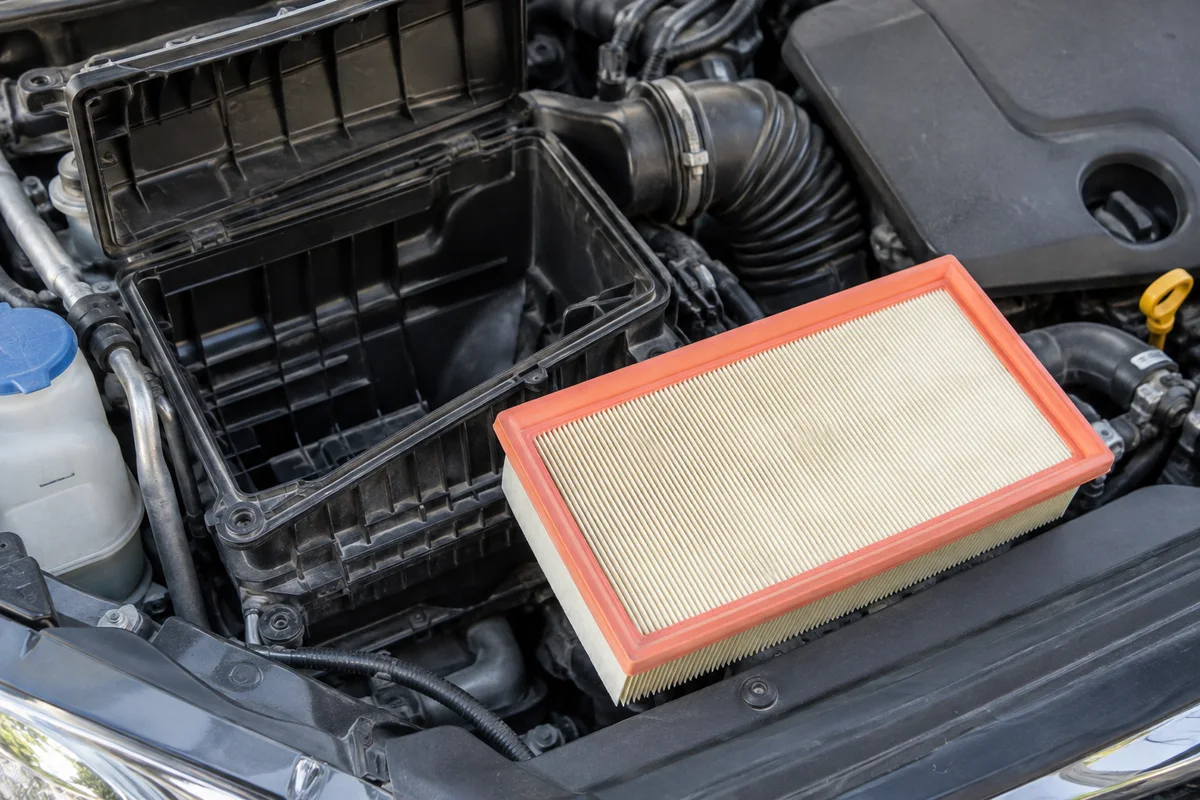
The engine air filter sits in the intake path, keeping unwanted particles from entering the engine. It is not the pollen filter that affects air entering the cabin. When checking a service quote, make sure the named part is the one you intend to replace. A generic filter package can hide this distinction, especially when an invoice uses shortened descriptions.
The replacement interval depends on the engine and operating conditions. Dusty use can matter, but there is no useful universal rule based only on how brown the material looks in a photograph. Consult the schedule and recent invoices first. If a garage recommends an early change, ask what condition they found and whether the recommendation follows the applicable maintenance guidance.
Opening the housing creates a responsibility
Only inspect the element yourself if the handbook permits it and the access procedure is clear. Work with the engine off and avoid dropping dirt into the clean side of the intake. Housings can use clips, screws, hoses or sensors that should not be forced. If something must be disconnected and you are unsure of its purpose, leave the job to the workshop.
Do not knock a disposable filter against a wall, wash it or blast it with compressed air unless the product manufacturer explicitly specifies that treatment. Damage may be difficult to see afterward. A reusable aftermarket element has its own care requirements and should not be assumed to improve the original system simply because it is marketed as washable.
A proper fit completes the job
The correct replacement should sit evenly with its seal properly located. A trapped edge or badly closed housing can let unfiltered air bypass the element. Reassemble according to the instructions, check that clips and connections are secure and remove tools from the engine bay. Never run the engine with an open intake just to see whether it sounds more powerful.
Record the date, mileage and part used. If poor running or a warning prompted the inspection, do not assume that a new filter has proved the fault solved. Describe the original symptom and verify the result through the appropriate diagnostic process. Routine filter maintenance and finding the cause of a running problem are related tasks, but they are not interchangeable.