Find the right container first
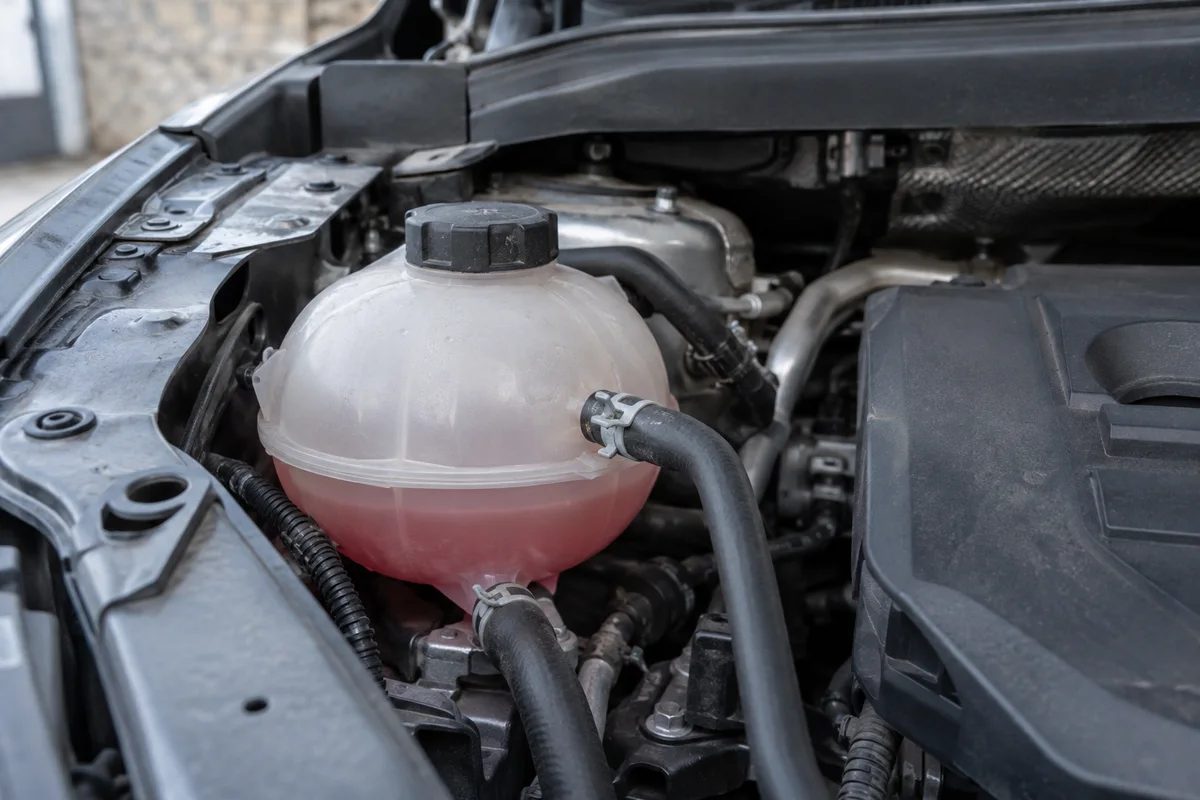
Engine bays contain several reservoirs, and some hybrid or electric vehicles have more than one cooling circuit. Use the handbook diagram to identify the container you are supposed to check. Do not rely solely on the cap colour or a memory from your previous car. If the reservoir is hidden or the instructions reserve the task for a workshop, a guessed inspection is not an improvement.
Park on level ground and allow the engine to become cold. Look at the level through the translucent reservoir against its marked range. A torch held outside may help you see the boundary. Opening the cap is usually unnecessary for this observation. Never remove a cooling-system cap while the system is hot: pressure can release scalding liquid and steam.
A low reading is information
If the cold level is below the specified range, note it and check the handbook’s advice. Use only the approved fluid and mixture if topping up is permitted and necessary. Colour alone does not establish compatibility. Do not fill above the cold maximum to create a reserve; the system needs the space designed for expansion as temperature changes.
Repeated additions are not routine maintenance to accept indefinitely. Record when and how much was needed, and arrange an inspection. You might notice staining near a hose joint or liquid beneath the car, but looking is enough: do not reach near fans or hot components, loosen hoses or crawl under an unsupported vehicle. A lack of visible leakage does not prove the system is sound.
Keep a warning separate from a routine check
An overheating warning, steam or a suddenly empty reservoir is not the same situation as a small difference noticed during a calm weekend inspection. Stop safely, switch off and obtain assistance according to the vehicle instructions. Do not pour cold liquid into a hot system or repeatedly restart the engine to see whether the warning disappears.
After a repair or a permitted top-up, establish a new cold reading and retain the details of the fluid used. Ask the workshop whether any follow-up check is needed. Comparing cold readings under similar conditions helps reveal a real change without confusing normal expansion with an unexplained loss of coolant.