Why matching colours can fail
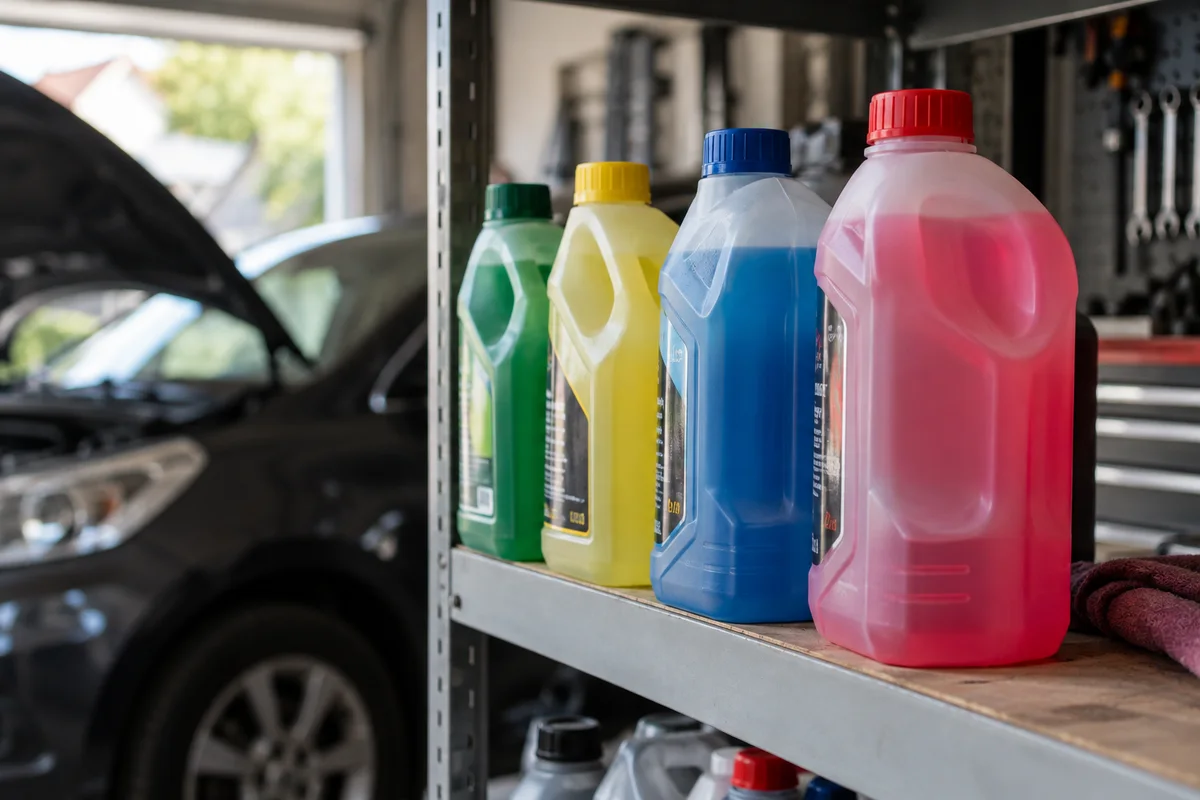
Coolant contains more than a coloured liquid that resists freezing. Its formulation is intended to work with the materials and operating conditions of a particular cooling system. Dyes help distinguish products, but there is no universal colour chart that makes every pink coolant compatible with every other pink coolant. A bottle can look right while still being the wrong choice.
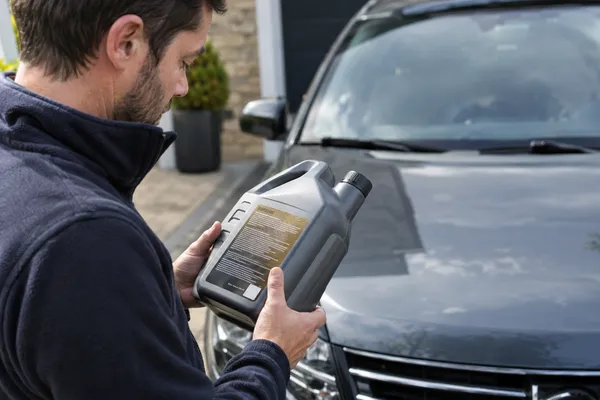
Start with the required specification in the vehicle’s handbook or current manufacturer guidance. Confirm the exact engine and model year, especially if the car has several cooling circuits. When a parts supplier recommends a product, ask them to identify the applicable approval or compatibility information rather than simply saying that the colour matches. Keep that reference with the maintenance record.
Ready mixed and concentrate are different purchases
Read whether the product is supplied ready to use or requires dilution. A ready-mixed bottle should not receive extra water merely because somebody always used a half-and-half mixture on an older car. A concentrate needs the dilution and water quality prescribed for that product and application. Guessing can reduce the intended protection instead of improving it.
Do not decide to mix an unknown fluid with a new one because the amount seems small. If the existing coolant cannot be identified, ask the workshop how to proceed. A proper assessment may be more useful than accumulating several partly used bottles. The workshop can also explain whether the system needs a scheduled replacement rather than just an occasional top-up.
Treat a colour change as an observation
An unfamiliar brown appearance or visible contamination is a reason to ask for inspection, not a reliable diagnosis from a photograph. Age, reservoir staining and fluid condition can affect what you see. Avoid home chemical experiments or additives intended to conceal a leak. Describe when the appearance changed and whether the cold level has also fallen.
Carry out any permitted level check only when the engine is cold, and never open a hot pressurised cap. Repeated coolant loss needs investigation regardless of how carefully you choose the replacement fluid. The useful outcome is a known, correct coolant in a sound system, with its service date recorded—not a reservoir whose colour happens to resemble a picture online.