Set up a safe check
Park away from moving traffic, secure the vehicle and choose conditions in which the lamps are easy to see. A helper makes checking brake lights much simpler, but agree on the sequence before operating controls. Nobody should stand behind a vehicle that could move unexpectedly. Keep the engine off where the lighting system permits, and follow the handbook for any function that needs a particular ignition mode.
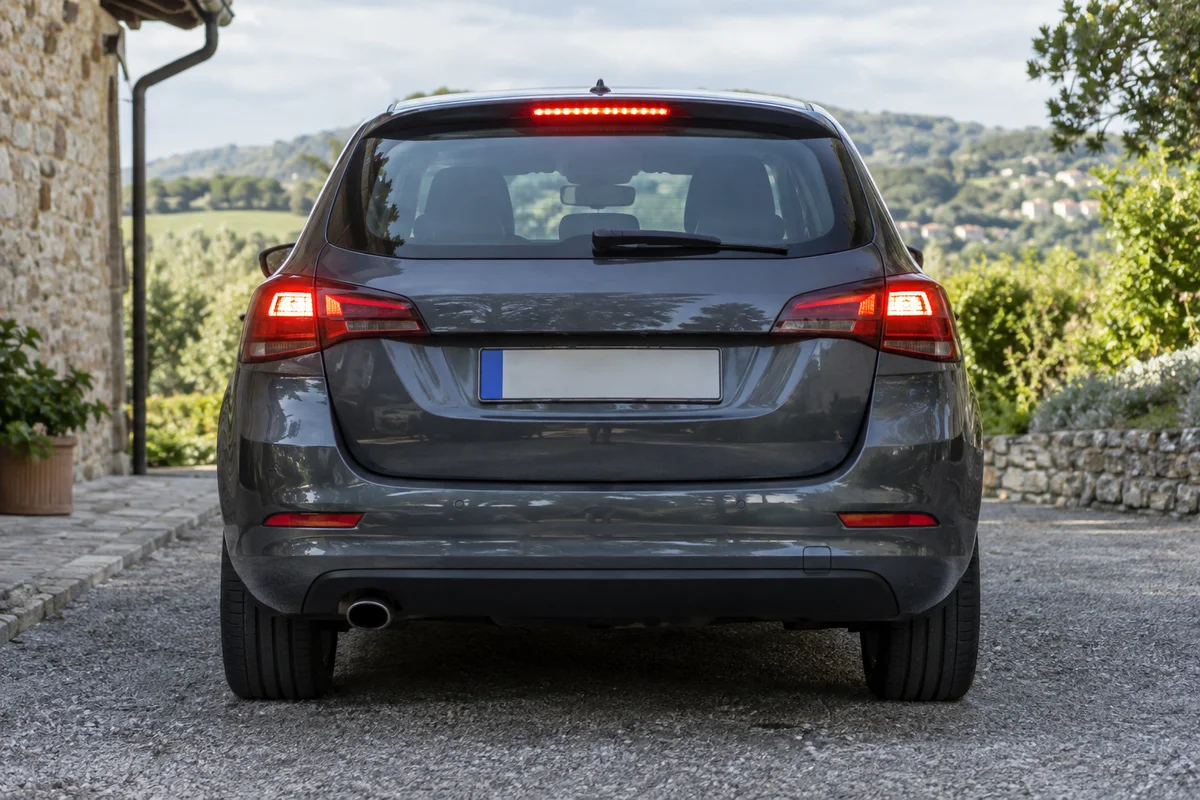
Work through sidelights, dipped and main beams, indicators, hazard lights, rear lights and number-plate illumination as fitted. Include fog lamps where relevant. Daytime running lights are not proof that every lamp required in darkness is working. Automatic lighting also needs understanding: a bright dashboard does not necessarily mean the rear lights have been switched on.
Observe both sides and the lens
Look for an unlit lamp, a markedly different brightness or an unusual flashing rate. Note the exact position and function rather than reporting that the back light is broken. One assembly may contain several separate functions. Also inspect lenses for dirt, cracks or obvious damage; a working bulb behind a heavily obscured lens may not provide the visibility you expect.
For reversing lamps, use the vehicle’s safe stationary procedure and a competent helper if needed. Do not leave an unsecured car in gear or stand in its path to obtain a photograph. If the check cannot be done safely at home, ask the workshop to include it. A reflection can sometimes help, but it should not encourage an unsafe setup.
Match the repair to the lamp
Some lamps have owner-replaceable bulbs; others are sealed LED units or involve high-voltage equipment. Check the manual before opening an assembly. The replacement must have the correct specification and fitting, and a repeated failure needs investigation rather than a growing collection of spare bulbs. Avoid modifications that change the approved lighting arrangement.
After work, repeat the relevant check and have headlamp aim assessed when appropriate. Keep the lenses clean using suitable products. If a safety-critical lamp fails before a night journey, resolve it before leaving instead of relying on the other side. The walk-around is valuable precisely because it checks what other road users can actually see.