Describe the sound without naming a part
Tell the workshop whether the sound is a brief squeal, a repeated squeak or a continuous noise. Note whether it happened during ordinary braking, while manoeuvring or after the car had been parked. Distinguish what you heard from what you assume caused it. Saying that a front corner seemed louder is more useful than insisting that a particular pad must be faulty.
Include the conditions you already noticed: wet weather, the first journey of the day or recent brake work. Do not repeat hard stops or drive with a phone in your hand to capture a recording. If a passenger can safely record an existing sound during an otherwise necessary journey, it may help, but no recording is worth creating another safety problem.
Put performance ahead of the noise
A squeal alone does not reveal the condition of the entire braking system. A changed pedal, reduced braking, pulling, grinding, smoke or a warning message makes the situation more urgent. Stop safely and obtain assistance if braking is affected or the car seems unsafe. Do not let an explanation about ordinary brake noise override a real change in the way the vehicle stops.
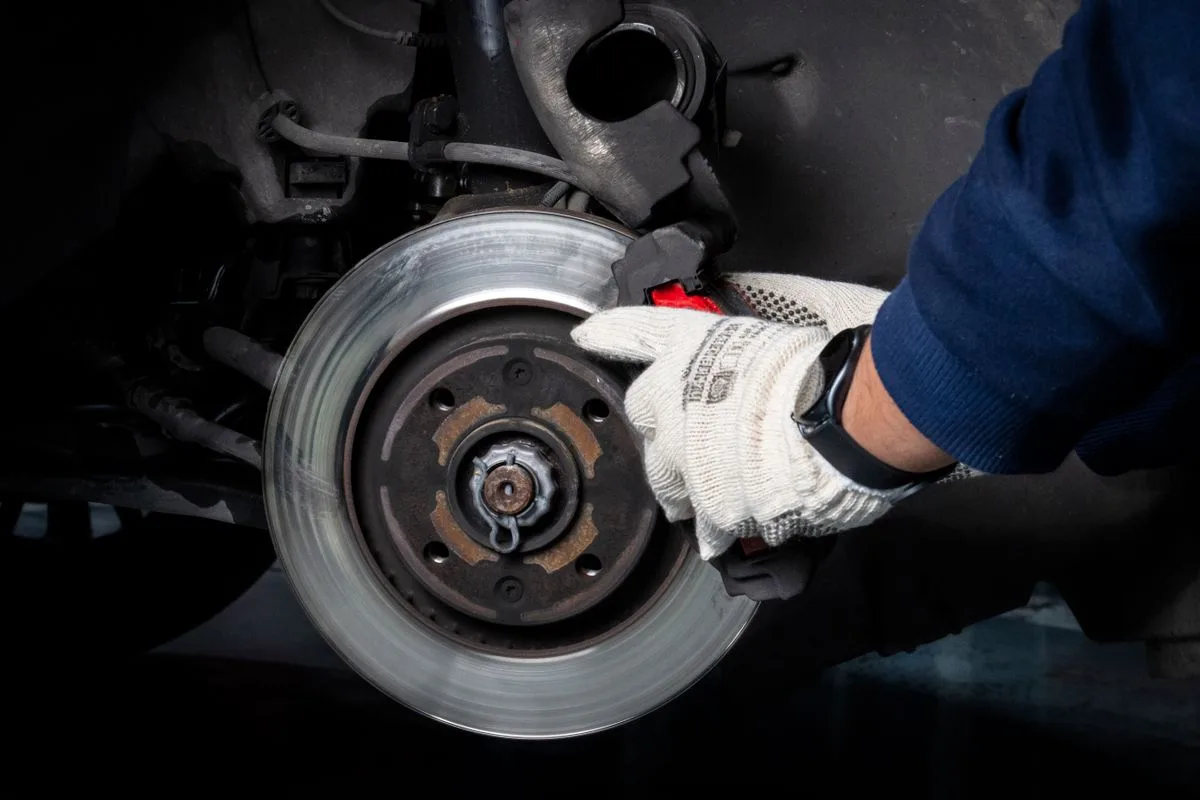
Even without those additional signs, persistent or new noise deserves professional assessment. Brake noise can arise from several interacting components and conditions. The visible outer pad or a clean-looking disc does not show everything that matters. Leave dismantling, lubrication and adjustment to a qualified professional; spraying a household product near friction surfaces can create a much more serious problem than the original sound.
Make the appointment specific
Mention when the pads or discs were last changed and provide the invoice if available. If the noise began immediately after work, contact that workshop promptly and describe the timing. Ask what inspection is proposed and whether the vehicle should be driven in the meantime. A booking several days away is not itself a judgement that continued use is safe.
After inspection, ask for the finding in plain language and any follow-up instructions. If the sound remains, note whether it is unchanged or accompanied by something new, then report that rather than repeatedly accepting the same vague reassurance. The aim is neither to panic at every brief squeak nor to dismiss all noise as normal. It is to connect the sound with a proper assessment of braking condition.