Do not use another journey as the test
If a harsh grinding or metal-on-metal sound appears during braking, treat it as a reason to stop safely and seek professional advice. Reduced braking, a changed pedal, pulling or a warning makes the need for assistance particularly clear. Do not continue commuting while waiting to see whether the sound becomes more consistent. An intermittent noise can still accompany a significant problem.
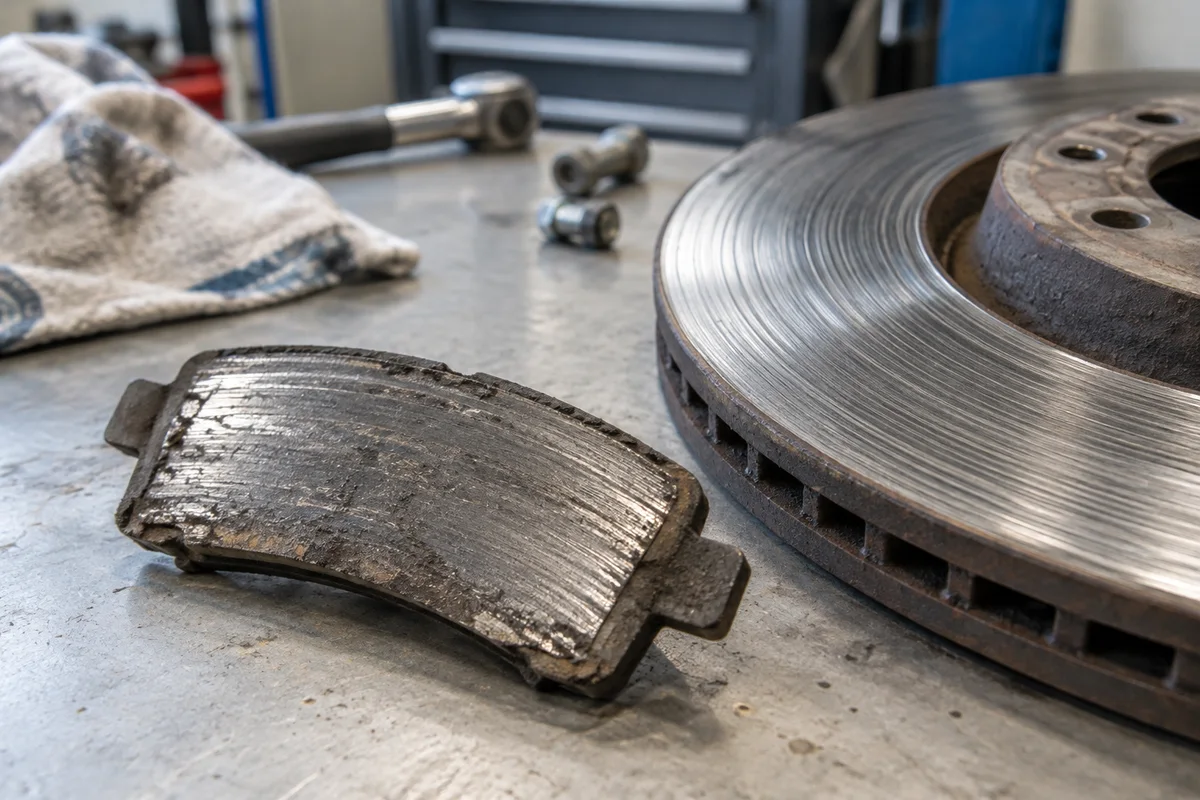
The sound does not prove a single diagnosis. Severely worn friction material is one possibility, but other faults or debris can also create scraping noises. That uncertainty is a reason for inspection, not a reason to keep driving. A nearby workshop cannot judge the full condition over the telephone, so describe the symptoms and ask about a safe way to get the vehicle assessed.
Preserve the information without touching the brakes
Once safely stopped, note when the sound began and whether it occurred with the pedal pressed or also while the car was moving without braking. Record any warning message and recent work. Do not reach through the wheel to feel a disc or caliper; brake components may be very hot. There is no need to dismantle anything to provide a useful initial account.
Avoid spraying cleaner, lubricant or water around the wheel in an attempt to change the noise. A temporary change would not establish that the fault has been repaired, and contamination can affect braking. Do not ask someone to stand beside the car while you roll it back and forth to locate the sound. The professional can perform an inspection under controlled conditions.
Keep the repair decision connected to the findings
Ask the workshop to explain what is damaged and whether related components need inspection. If worn pads have affected a disc, the quote should distinguish those findings from unrelated recommendations. Brakes are a system, and a repair should follow the vehicle and component requirements rather than replacing whichever visible part seems easiest. This is work for a qualified professional with appropriate equipment.
Before the car returns to use, obtain confirmation that the reported fault has been addressed and ask for any relevant follow-up instructions. Keep the invoice and report a recurring noise or altered pedal promptly. Waiting for a routine service can feel economical, but a serious brake symptom changes the timetable. The sensible saving is to prevent further damage and avoid another journey with an unresolved safety concern.