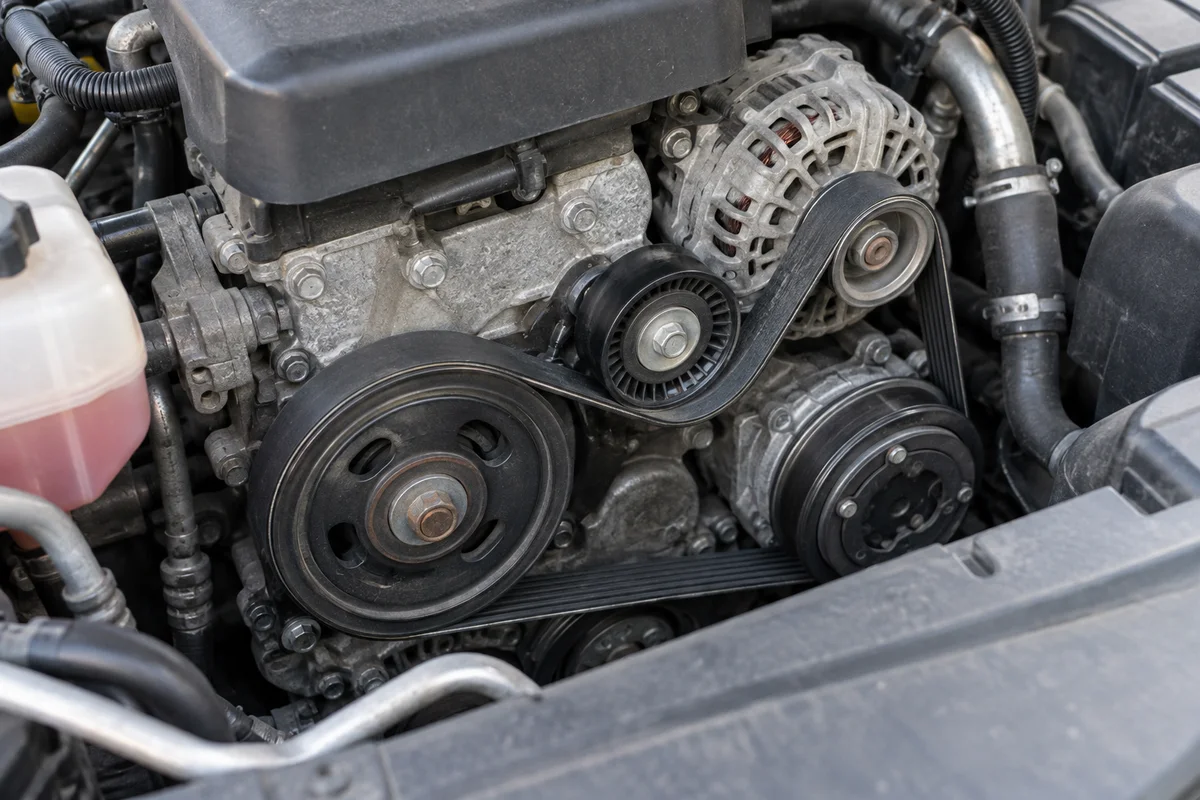
Know what you are looking at
An auxiliary belt may drive equipment such as the alternator or air-conditioning compressor, depending on the engine. The arrangement is not identical on every car, and a visible belt should not be confused with the timing system. Use the handbook or a workshop explanation to identify it. There is no need to reach into the engine bay to prove that you have found the right part.
For an owner’s visual observation, park safely, switch off and keep the key away as appropriate for the vehicle. Remember that cooling fans can start unexpectedly. Do not put fingers, clothing or a phone near belts and pulleys, and never ask someone to start the engine while you stand over the drive. A photograph taken from a safe distance can record an obvious concern without direct contact.
Visible damage is not a complete assessment
Frayed edges, displaced material or a belt that appears out of line are reasons to seek professional advice before further use. Oil or another fluid on the belt also deserves investigation of the source. Do not wipe the belt with solvents, apply belt dressing or try to quiet it with an improvised spray. A changed noise can have several causes, including components around the belt.
Conversely, an apparently smooth surface does not prove that the entire system is healthy. Some wear is difficult to judge without the correct method, and the tensioner or pulley can matter as much as the rubber. Ask the workshop to evaluate the drive as a system when replacement is proposed, and request an explanation of any related parts on the estimate.
Keep symptoms and maintenance separate
A scheduled inspection is different from a sudden squeal accompanied by a charging or temperature warning. If warnings or serious symptoms occur, stop safely and follow the vehicle’s instructions rather than continuing until the next service. What the belt drives determines the consequences of failure, so advice from a different engine may be misleading.
Record the replacement date and mileage when work is completed. If a service invoice says belt changed, ask whether it means auxiliary or timing belt and keep the answer with the record. This small distinction prevents an accessory-belt job from being mistaken for evidence that a much different maintenance requirement has been fulfilled.