Two different measurements
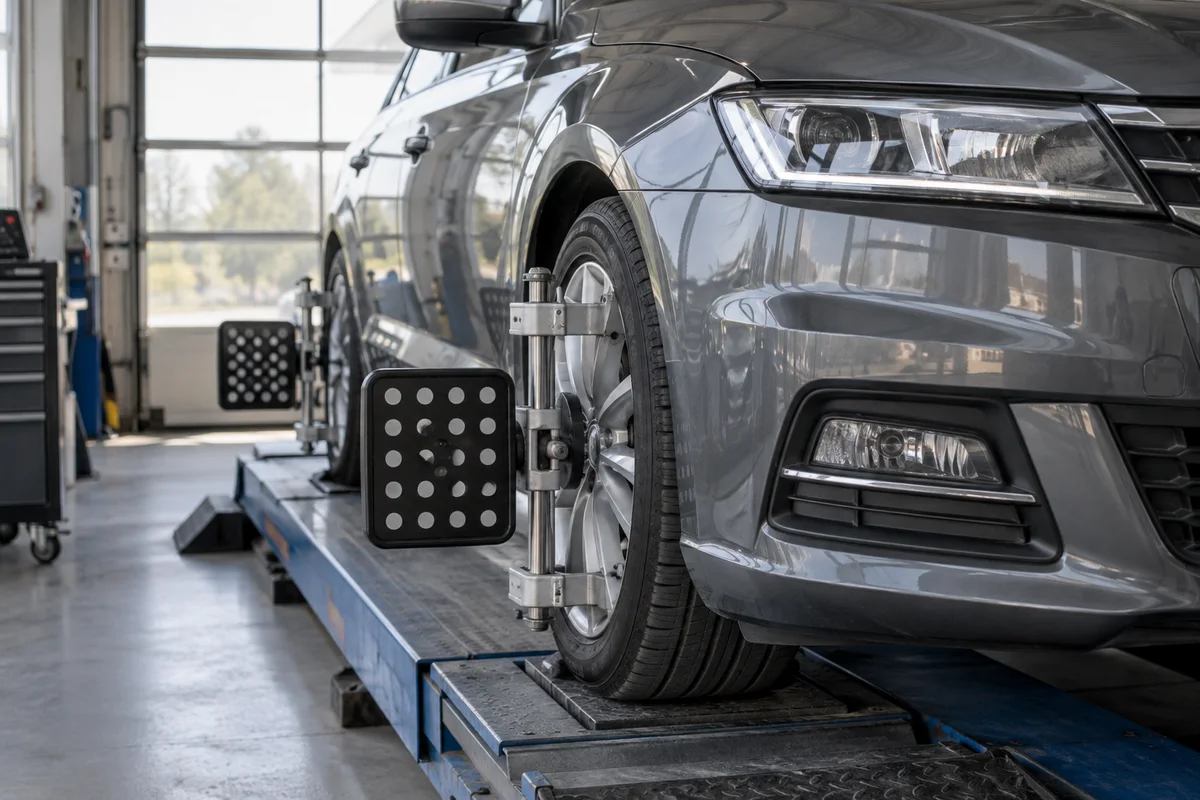
Wheel alignment concerns the angles at which the wheels sit and their relationship to the vehicle’s suspension geometry. The workshop measures them against the appropriate vehicle specifications and makes permitted adjustments. Wheel balancing concerns uneven mass distribution in the rotating tyre and wheel assembly. It is normally assessed using specialist equipment, with corrections made to the assembly as appropriate.
The names are often bundled into a tyre quote, which can make them sound interchangeable. They are not. Balancing does not correct a suspension alignment setting, and adjusting geometry does not repair a bent wheel or every source of vibration. Ask what has been measured and what the proposed service is intended to correct, particularly if the recommendation follows a complaint rather than routine tyre fitting.
Bring observations without choosing a diagnosis
Tell the workshop whether you noticed a pull, an off-centre steering wheel, vibration or uneven tyre wear. Include when the behaviour began and whether there was a recent impact or tyre change. Mention the conditions already observed, such as whether vibration occurred during braking or ordinary cruising. Do not take another high-speed drive or release the steering wheel to produce a more convincing demonstration.
Several faults can create similar sensations, and road surfaces can complicate the picture. Tyre pressure, tyre damage, wheel condition and suspension components may need checking before an adjustment is sensible. A workshop should not use a familiar label to skip those possibilities. If the car feels unstable, has serious vibration or shows visible tyre damage, seek advice before driving it to an appointment.
Ask for a result you can understand
For alignment work, request an explanation of the measurements and any limitations on adjustment. If worn or damaged parts prevent a proper setting, understand the repair plan before paying for repeated adjustments. For balancing, ask whether the wheel and tyre were checked for damage or another condition that weights alone cannot correct. The aim is to address the cause, not merely complete a named procedure.
Keep the report with the tyre records and note the mileage. If the original symptom remains, return to the workshop with that information rather than assuming that a second identical service must solve it. Clear observations and measured results make the next step more focused. Knowing the distinction helps you discuss the work without turning a driver’s description into an unsupported diagnosis.