Describe the complaint before buying a package
Tell the workshop whether the air is never cold, starts cold then warms up, cools differently from left to right or simply smells unpleasant. Include when the problem began and whether the system was recently serviced. These details do not identify a failed part by themselves, but they help the technician choose an investigation instead of starting with an assumed solution.
Ask whether the quoted price covers an initial assessment, a refrigerant service or both. A cabin deodorising treatment and a cabin-filter change can be useful in the right circumstances, but neither is the same as finding a refrigerant leak. A menu item called air-con service can combine several different operations, so the written scope matters more than its short name.
The correct equipment and fluid matter
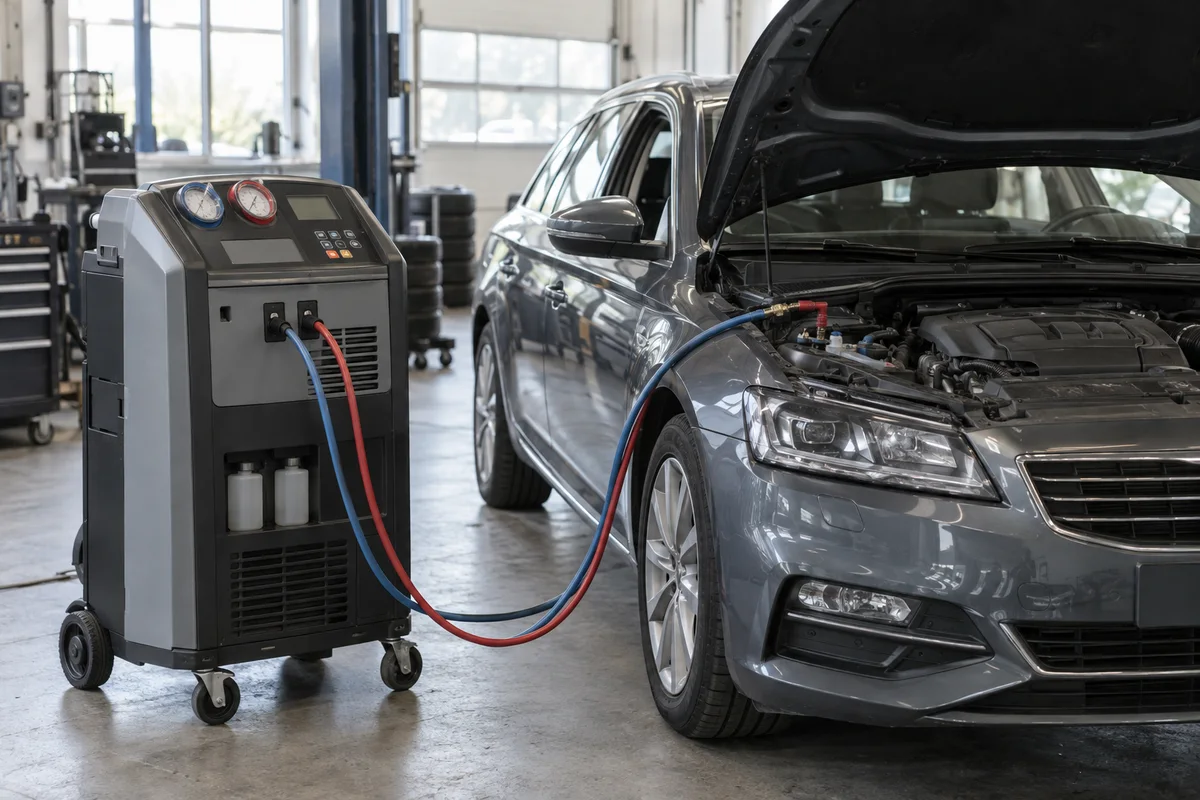
The vehicle specifies its refrigerant type and charge quantity. A workshop should identify the system rather than treat every car as interchangeable. Hybrid and electric applications can have additional requirements for equipment and lubricants. You do not need to select those technical details yourself; you do need confidence that the estimate is for your actual vehicle and that the technician is equipped for it.
If the system lost cooling soon after a previous refill, mention that history before authorising another. Ask what checks will establish why performance was lost and how any finding will be reported. Do not expect a recharge alone to repair a leak, an electrical control fault or a damaged compressor. Equally, a weak system does not automatically require the most expensive component.
Agree on the decision point
Set a clear boundary for further work: the workshop should contact you with findings and an updated price if parts or additional diagnosis are needed. Request separate descriptions for inspection, refrigerant-related work, replacement parts and cabin treatment where relevant. That makes two estimates easier to compare without assuming that the cheaper one includes the same tasks.
After completion, ask what was found, what was done and whether follow-up is recommended. Keep the invoice with the date and vehicle details. Check the result in ordinary use and report a prompt recurrence. A useful service leaves you with both functioning cooling and an explanation, rather than only a fresh fragrance and a receipt saying gas.