Do not connect a charger or booster
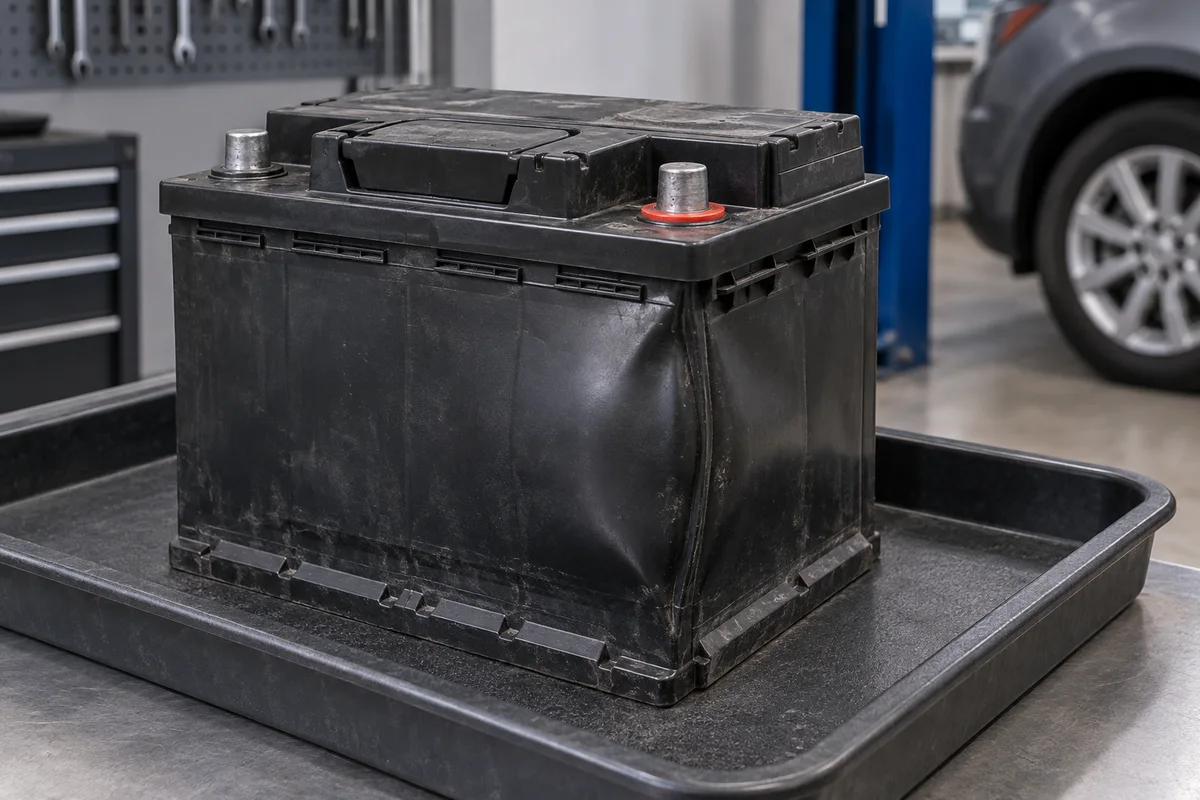
A bulging, cracked or leaking low-voltage battery should not receive an improvised jump-start. Do not try to squeeze the case back into shape, open caps or probe it to find out how much charge remains. Leave it alone and arrange professional assistance, explaining the visible damage before anyone arrives with starting equipment.
The cause might involve heat, charging conditions, freezing or another fault, but the appearance alone cannot settle that question. You do not need a complete explanation before deciding that a damaged battery is unsuitable for an ordinary owner-level charging attempt.
Keep the surroundings safe
Keep children, pets, cigarettes, flames and potential sparks away. Do not lean over the battery to smell it more closely. If there is smoke, rapidly increasing heat, hissing or an immediate fire concern, move people away and contact the appropriate emergency service from a safe position.
Avoid handling leaked material or trying household neutralising mixtures around the vehicle. The battery and contaminated area need appropriate assessment and cleanup. If material contacts a person, seek prompt professional medical advice and follow emergency guidance rather than relying on a car-maintenance article for treatment.
Tell assistance what can be seen
Report whether the case is swollen, cracked, wet or unusually hot, and whether the car was recently charged, jump-started or exposed to severe cold. A photograph taken from a safe distance may help the service prepare. Do not remove covers or move the battery solely to obtain a better image.
Identify whether you are describing the ordinary low-voltage battery or an electrified vehicle’s traction-battery area. If uncertain, say so. High-voltage equipment is not part of this owner check, and orange cables or unfamiliar underfloor components should remain untouched.
Tell the service whether the battery is easily accessible or enclosed beneath a seat or luggage-area cover. Access constraints can affect safe handling, and they are better discussed before anyone begins dismantling trim around a damaged unit.
Replacement should include a cause discussion
A professional can arrange safe removal, correct replacement and an appropriate waste route. Do not put the damaged battery in household rubbish or carry it loosely in the passenger compartment. Ask the service how it will be handled before transporting it yourself.
After replacement, ask whether charging behaviour and related connections need checking so a new battery is not exposed to the same conditions. Keep the diagnosis with the invoice. Replacing the visibly damaged part addresses one problem, but the reason for the damage may require additional work.