Two different demands
The radio plays, the cabin lamp looks normal and the engine refuses to turn. It is tempting to cross the battery off the list. Those accessories and the starting system, however, do not ask the electrical supply to do the same job. Being able to power a small load does not establish that the battery and its connections can support a much larger demand.
That distinction is useful because it prevents a premature parts order. It does not turn every no-start into a battery problem. A start request can also be interrupted elsewhere, or the starter circuit may need investigation. Tell the person checking the car that the lights worked; do not present that observation as proof that the supply has already passed a proper test.
Describe what changes during the attempt
If you have already made a normal starting attempt, note what happened at that moment. Did the display briefly go dark? Was there a series of clicks, a single click or complete silence? Did the engine turn slowly, or turn normally without firing? Those descriptions separate several different situations that are easily collapsed into the phrase 'it will not start'.
You do not need repeated attempts to build a useful account. Long or frequent cranking can add another problem and makes the original conditions harder to describe. If there is smoke, an unusual burning smell or a damaged battery, stop and keep clear. A booster pack is not a suitable response to visible damage or an unexplained electrical overheating symptom.
Ask for a test, not a vote
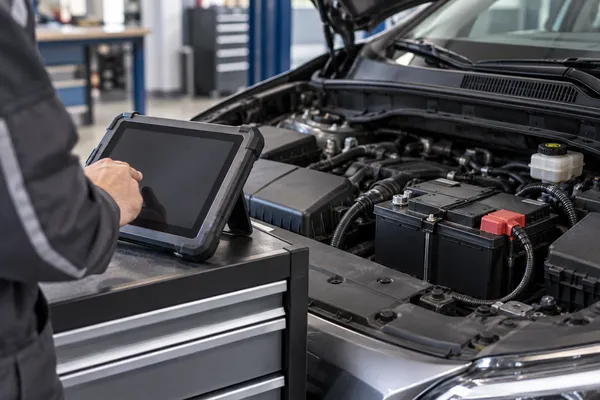
A workshop or assistance technician can assess the supply under the relevant conditions and check the connections and starting circuit as needed. If someone says the battery is healthy, ask what was checked. A recent replacement date, a dashboard display and a test performed under load are different kinds of evidence.
Keep the sequence clear if the car later starts with assistance: what failed, what help was used and what changed afterwards. The successful start is another clue, not a guarantee that the next journey will be trouble-free. Follow the vehicle's approved assistance procedure and arrange follow-up checks when the original cause remains unknown. A small amount of accurate information is more useful than deciding in advance that either the battery or the starter must be guilty.