Let the failed attempt end
A sharp grinding or metallic scraping noise is different from the familiar rhythm of an engine turning over. Release the start control, or follow the handbook's way of cancelling the request on a vehicle that controls cranking automatically. Do not keep the starter engaged in the hope that the noise will clear. If the engine starts but an abnormal mechanical sound continues, shut it down safely and seek help.
Avoid immediately trying again for a better recording. Repetition can turn a brief engagement problem into more damage, and a sound alone is not enough to identify which part is responsible. There is no useful owner-level test that involves holding the control longer, hitting the starter or bridging its connections. Leave the vehicle secured while arranging an assessment.
Locate the noise in time
Tell the workshop when the sound occurred: at the first instant of the request, while the engine was turning, or just as it began to run. Mention whether the engine turned at all. A whirring motor without normal cranking and a grinding engagement are different descriptions, even if both result in a car that does not start.
Also say whether this was the first attempt of the day and whether recent starting work has been done. Keep those details factual. A new battery does not prove that every connection or starter component is healthy, while a recent starter replacement does not establish that the new part is the cause. The sequence helps decide what to inspect.
The repair needs an explanation
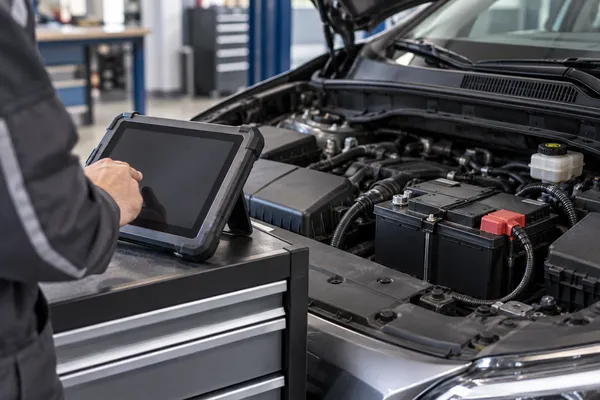
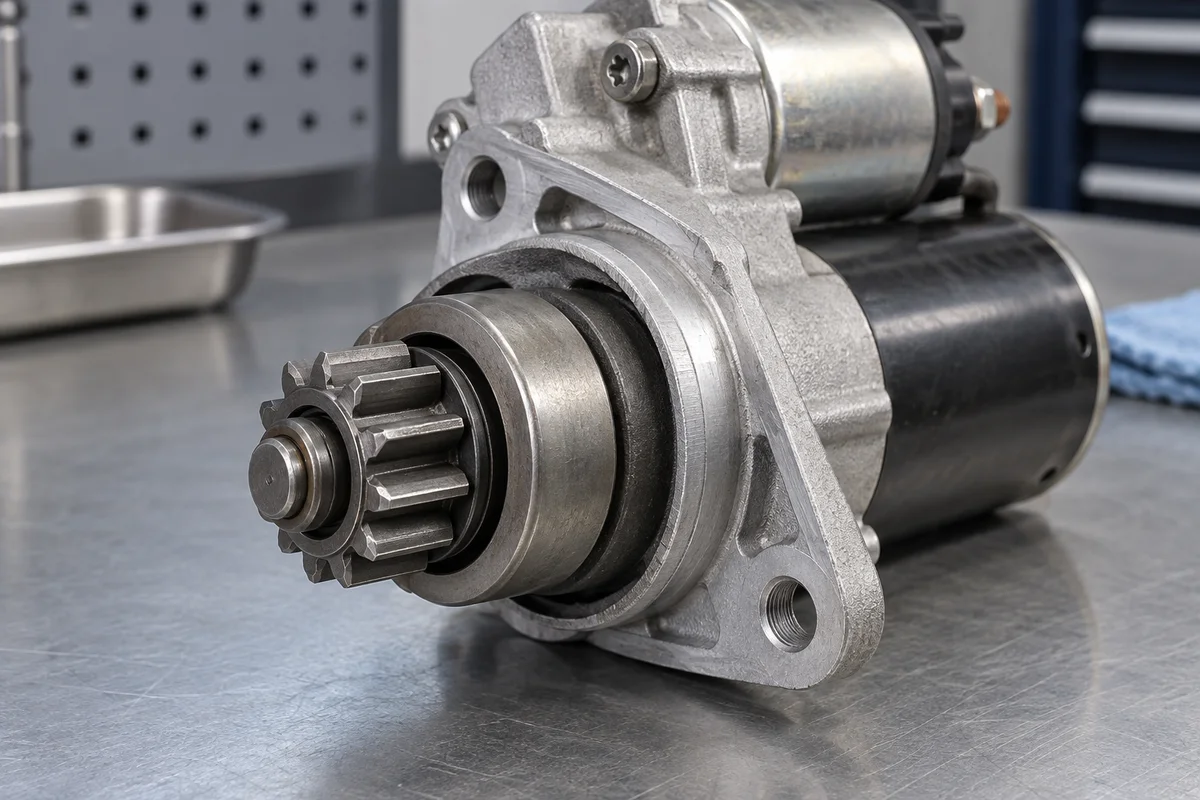
The starter's engagement and the parts it engages require a proper inspection. Ask which damage or test result supports the proposed repair, and whether related components were checked. A quote naming only a replacement starter tells you less than an explanation connecting the noise to an observed fault.
Before agreeing to further attempts, describe any burning smell, smoke or persistent electrical noise. If there is active smoke or fire, move away and call appropriate emergency help; do not open the bonnet to investigate. Even without those signs, a car that occasionally catches after grinding is not demonstrating a successful repair. Arrange the next step with a workshop or assistance provider rather than relying on one lucky start.