Make one change at a time
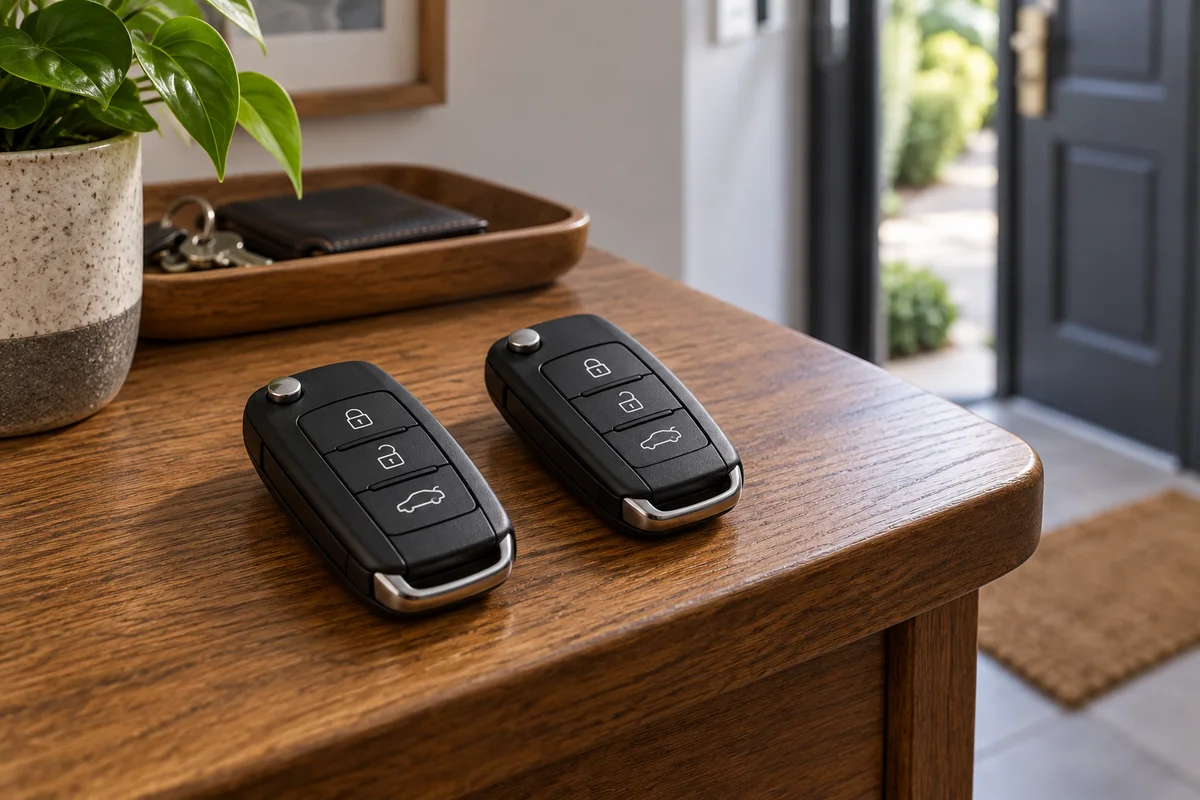
When a car reports a recognition problem, a spare key can help separate a key-specific issue from a wider starting fault. Secure the car, put the first key away from the cabin and try the spare using the same normal procedure. Record the message and response rather than simply marking the attempt as success or failure.
If both keys remain together, the car may recognise one while you think it is testing the other. Keeping the comparison clear is more useful than rapidly swapping fobs while also moving the selector, charging the vehicle battery and changing settings.
When only one key works
Tell the repairer which key succeeds and whether the unsuccessful one can still lock or unlock remotely. Mention damage, a recent coin-cell change or exposure to liquid. Those distinctions help assess the fob without assuming that remote locking and start authorisation are identical functions.
Check the failing key’s handbook-approved backup-reader method if appropriate. A key that works in the backup position but not normally presents different evidence from one that is never recognised. Do not attempt to open, solder or reprogram unfamiliar key electronics to turn that comparison into a repair.
When neither key works
Both keys failing does not automatically condemn the vehicle’s receiver. A spare may also have a weak battery, the normal start conditions may be unmet or the low-voltage supply may be inadequate. Read the display and check the ordinary handbook requirements before drawing a conclusion.
If the engine cranks normally but does not fire, make sure the complaint actually concerns key authorisation rather than a different no-start. Share the precise symptom with assistance. A dashboard key symbol can help, but a generic description of a car that does nothing can hide important differences.
Keep security part of the legitimate repair
Use an established repairer or automotive locksmith who can confirm ownership and compatibility. Ask whether all existing keys should be brought to the appointment and what will happen to a lost key’s authorisation if replacement is involved. Procedures vary, so arrange that detail before the visit.
Do not use bypass devices or online sequences intended to defeat the immobiliser. The comparison test is about restoring normal authorised operation. A fob that looks correct or fits a mechanical lock is not necessarily electronically compatible with the vehicle.
Write down the comparison
A short note saying which key, normal or backup position, exact message and result provides a reproducible starting point. Keep it with any battery or key-service records. That modest detail can save a technician from repeating several uncertain experiments at the beginning of the appointment.
Label the two keys in your notes as first and spare rather than relying on their appearance. Similar replacement shells can make an otherwise useful comparison confusing when the vehicle reaches the workshop.