A sound worth describing accurately
You turn the key or press Start, hear one solid click, and the engine does not turn. That is different from repeated rapid clicking and different again from an engine that turns normally without firing. Tell assistance which of those happened; the distinction saves time at the beginning of the investigation.
Listen to the event you already experienced rather than making dozens of attempts to obtain a perfect recording. If a short recording is possible while safely parked, it can help. Keep the phone inside the cabin and do not put a hand or device near engine components during an attempted start.
The click is not a parts verdict
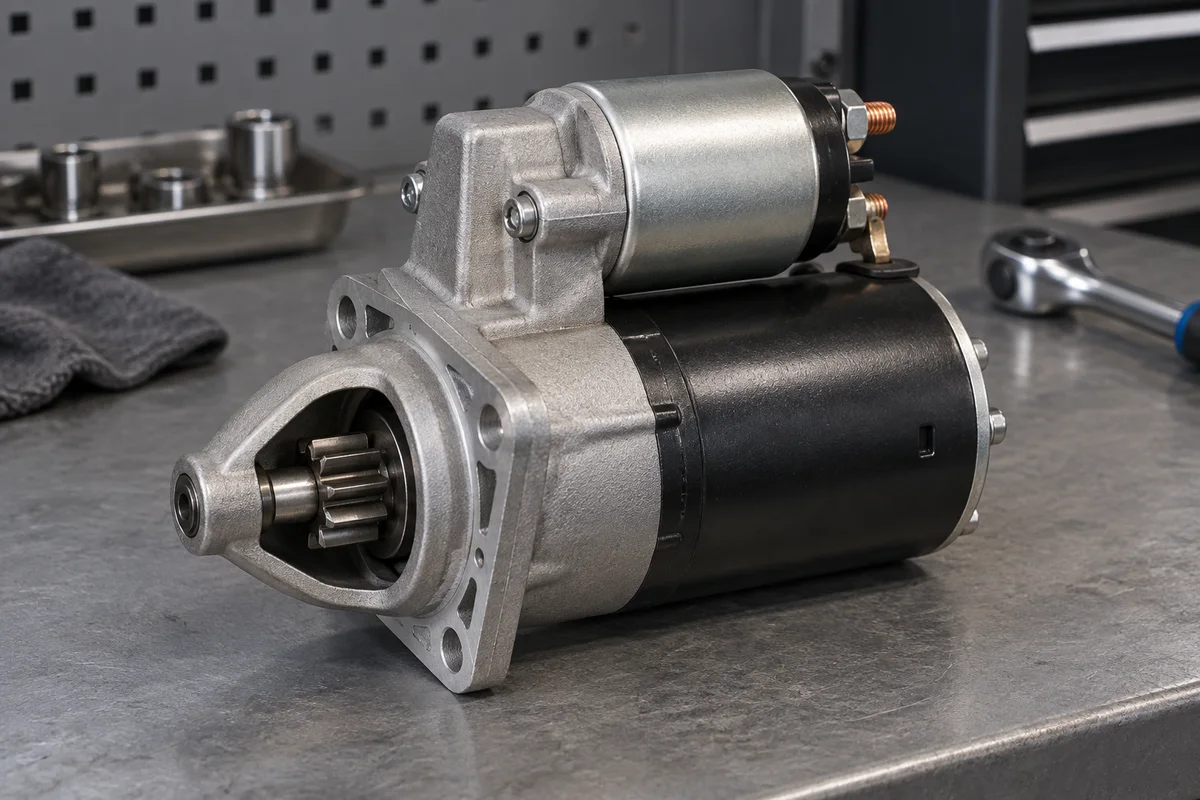
The starting system has to receive a command and deliver substantial electrical power to turn the engine. Hearing a click suggests that something has reacted, but it does not establish the condition of every connection, the battery or the starter itself.
A healthy-looking dashboard and working headlights do not eliminate a supply problem. Those loads are not equivalent to cranking an engine. Similarly, a recently purchased battery can be discharged or connected imperfectly. Age and appearance are context for testing, not substitutes for it.
Two tempting shortcuts to avoid
Do not strike the starter, bridge its terminals or crawl beneath the car to reach it. These traditional roadside suggestions can expose you to movement, short circuits and unsupported vehicle hazards. A successful reaction would still not be a complete diagnosis or lasting repair.
Do not attempt a push-start unless the vehicle’s own instructions specifically support the procedure and the circumstances are safe. Many modern vehicles are unsuitable, and automatic or electrified powertrains bring additional restrictions. Assistance is a better next step than an improvised experiment in a car park.
What a useful assessment covers
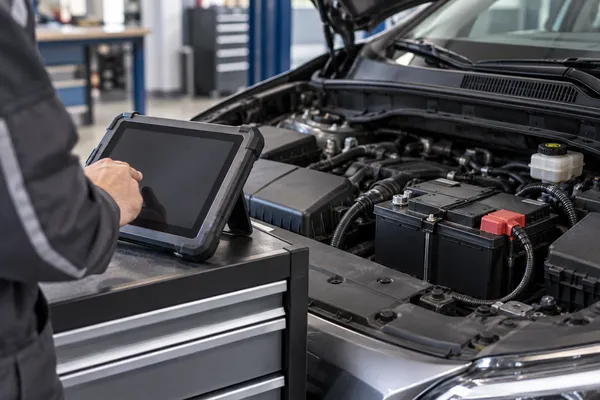
Give the technician the battery history, any recent starting hesitation, the temperature and whether the fault occurs warm or cold. Testing can then establish the battery’s ability to supply power and whether that power reaches the starter appropriately before condemning a component.
Ask for the evidence behind the recommendation in ordinary language. For example, was the battery tested, were connections checked and was the starter receiving the required command? You are seeking a coherent explanation, not prescribing the workshop’s exact sequence.
If it starts on the next attempt
Keep the appointment if the problem is recurring. Intermittent success can make a fault harder to reproduce, not less real. Note the delay between attempts and whether anything changed. A clear history may prevent a repeat breakdown after the car appears entirely normal in the workshop.