What does 'warm' mean this time?
A warm-start complaint can describe several different patterns. Perhaps the car fails immediately after a long drive. Perhaps it restarts at once but refuses ten minutes later. Or perhaps the problem appears only on a hot day, regardless of journey length. Record the actual sequence instead of reducing all three to 'it does not like heat'.
Include roughly how long the previous journey lasted and how long the engine was off. Note whether the vehicle was parked in direct sun and whether a temperature warning appeared. A normal operating temperature and an overheating event are not interchangeable. If the car has overheated or shows a serious warning, follow the handbook and arrange assistance rather than treating it as an ordinary intermittent starting issue.
Separate turning from firing
The most useful next distinction is whether the engine turns over. Slow turning, no turning and normal turning without starting lead to different checks. Describe any click or grinding sound you already heard, and preserve dashboard messages. Do not keep trying simply to make a recording. A short note made after the failed attempt is enough to capture the essential difference.
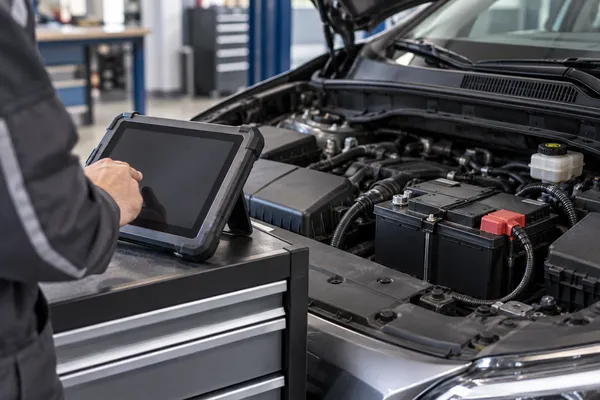
Avoid choosing a component because an online discussion describes a similar delay. Temperature can affect several parts of a system, and a model-specific problem may not apply to your car. A workshop may need to check supply, the starting request or engine-management information while the fault is actually present. Replacing the most frequently mentioned sensor can leave the original symptom untouched.
Help the workshop see the same event
When booking, explain the interval that matters. A car delivered cold may start perfectly during a quick morning inspection. Your record gives the workshop a reason to plan the investigation differently. Provide previous repair details and mention whether the fault existed before that work; this is chronology, not an accusation that the last repair caused it.
If the car restarts after waiting, record the waiting time without assuming the underlying problem has healed. Discuss whether recovery or an arranged inspection is more appropriate than driving somewhere that could leave you stranded again. Do not cool components with water, bypass a start interlock or reach into a hot engine bay to test a theory. The aim is to preserve the pattern safely so that the next check has a useful starting point.