Separate unlocking from permission to start
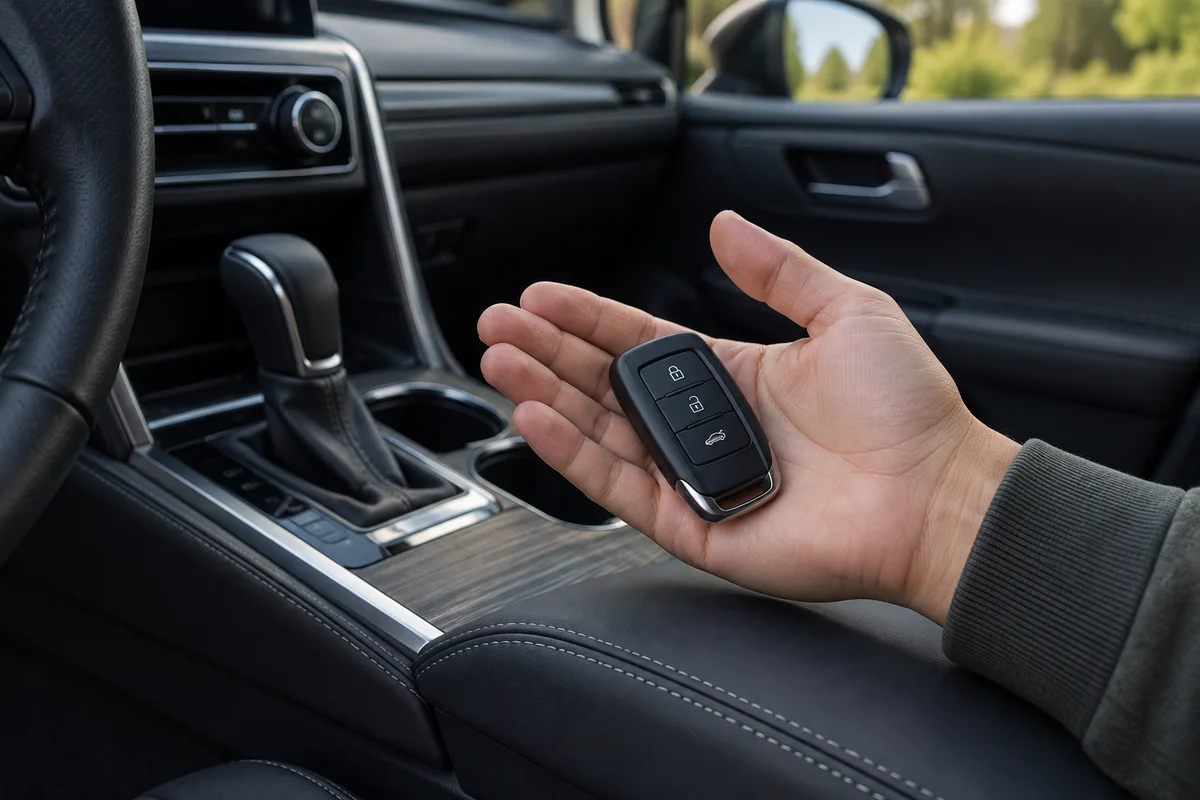
A remote button may unlock the doors while the start system still reports that no key is detected. The two observations are useful but do not prove the same function is working. Likewise, a mechanical emergency blade can open a door without showing that electronic start authorisation is available.
Read the complete message and make sure the correct key is actually with you, rather than another visually similar fob. Keep the car stationary and secure while checking. If several keys are together, separate them and follow the handbook’s advice about nearby electronic or metal objects.
A key left in a coat or bag outside the car may unlock it at close range without being in the required starting area. Confirm the fob’s actual location before beginning a more complicated investigation.
Use the actual backup-reader location
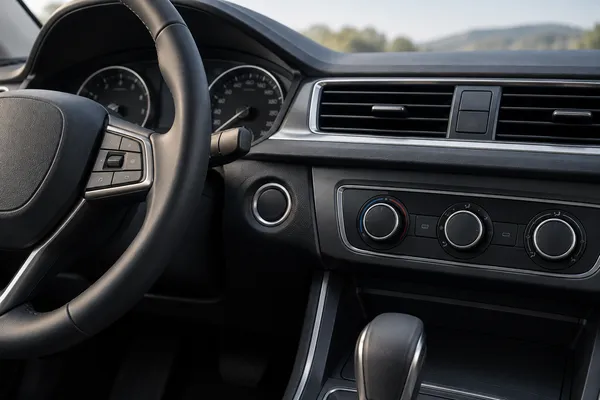
Many keyless vehicles have a designated backup position where the fob can be recognised when its battery is weak. That position may be near the steering column, in a console compartment or elsewhere. It is not universally the start button, so use the vehicle’s illustration rather than a remembered internet tip.
Place the key exactly as instructed and perform the normal starting sequence. If it works, record that result. It suggests a route for further checking but does not prove that simply fitting any coin cell will resolve every future recognition problem.
Compare with the spare without changing everything
If available, try the correctly authorised spare under the same conditions. One key working while the other does not is useful information. Both keys failing can point the investigation elsewhere, but it is not a conclusive diagnosis of the vehicle’s receiver or battery.
Avoid changing the vehicle battery, resetting settings and replacing both key batteries all at once before documenting the original behaviour. Too many simultaneous changes make it harder to identify what helped. Keep a simple sequence of what was tried and what the display showed.
Know where owner checks end
A damaged, wet or dropped fob may need specialist assessment. Do not improvise immobiliser programming or bypass methods. If assistance or a locksmith is required, use a legitimate service prepared to verify ownership and vehicle compatibility.
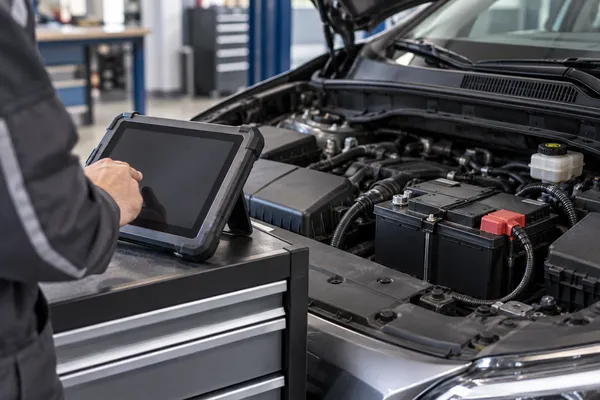
Mention whether central locking is weak, whether the dashboard resets and whether the key problem occurs only in one location. Interference, key condition and vehicle supply are different questions. A technician can investigate them without assuming that the nearest advertised replacement key is automatically suitable.
Once you are mobile
Arrange a lasting fix and test the normal method again. Relying indefinitely on an emergency reader can leave a second problem unnoticed. Keep the backup instructions accessible for travel, but treat them as a fallback rather than an explanation for the original warning.