Start with the correct diagram
A fuse-box picture from a similar-looking car is not enough. Find the handbook for the exact model, year and equipment, then identify the circuit you are investigating. Vehicles can have several fuse panels, and positions can differ between versions. An empty slot does not necessarily mean that a fuse is missing.
Only attempt an owner-accessible low-voltage fuse check if the handbook describes it and you can follow its shutdown and access instructions. If the panel is difficult to reach, damaged or wet, leave it to a professional. Do not investigate high-voltage equipment, airbag circuits or unfamiliar high-current connections as part of a quick accessory repair.
A replacement must preserve the protection
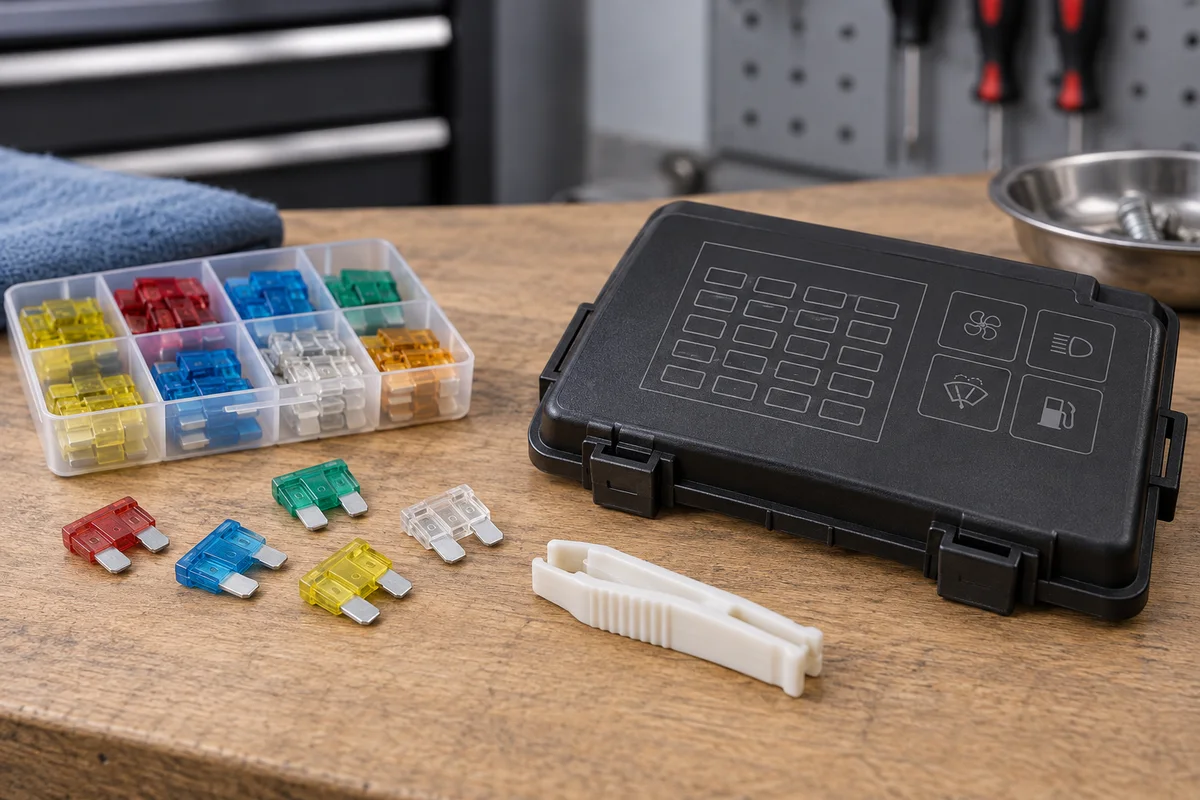
Use the exact specified type and amperage. Do not choose a higher rating because the original blew, and never bridge a fuse with wire or foil. Physical fit alone does not establish suitability. Check the specification rather than relying only on colour, a spare found in the glovebox or the rating of a neighbouring circuit.
Switch off the equipment and follow the vehicle's instructions before accessing the fuse. Do not pull random fuses while the vehicle is operating to see what stops working. That can create additional faults and remove useful context. A visible break may explain why a circuit is open, but a fuse that looks intact does not prove the whole circuit is healthy.
One failure is information; repeated failures need investigation
If an approved replacement immediately fails again, stop replacing it. The original problem still needs to be found. Record which equipment was connected and what happened just before the failure. A phone adapter, trailer connection or recently added accessory may be relevant to the investigation without automatically being the cause.
Keep a photograph of the correct diagram and your notes for the workshop, not a collection of progressively larger fuses. Mention heat damage, a smell or any evidence of water. Where the handbook does not provide a clear owner procedure, the sensible next step is an electrical assessment. The goal is restoring a correctly protected circuit, not merely getting the accessory to switch on for a few minutes.