Find the emergency instructions before the battery dies
A reduced remote range or key-battery message is a good moment to locate the handbook’s emergency entry and starting pages. Some fobs contain a mechanical blade, and some cars hide the door-lock cylinder beneath a cover. Knowing the intended release method avoids broken trim in a rushed situation.
Do not assume that a keyless car has no physical entry method, or that every cover should be prised off in the same way. If the mechanism is unfamiliar or resists, stop and consult the correct instructions. Forcing an attractive seam in the handle can damage a part that was never meant to move.
The backup start can use a different form of recognition
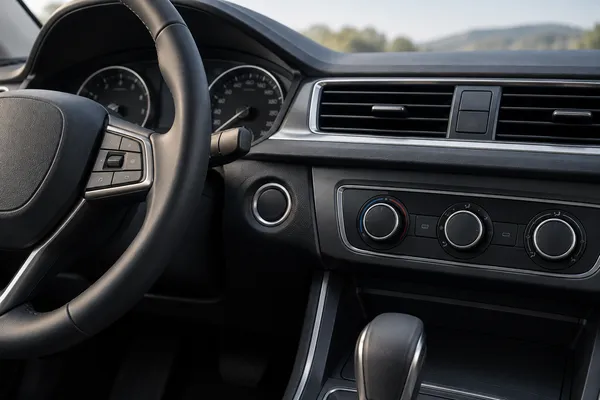
After entry, many vehicles provide a designated place for the fob so the car can recognise it despite a weak coin cell. Follow the specified orientation, position and pedal sequence. Do not substitute the location from another model, even within the same brand.
If an alarm sounds during authorised emergency entry, follow the handbook’s disarming procedure. Avoid repeated button presses or removing the vehicle battery as an improvised response. If the backup start does not work, call assistance and describe both the entry method and the displayed message.
Replace the coin cell carefully
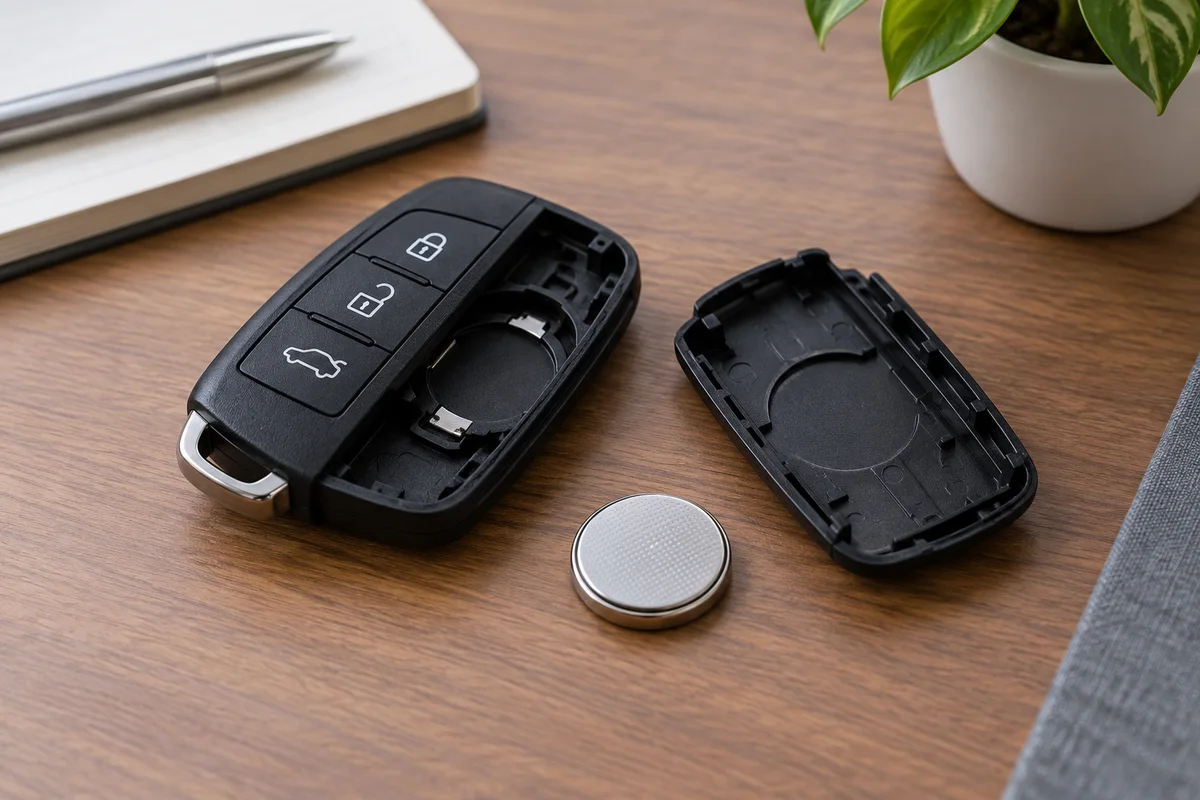
Use the exact battery type and orientation stated for the fob. Open it using the intended method, keep the contacts and seals undamaged and avoid touching or bending internal parts unnecessarily. A similar-looking cell is not automatically the correct replacement.
Keep coin cells away from children and pets before, during and after the job, and dispose of the old cell through an appropriate collection route. Do not leave it loose on a kitchen counter. If a child may have swallowed a cell, seek immediate emergency medical help rather than waiting for symptoms.
Confirm both normal functions
Test locking and the ordinary start-recognition method after reassembly. If one works and the other does not, record the difference. A damaged contact, an incorrect cell or another key issue may need inspection; repeated battery purchases are not a complete diagnostic strategy.
Check whether the handbook specifies any follow-up action after replacement. Do not buy programming services solely because a generic advertisement says every fob needs coding after a coin-cell change. Ask for the requirement for this exact key and vehicle.
Prepare the spare as well
A spare stored for years may also have a weak battery. Check it before an important journey and keep it separate from the main key. Two working authorised keys are more useful than two apparently identical fobs whose condition is unknown.