The engine is turning; it is not yet running
The familiar cranking rhythm can continue without the engine ever catching. That observation separates this complaint from a silent starter or rapid clicking, but it still leaves several possible causes. Describe whether the engine briefly fires, never fires, or starts and immediately stops.
Do not keep the starter engaged for a long time. Follow the attempt limits and rest periods in the handbook. Repeated cranking can deplete the battery and make a normal-speed no-start turn into a slow-cranking problem, obscuring the original symptom.
Begin with information you already have
Check the displayed fuel level and recall the last refuelling. Mention whether the problem began immediately afterwards, especially if there is any possibility of incorrect fuel. If misfuelling is suspected, stop attempts and seek help rather than trying to run the fuel through.
Look for a key-recognition message, an emissions-related restart restriction or another explicit instruction. These can change the diagnostic route. Do not assume that every illuminated oil or charging lamp is a separate running fault when the engine has not actually started.
Smell and sound need restraint, not experiments
A strong fuel smell, smoke or an unfamiliar mechanical noise is a reason to stop. Keep ignition sources away and contact assistance. Do not spray starting fluid into an intake or loosen fuel pipes to see whether fuel is present; these are not appropriate owner checks.
A cranking sound that suddenly becomes much faster or uneven is also worth reporting. It can have different explanations, and forcing further attempts may be unwise. A technician can decide what mechanical and electronic checks are needed without asking you to recreate the symptom repeatedly.
What the workshop needs to distinguish
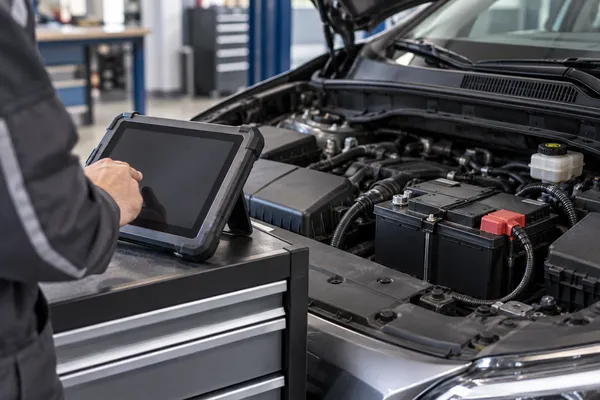
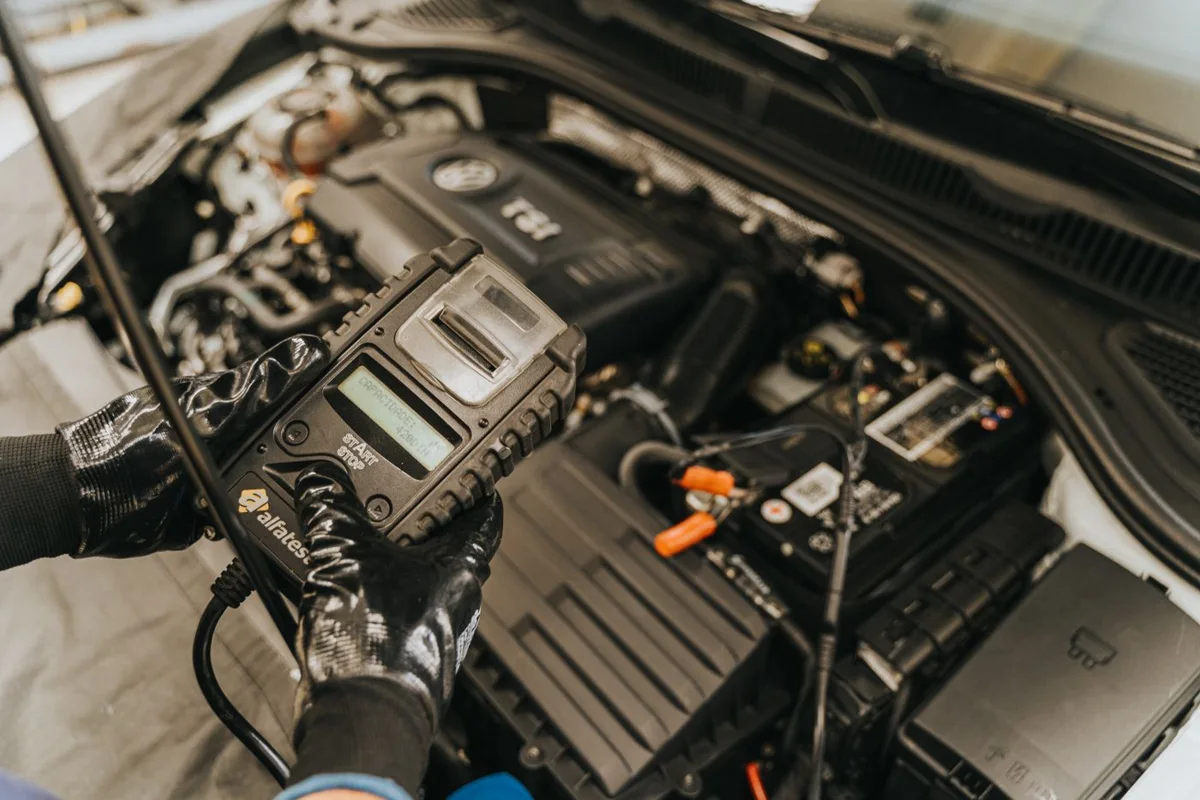
Starting requires several conditions to arrive together, including suitable electrical control and the correct combustion conditions. The test plan therefore goes beyond replacing the first sensor named by a fault code. Recent repairs, cold-versus-warm behaviour and whether the car stalled before refusing to start all help narrow it.
Preserve exact codes if they have already been read, but avoid clearing them. Ask for the connection between the test findings and any proposed part. An empty basic-reader result does not rule out a fault in another control unit or a mechanical problem.
Make recovery straightforward
Tell assistance the powertrain, transmission type and whether the car is in a confined parking place. If it briefly starts before they arrive, report the original failure anyway. A temporary return to normal is valuable evidence, but it should not erase the need to understand a recurring no-start.