Observe without making a short circuit
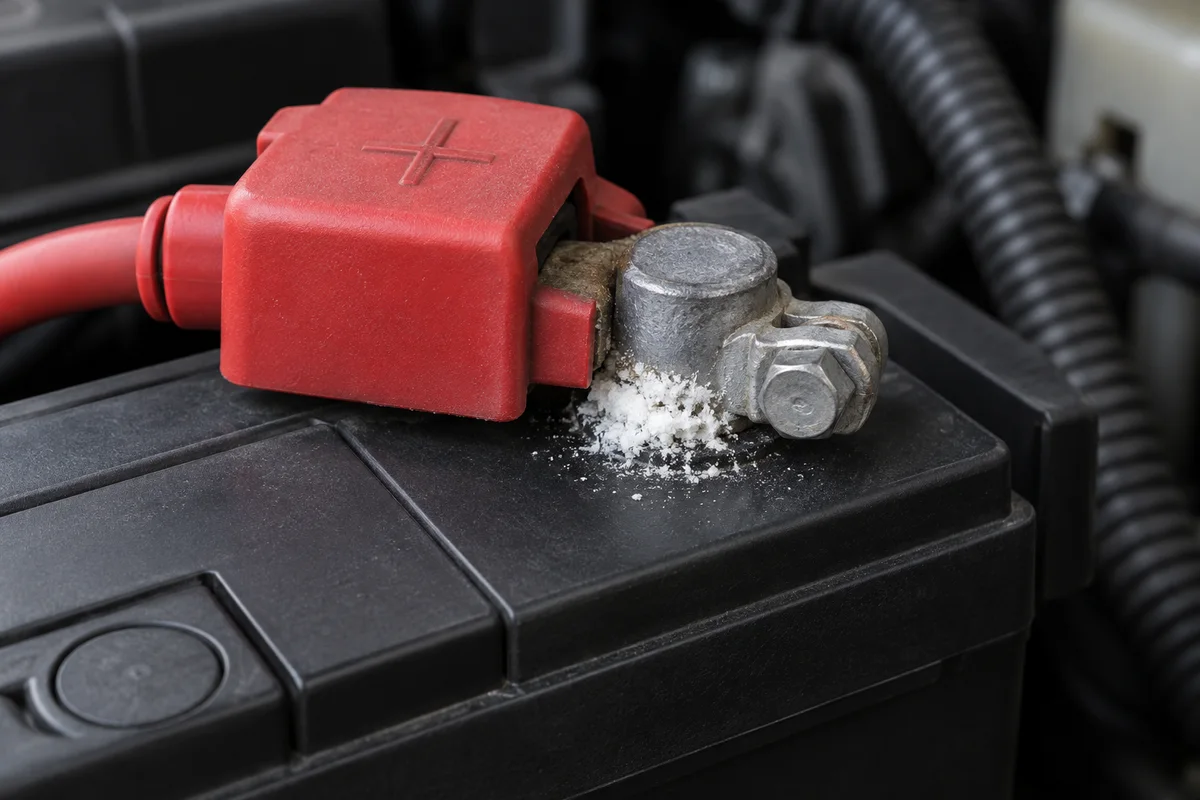
With the vehicle safely parked and switched off, a visible deposit around a terminal can be photographed without touching it. Do not lay a metal tool across the battery, bridge terminals or brush material with bare hands. Battery-area contamination and electrical short-circuit risks make casual cleaning a poor first step.
Look for associated damage from a safe position: a cracked case, wet area, loose-looking connection or damaged cable insulation. If the battery is swollen, leaking or unusually hot, stop the inspection and arrange assistance rather than treating it as a routine dirty-terminal job.
Remove rings or other metal jewellery before any authorised work around a battery, and keep tools under control. If you are only documenting the deposit for a workshop, there is no reason to bring a spanner into the area at all.
Connect the observation with the symptoms
Tell the workshop whether the car cranks slowly, loses electrical power intermittently or has recently needed a boost. A poor connection can matter under high starting demand, but the deposit alone does not prove it caused every symptom. The battery, cable and charging system may all need consideration.
Note whether the corrosion returned after an earlier cleaning. Recurrence is useful evidence about the condition around the connection or battery, not a reason to repeat a cosmetic treatment indefinitely. Mention recent installation work and keep the battery’s specification and age available if known.
Disconnection is not always a simple reset
Some vehicles require particular shutdown, access or setup procedures when the battery is disconnected. A sensor may be built into a terminal assembly. Do not remove or alter that equipment based on a generic cleaning video, and never disconnect with the engine running.
If the handbook allows an owner maintenance procedure and you have the required knowledge and protective equipment, follow it exactly. Otherwise, professional cleaning and inspection is a reasonable small job. The aim is a sound, correctly secured connection, not simply a brighter-looking metal surface.
Ask what was found beneath the deposit
A technician can assess the terminal and cable condition and decide whether cleaning, securing or replacement is needed. Ask whether the underlying battery condition and charging complaint were checked if starting has been unreliable. Do not accept a connection improvement as proof that an unrelated warning has been resolved.
Keep the work recorded and observe the area during later permitted checks without disturbing it. A photograph provides a useful comparison if material returns. Report renewed deposits or starting symptoms early, rather than waiting until another failed start makes every explanation look like a dead battery.