Think in roles, not rival suspects
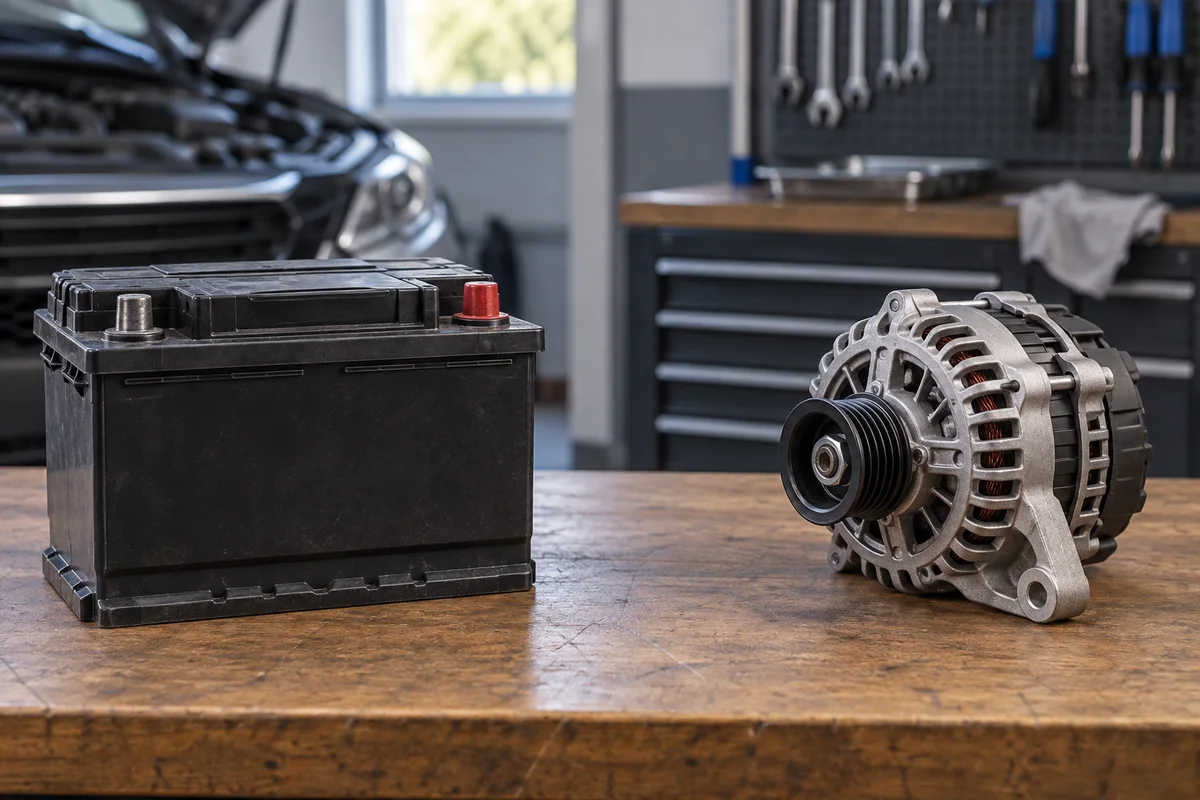
On a conventional combustion-engine car, the battery supplies the energy needed for starting and the charging system supports the electrical supply while replenishing it. If either side is weak, the eventual complaint may be that the car will not start. That shared result does not identify the original cause.
A battery-shaped warning while driving deserves a different response from slow cranking after weeks of parking. Record the sequence: did the lamp appear on the road before the battery became flat, or was the first symptom a difficult morning start? The chronology can be more useful than guessing which part is older.
A successful boost answers only part of the question
If external assistance gets the engine running, it shows that additional starting support helped under those conditions. It does not prove that the battery is worn out, that charging is normal or that the car will restart after a brief drive. Preserve that result as evidence, not a complete diagnosis.
If the charging warning remains or the car runs abnormally after starting, stop safely and ask for professional help. Do not drive an arbitrary distance hoping the battery will recover. A charging fault may leave only limited stored energy, and the remaining time cannot be reliably inferred from a successful start.
Avoid the old disconnect test
Never remove a battery terminal with the engine running to see whether it continues. That is not a safe owner test for a modern electrical system. It can create additional faults and does not provide the controlled evidence a technician needs.
Likewise, a single voltage reading is not a universal verdict. Modern charging strategies can vary with operating conditions. The test has to suit the vehicle and battery, taking account of charge state, load and relevant control information rather than comparing every car with one internet number.
Ask for findings that connect together
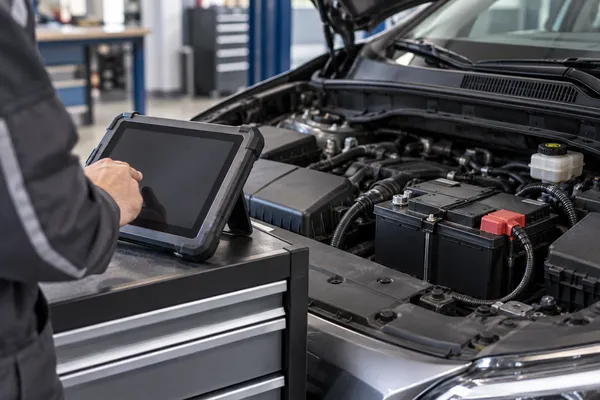
A useful report considers battery condition, charging performance and connections, with additional investigation if parked discharge is suspected. If the battery needs charging before a reliable condition test, that should be part of the plan rather than a reason to jump directly to replacement.
Ask what explains the original symptom and what was checked after repair. A new alternator paired with a battery damaged by repeated discharge may not restore dependable starting without further attention. Conversely, a new battery alone cannot solve a charging problem that remains present.
Electrified vehicles need the correct vocabulary
Hybrids and electric cars may support their low-voltage system differently from a conventional alternator arrangement. Tell the repairer the exact powertrain and avoid applying a petrol-car test by analogy. Keep all high-voltage equipment outside an owner-level investigation.