Was it charged when the evening began?
A car that starts after a boost and refuses again the next morning may never have recovered enough charge in between. That is different from a fully assessed, properly charged battery losing energy unusually quickly while parked. Begin by establishing which situation applies before naming a parasitic drain.
Write down the previous journey length, any charging performed and the time the vehicle stood. A statement such as 'it was fine yesterday' can mean only that it started once. Ask the technician to distinguish the battery’s state of charge from its ability to retain and deliver that charge.
Look for changes in ordinary use
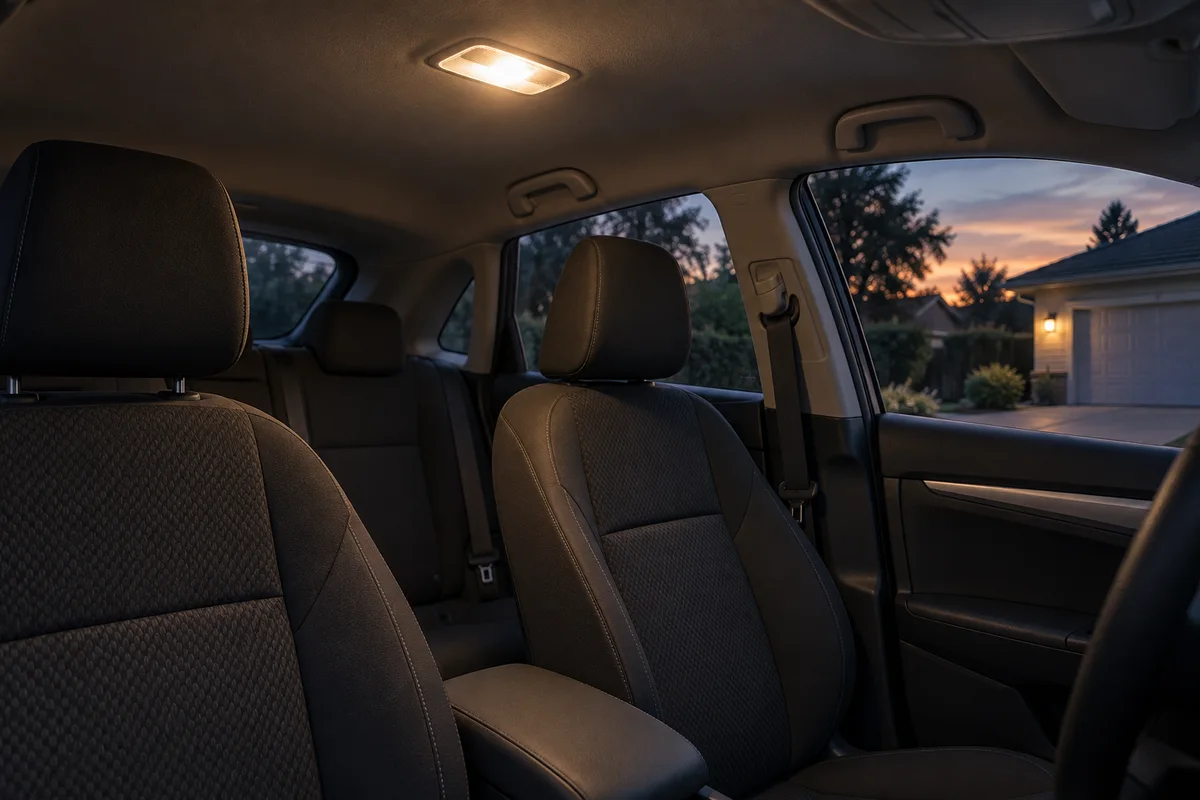
An interior light, a door not fully closed or an accessory left connected can provide an obvious clue. Check normal controls and visible status while the car is secure. Mention a recently fitted dashcam, tracker, audio accessory or charger, even if the installation appeared unrelated at the time.
Do not unplug factory modules or pull random fuses to see which makes the problem disappear. That can wake systems, erase useful information or disable functions without establishing the fault. A professional current-draw investigation needs the vehicle’s normal shutdown behaviour and an appropriate test method.
Give the workshop a repeatable timeline
Record whether the failure takes one night, a weekend or several weeks, and whether it happens in one parking location or everywhere. Note which keys were nearby and any connected accessories. You do not need to decide which detail is causal; a clear account lets the technician evaluate it.
If the vehicle has been repeatedly boosted, say so. Repeated deep discharge can affect battery condition, so there may be both an original drain issue and a battery now needing attention. Replacing only one without considering the other can lead to another frustrating return.
Agree on the test conditions
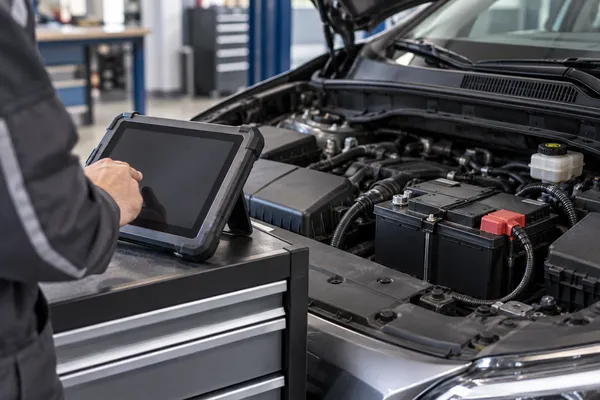
Ask whether the car should be left overnight and whether your usual accessories should accompany it. An intermittent parked fault can be difficult to observe during a brief appointment. A planned test that resembles the real situation is more useful than an immediate replacement chosen under time pressure.
Keep the battery specification and any previous test printout available. If a new battery is proposed, ask how its condition was assessed and what evidence addresses the overnight complaint. A successful start at collection should be accompanied by an explanation of what changed.
Avoid the daily workaround
A booster is useful emergency equipment when appropriate, but daily boosting is not a maintenance plan. Arrange a diagnosis before the next essential trip. Stop using or charging a battery that is damaged, swollen, leaking or unusually hot, and seek professional assistance instead.