Start outside the cabin
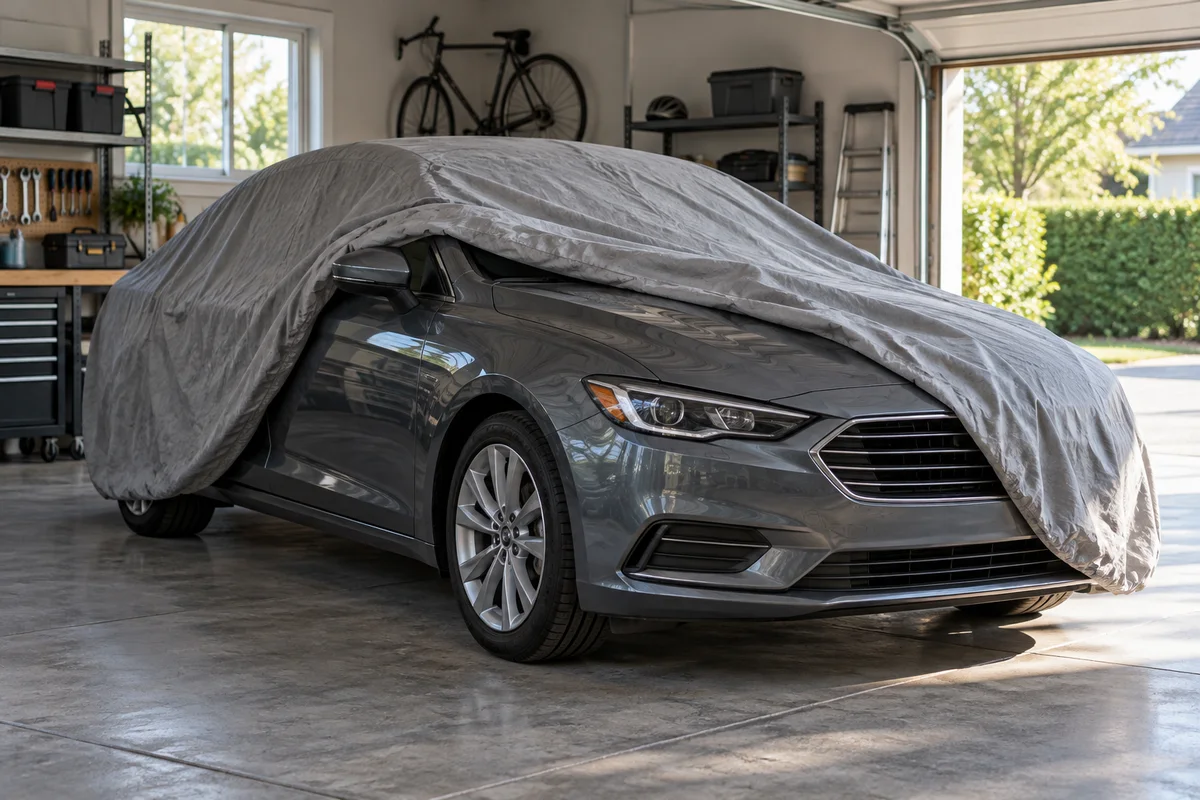
Walk around the car before attempting to move it. Look for a visibly low tyre, fluid beneath it, damage or anything obstructing the vehicle. Check that the place is safe for starting and that a garage is properly ventilated. A stored car’s first problem is not necessarily its battery.
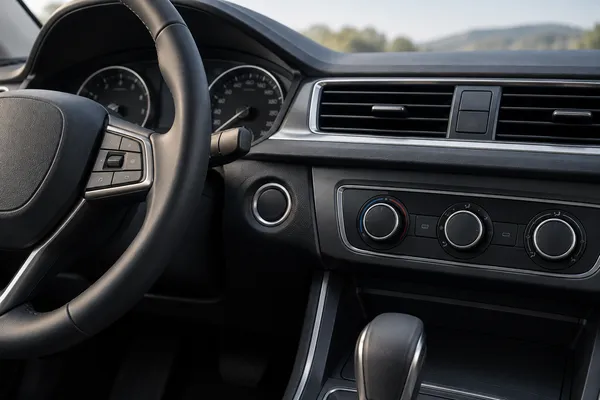
Once inside, note whether locking, interior lights and the display behave normally. Weak or absent electrical response is useful information, but do not keep opening doors and operating accessories to test how much remains. Preserve available power for a deliberate next step.
Time parked is only part of the story
Some vehicle systems continue to use energy while parked. The outcome depends on initial charge, battery condition, temperature and the vehicle’s normal electrical demand. There is no universal number of unused days after which every battery will be flat.
Tell assistance how long the car stood and whether a charger or maintenance device was connected. Mention an accessory left plugged in or a previous weak start before storage. These details help distinguish a predictable charge deficit from a recurring drain or battery deterioration.
A failed attempt is a reason to pause
If the starter turns slowly or clicks, stop repeated attempts and consult the handbook. A compatible recharge or professional starting assistance may be appropriate, but a damaged, leaking, swollen or possibly frozen battery must not be boosted or charged casually.
Use only the prescribed low-voltage connection points and procedure if external assistance is allowed. On hybrids and electric vehicles, keep clear of high-voltage cables and components. Their traction battery and low-voltage battery serve different roles, so a high displayed driving range does not prove that every starting-related supply is healthy.
Starting is not the whole return-to-use check
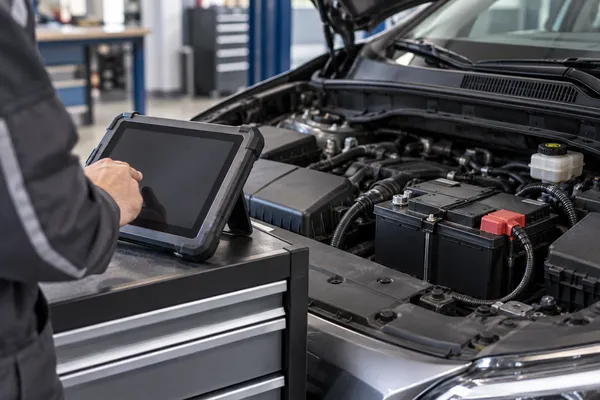
After the car runs, watch for persistent warning lamps and confirm that steering and brakes behave normally before joining traffic. A long parked period can leave other issues that a successful jump-start does not address. If anything feels wrong, stop and arrange inspection.
Do not assume one short drive has fully restored a deeply discharged battery. Ask for a suitable charging and testing plan. Keep the result, particularly if another period of storage is likely, so you can prepare rather than repeat the same emergency next time.
Prepare the next absence
Follow the manufacturer’s storage advice, including whether a compatible maintainer is appropriate. Do not disconnect the battery by default: security, access and learned settings may be affected. An advance plan should cover where the car stands, how it remains secure and how you will access it if low-voltage power is unavailable.