Count the pattern, not just the trips
Daily use does not automatically mean adequate charging. Starting consumes energy, and a succession of brief journeys may provide limited opportunity to replace it while lights, heating and other equipment are in use. The balance depends on the vehicle, conditions and battery state, so there is no single journey length that guarantees recovery.
Think about a typical week rather than one unusually long trip. Several cold starts for a school run, shopping and errands can create a different pattern from one continuous journey. Tell the workshop about that routine if starting becomes slower or the battery repeatedly needs help.
Do not turn off equipment needed for safety
It is reasonable to avoid unnecessary electrical loads, but visibility and control take precedence. Do not drive with an inadequately demisted windscreen or insufficient lighting to save battery energy. If the charging system is healthy, ordinary safety equipment is part of the use the vehicle was designed to support.
A charging warning while driving is a separate concern from a gradually low battery after short trips. Stop safely and seek the model-specific advice for that warning. Do not explain it away as a consequence of yesterday’s local errands.
Testing separates use from deterioration
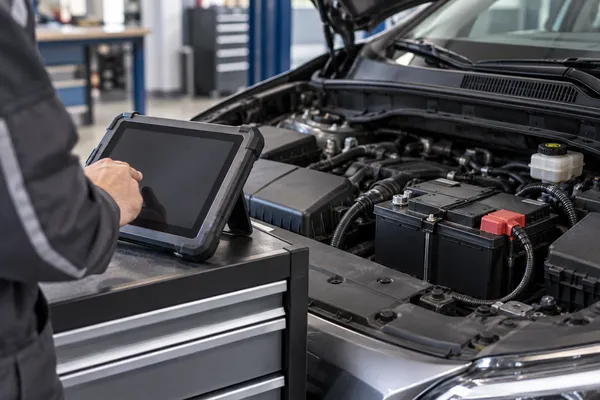
Ask for assessment of both charge and battery condition. An old battery may have reduced reserve, while a newer one can still be undercharged. Connections and charging performance may also require checking if the pattern does not adequately explain the complaint.
Do not replace the battery solely because a short drive failed to revive it after a flat-start incident. It may need an appropriate controlled recharge before a meaningful condition test. Equally, a battery that repeatedly fails a proper test should not be defended indefinitely on the theory that one more long drive will fix it.
Choose a charging plan that suits the car
A compatible smart charger can be useful for some low-use patterns, but follow the vehicle and charger instructions for chemistry, connection points and operating conditions. Modern battery monitoring may make the prescribed connection location important. Do not assume that any unit labelled twelve volts is suitable for every battery.
If home charging is impractical, discuss a realistic service or use plan with the workshop. Avoid running the engine briefly in an enclosed garage, and do not treat occasional idling as a universal charging solution. The plan should address your actual parking and travel circumstances.
Use symptoms as an early opportunity
A noticeably slower start is a reason to act before total failure. Keep a brief record of travel and charging changes, then compare the result. You are looking for dependable starting over the ordinary week, not just a successful restart immediately after a long journey.