Clear the view before moving
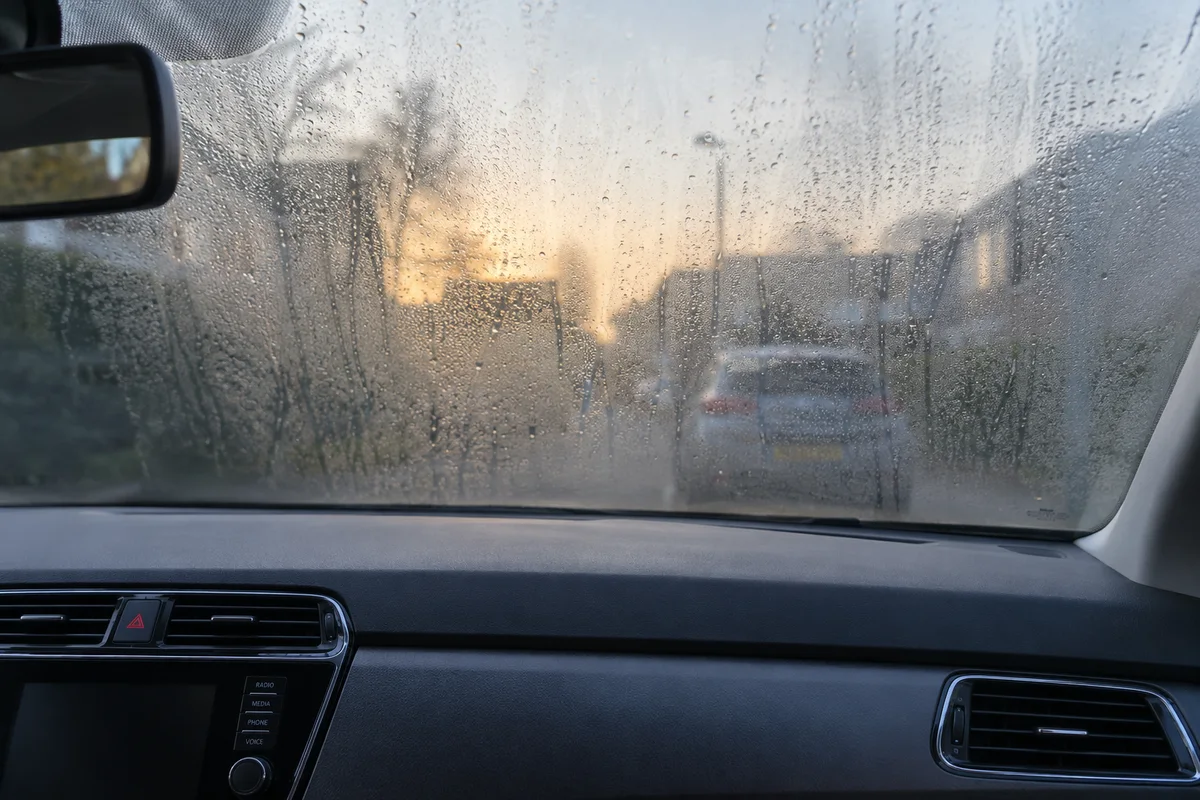
Do not begin a journey through a small wiped patch in the windscreen. Use the demisting settings described in the handbook and wait until you have a clear view that can be maintained. If the screen clouds again while driving, stop somewhere safe before making further adjustments. Reaching across the glass with a cloth is not a substitute for visibility.
Many systems use air conditioning during demisting because it helps remove moisture from the air. The exact control behaviour varies, including whether the compressor operates in particular temperatures. Check the handbook rather than assuming that a cooling symbol should always be switched off in winter. Prolonged recirculation can also be unhelpful when the cabin is already humid.
Look for moisture that stays in the car
Wet coats, umbrellas and floor mats can leave a substantial moisture load inside. Remove damp belongings and let removable mats dry appropriately outside the vehicle. Check whether the carpet beneath remains wet; drying the top surface does not identify the source of water underneath. Do not place loose mats or towels where they can interfere with the pedals.
If the problem persists, note whether it follows rain, washing or use of the climate system. A damp footwell, a musty smell or a greasy-looking film on the glass gives the workshop a more specific complaint. Do not assume that any one clue proves a leaking heater or blocked drain. Several sources can produce a similar result in the cabin.
Check the ordinary ventilation response
With the car stationary, confirm that air reaches the windscreen when the appropriate mode is selected. Weak output or air directed elsewhere may explain why normal settings no longer work. A cabin filter or distribution problem can be relevant, but replacing parts without checking the airflow may miss the reason. Describe the fan sound and the actual outlet response separately.
Keep the inside of the glass clean using a suitable method, but do not let an anti-mist product disguise a persistent water-ingress complaint. Ask the workshop to investigate both ventilation performance and the source of recurring dampness. After any repair, assess the car in the weather that exposed the problem. A dry afternoon alone may not show that rain-related moisture has been resolved.