Find the pattern before disturbing trim
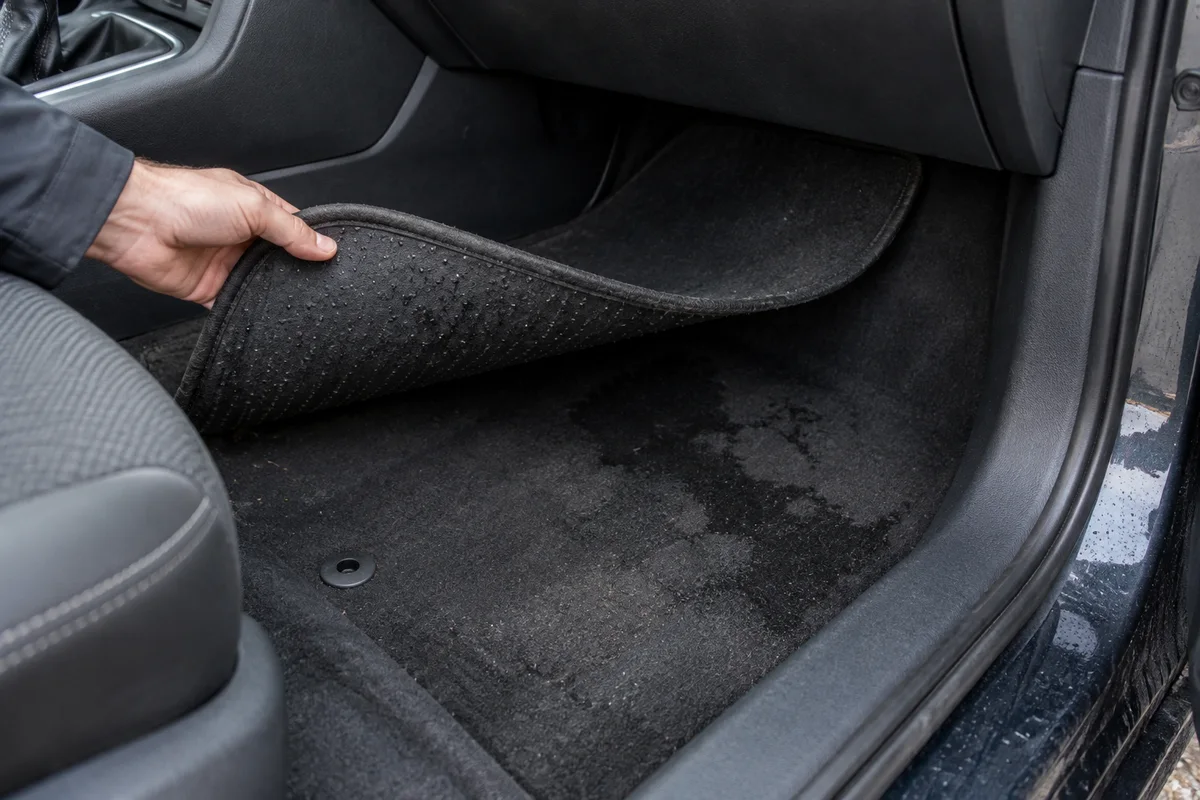
A wet floor mat can be an isolated spill, but moisture that returns under the passenger carpet needs investigation. Note whether it follows rain, a car wash or ordinary climate-system use. The timing does not prove a particular leak, yet it helps the workshop decide where to begin. A dry top surface can conceal moisture held beneath the carpet.
Remove only loose belongings and removable mats that can be handled safely. Do not pull up wired seats, peel back fixed trim or disconnect electrical components to inspect underneath. Modern vehicles can place important equipment beneath seats or near the floor. If there are electrical warnings, unusual smells or visible damage, tell the workshop before continuing to use the vehicle.
Keep the water where it was observed
Take a photograph of the wet area and note whether it begins near the sill, under the dashboard or farther back. Avoid flooding the car with a hose in an attempt to force the leak to appear. An uncontrolled water test can wet previously dry areas and make the original path harder to identify. It can also add damage to trim or electronics.
Check whether wet shoes, an umbrella or an open window could explain the event, without assuming that explanation when the moisture repeatedly returns. If there is a sweet or chemical smell, unusual window film or a known coolant-level change, report it. Do not taste the liquid or open a hot coolant system to test the theory yourself.
Ask for source and drying to be addressed
The workshop should distinguish locating the entry or drainage problem from drying the materials that became wet. Fixing a leak does not automatically remove water already held in padding. Ask what areas were checked and whether additional drying or inspection is needed. A cabin that smells clean after treatment can still contain hidden moisture if only the visible surface was dealt with.
After the work, observe the same ordinary conditions that originally exposed the issue and keep the report. Remove any temporary drying materials before driving, particularly anything that could reach the pedals. If dampness returns, report its location and timing promptly. A small recurring patch is useful evidence; waiting until the whole carpet is soaked makes the situation harder to manage.