Begin without touching the liquid
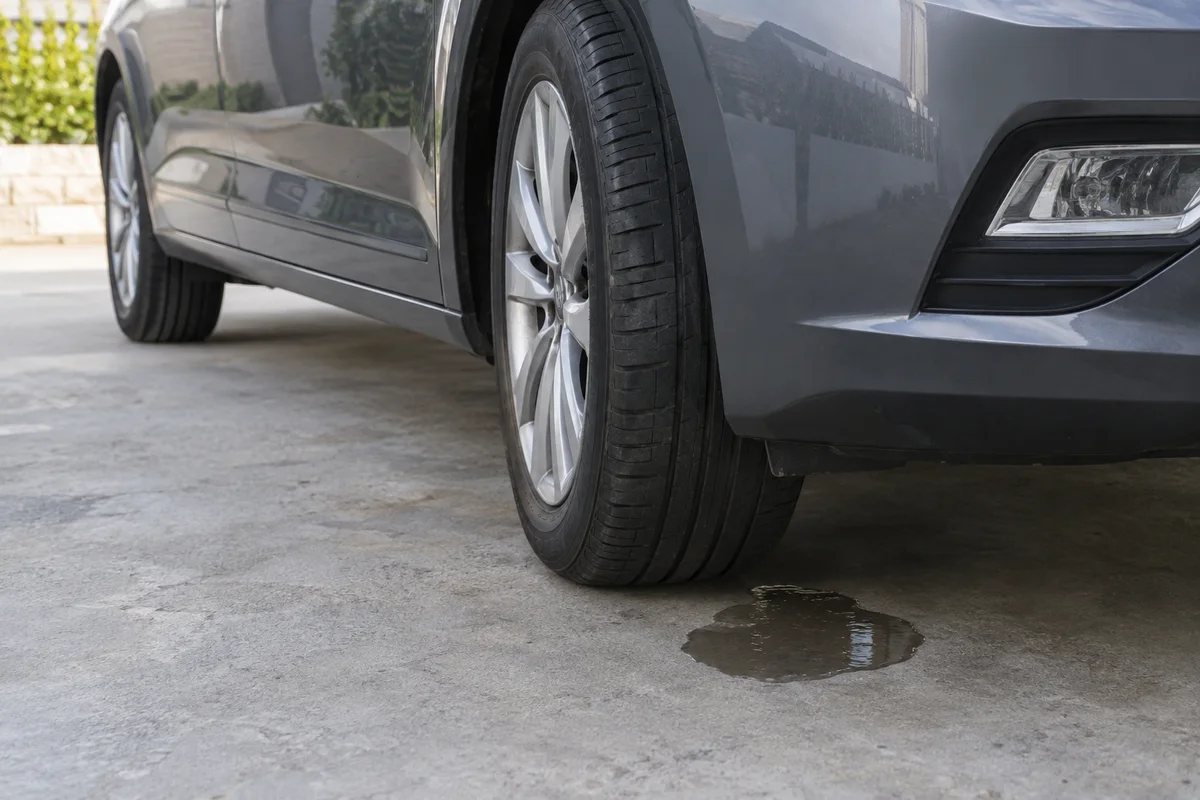
Clear water beneath a car after air-conditioning use can be normal condensation draining away. Rainwater can also collect and fall from bodywork after parking. Those familiar explanations are useful, but they should not become a reason to dismiss every new puddle. Different fluids and different locations require different levels of attention, and a photograph alone may not identify them.
Look from a safe standing position and note where the liquid appears relative to the car. Describe the amount, whether it is still dripping and what the vehicle was doing before it stopped. Do not touch, taste or deliberately smell an unknown liquid. Keep children and animals away, and avoid crawling beneath a car supported only by a jack.
Use context rather than colour alone
Was the climate system running on a humid day? Had the car just been washed or driven through rain? Did the puddle appear overnight after a dry journey? These details help the workshop distinguish a normal drain from a suspected leak. Colour can be misleading on dark ground, and fluid colours are not universal across products and vehicles.
A strong fuel smell, a serious warning, changed braking or abnormal engine temperature takes priority over identifying the puddle. Stop using the vehicle and arrange appropriate help if those signs are present. Do not open a hot coolant cap or top up an unidentified reservoir in response. A fluid-level check must follow the handbook's safe conditions and correct product specification.
Preserve a useful observation
A photograph of the puddle and its position can help, provided it is taken without entering traffic or going under the vehicle. Note the date and whether the same location becomes wet again. If safe and practical on your own level parking space, a clean sheet beneath a stationary car can show the position of a drip; remove it before the vehicle is used.
Ask the workshop to identify the source rather than merely clean the underside. If a normal air-conditioning drain is confirmed, keep that explanation in mind for similar conditions. If a leak is repaired, ask what was checked afterwards. A dry patch immediately after cleaning is less informative than confirmation that the relevant system was assessed under suitable conditions.