Use colour as the first clue
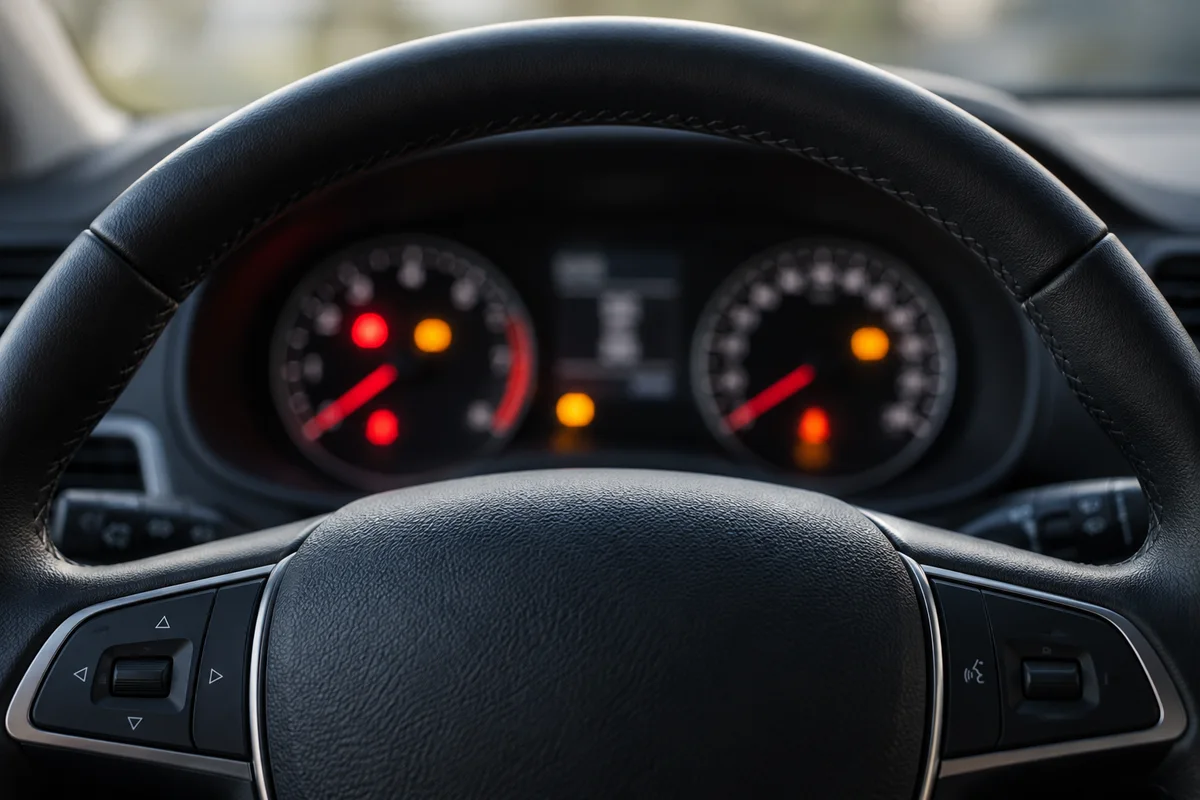
Drivers often learn a simple colour rule: red needs urgent attention, amber needs checking, and green or blue usually describes an operating state. That is a useful starting point, not a substitute for the handbook. A red seat-belt reminder and a red oil-pressure warning do not ask for the same action.
Likewise, a blue high-beam indicator normally reports a lighting state, while another blue symbol can have a different vehicle-specific meaning. Read the shape and nearby text together. If you cannot identify a warning safely while moving, stop in a suitable place before searching.
Behaviour can change the interpretation
A steady lamp and a flashing lamp can have different meanings even when their colour is identical. The engine warning is a familiar example, but tyre-pressure and stability indicators also use patterns to distinguish conditions. Note whether the light flashed first, remained on or appeared only briefly during startup.
Do not group every amber light into a category of faults that can wait indefinitely. A system may be unavailable even while the vehicle feels normal. The urgency depends on the affected function, accompanying symptoms and the manufacturer’s instruction, not simply the pigment on the display.
Text is often the most useful part
Modern cars may display a general triangle or information symbol alongside a precise instruction. Photograph the whole message while parked rather than cropping down to the icon. Words such as stop, service, unavailable or low level can change the next step substantially.
A generic online chart can help identify a family of symbols, but equipment and regional versions vary. Use the correct handbook for the model and year, ideally matched to the vehicle’s specification. Avoid relying on an image from a different instrument cluster merely because it looks similar.
Drivers with difficulty distinguishing colours should rely especially on shape, text and audible messages. Dashboard brightness or a photograph’s colour balance can also change how a symbol appears. When reporting a warning, include the complete wording even if you are uncertain whether the light looked red or amber in the moment.
When uncertainty remains
Describe the colour, shape, exact wording and driving symptoms to assistance. If the car reports an urgent stop or braking, steering or temperature becomes abnormal, choose safety rather than continuing while debating the colour rule. The purpose of interpretation is a suitable action, not winning a symbol-identification exercise.