A different warning from a steady lamp
A flashing engine light can indicate a misfire capable of overheating the exhaust catalyst. That is why advice for a steady amber light should not be carried over automatically. The right response is to reduce engine load, avoid hard acceleration and find a safe place to stop. Follow any stop instruction displayed by the car.
You might notice shaking or a rough exhaust note, but an obvious symptom is not required before taking the warning seriously. Do not accelerate hard to see whether the engine clears itself. A steep climb, towing or maintaining motorway speed can place further demand on an engine that is already reporting trouble.
Park before investigating
Choose safety over a perfect parking location. On a fast road, follow the local breakdown procedure and contact assistance. Do not stand next to moving traffic to inspect the engine. Once secure, switch off and explain that the engine warning was flashing, rather than simply saying there was an orange light.
Mention whether the warning appeared during acceleration, immediately after starting or only when warm. If the car shook, describe whether it affected the whole vehicle or mainly the engine at idle. There is no need to reproduce the event for a video; a clear account is sufficient.
Why a code is not a spark-plug order
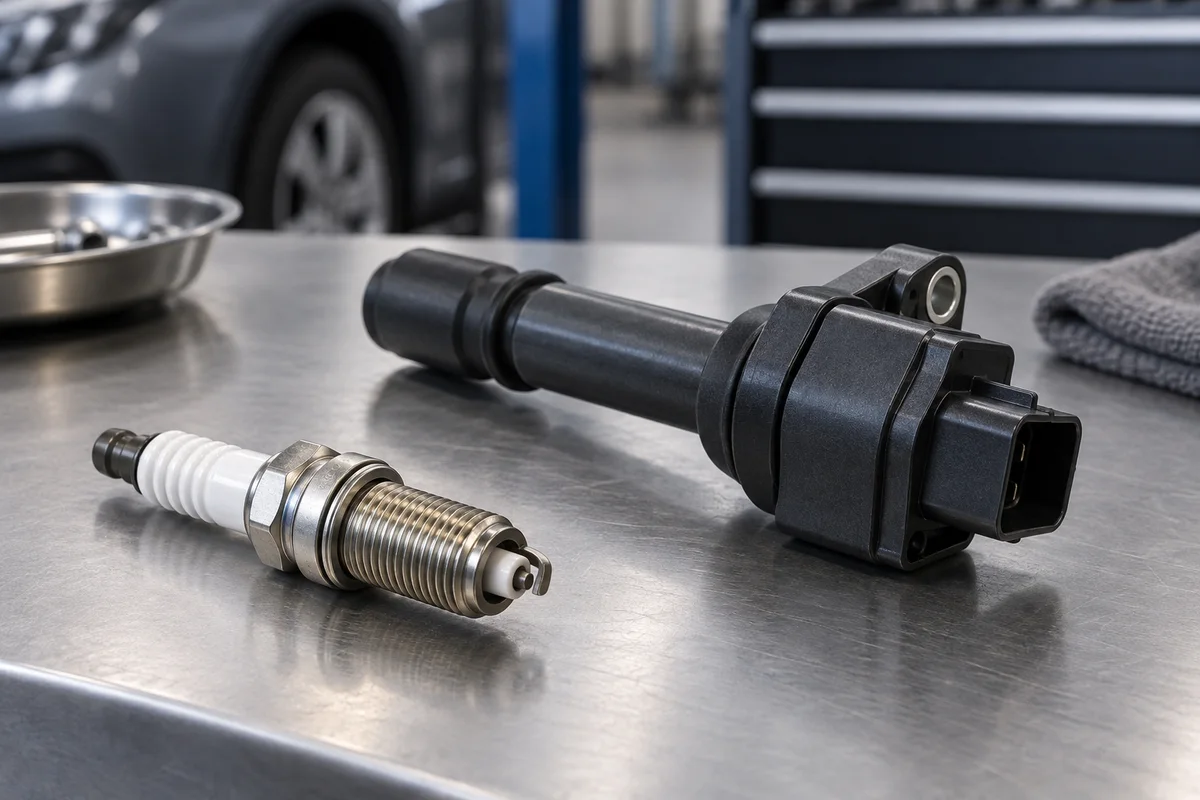
A misfire-related code helps direct testing, but several kinds of fault can produce incomplete combustion. Replacing an ignition part because its name appeared in an internet search can miss a different electrical, fuel or mechanical problem. Diesel and petrol engines also need different diagnostic reasoning.
A technician may need to examine stored data and compare the affected cylinders or operating conditions. Ask for the cause of the misfire to be established and for any relevant consequences to be considered, rather than asking only for the light to be cleared.
When it stops flashing
The warning may become steady after you ease off. This does not demonstrate that the original problem has been repaired. Record the change and seek model-specific advice before proceeding. If rough running, smoke, unusual heat or an instruction to stop remains, leave the engine off and arrange recovery. Avoid an improvised road test to find out how far the car will go.