Do not use the next junction as a test
An oil-pressure warning is one of the dashboard messages that changes the journey immediately. Find a safe place to stop and switch the engine off. Do not continue simply because the car still pulls normally or there is no unusual noise. Waiting for an audible symptom is a poor way to judge whether lubrication is adequate.
The symbol may briefly appear during the ignition self-check, before the engine starts. That is a different situation from a lamp that comes on while the engine is running. Check the exact message in the handbook: some cars also have a separate oil-level reminder, and the two should not be treated as interchangeable.
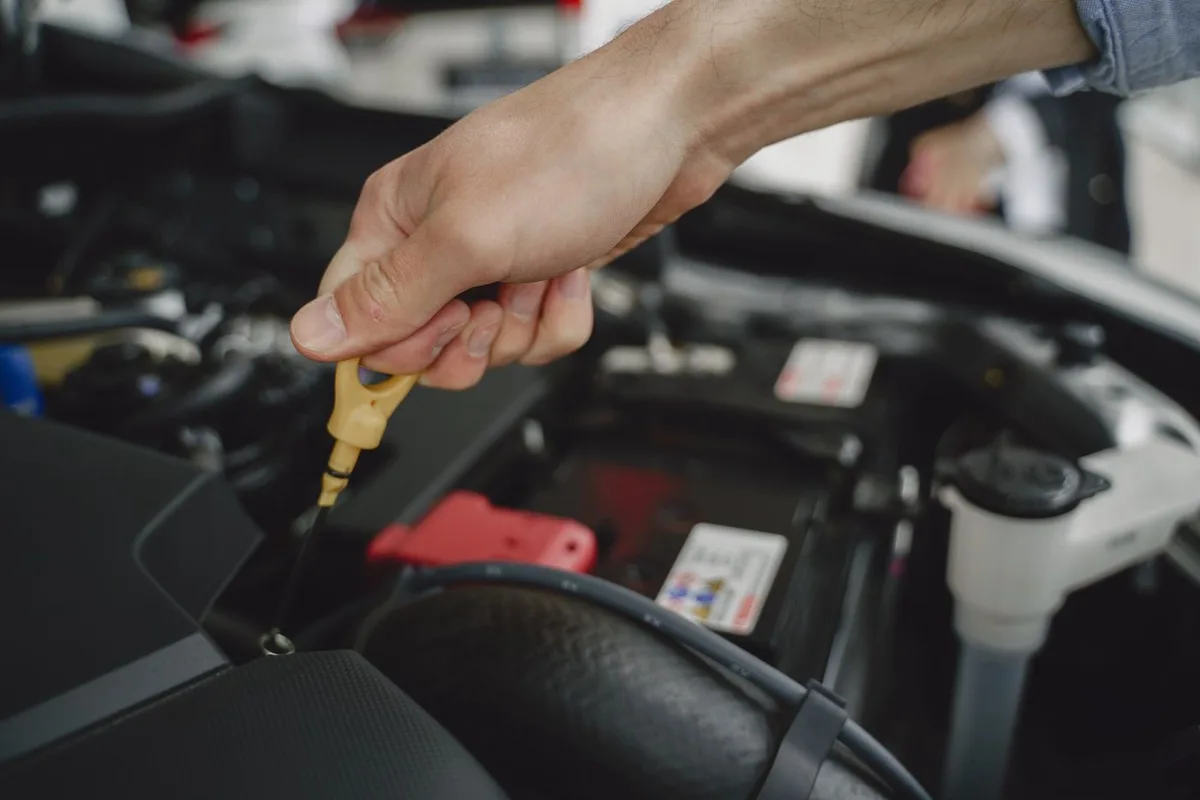
A dipstick answers a limited question
Once the vehicle is secure, follow its manual for the correct oil-level checking procedure. The required waiting time and whether the car uses a dipstick or an electronic display vary. A level reading tells you about the quantity available; it does not measure whether oil is circulating at the required pressure.
If the level is low, note how far it is below the specified range and look from a safe standing position for an obvious puddle. Do not crawl beneath a car at the roadside. Adding the correct oil may address a shortage, but it does not explain a leak or prove that continued running is safe. Avoid overfilling and do not choose oil by viscosity alone: the manufacturer’s approval matters too.
Keep the next conversation precise
Tell roadside assistance whether the warning appeared at idle, while turning, during acceleration or continuously. Mention any recent oil service, an impact beneath the car, a new noise or visible leakage. These are useful observations, not proof of a failed pump or sensor.
A pressure warning with an adequate level still needs professional investigation. Leave the engine off and arrange assistance; do not restart it repeatedly to see whether the lamp will disappear. A workshop can follow the vehicle’s diagnostic procedure and check actual pressure where required. A cheap sensor remains a possibility, but assuming that explanation at the roadside risks turning a small fault into a damaged engine.